
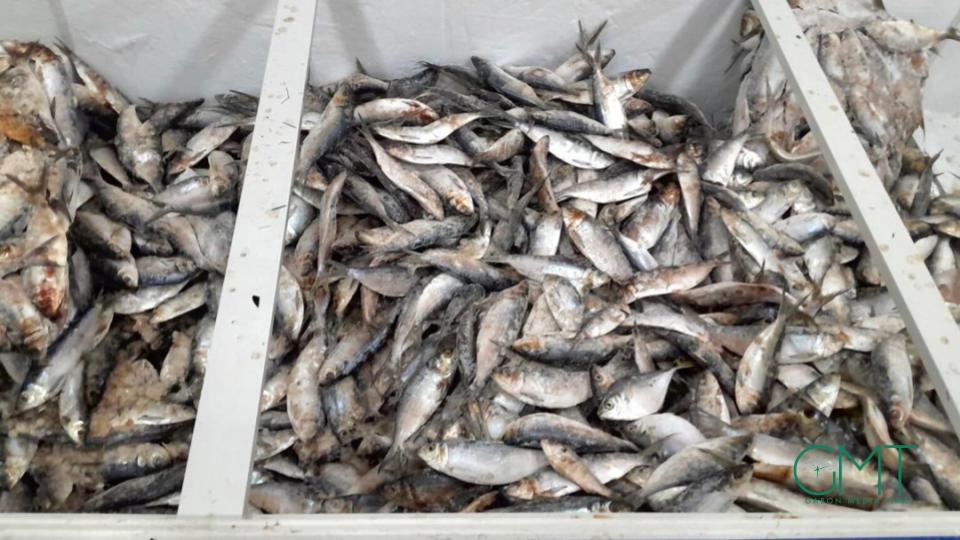
Gabon’s government has taken decisive action to protect its domestic fish supply by temporarily banning the export of sardines (Ethmalosa fimbriata) and the locally known ‘sans nom’ fish (Heterotis niloticus). Effective since March 26, 2026, this measure applies nationwide and was formalized through two ministerial decrees issued by the Ministry of Sea, Fisheries, and Blue Economy, published in the Official Gazette on April 16, 2026. The move comes in response to growing shortages in local markets, as these fish species continue to be exported across border regions, particularly to neighboring areas like Cocobeach.
On May 30, Governor Marie Françoise Dikoumba of the Estuaire Province visited Cocobeach to reinforce compliance with the ban among fishermen, traders, and transporters. The crackdown follows widespread concerns over the dwindling availability of sardines in markets, which has driven up prices and made this staple food less accessible to households. Authorities argue that unchecked exports to neighboring countries are exacerbating supply imbalances and fueling inflation.
Securing fish stocks and food sovereignty
The temporary export restriction aims to reorganize production and distribution channels, stabilize domestic supply, and curb price surges. The government also seeks to enhance traceability in the fishing industry, ensure future exports meet sanitary standards, and reinforce food sovereignty—key priorities in the national agenda. This policy aligns with broader efforts to combat rising living costs and strengthen the country’s food independence.
The Ministry of Sea highlights the mounting pressure on Gabon’s sardine stocks and the declining populations of ‘sans nom’ in river and lake basins. By halting exports, authorities hope to allow these fish populations to replenish in over-exploited areas, ensuring sustainable harvesting. Violators face penalties under the Fisheries Code, including cargo seizures, revoked fishing licenses, or legal action—unless granted an exceptional permit by the competent authorities.