
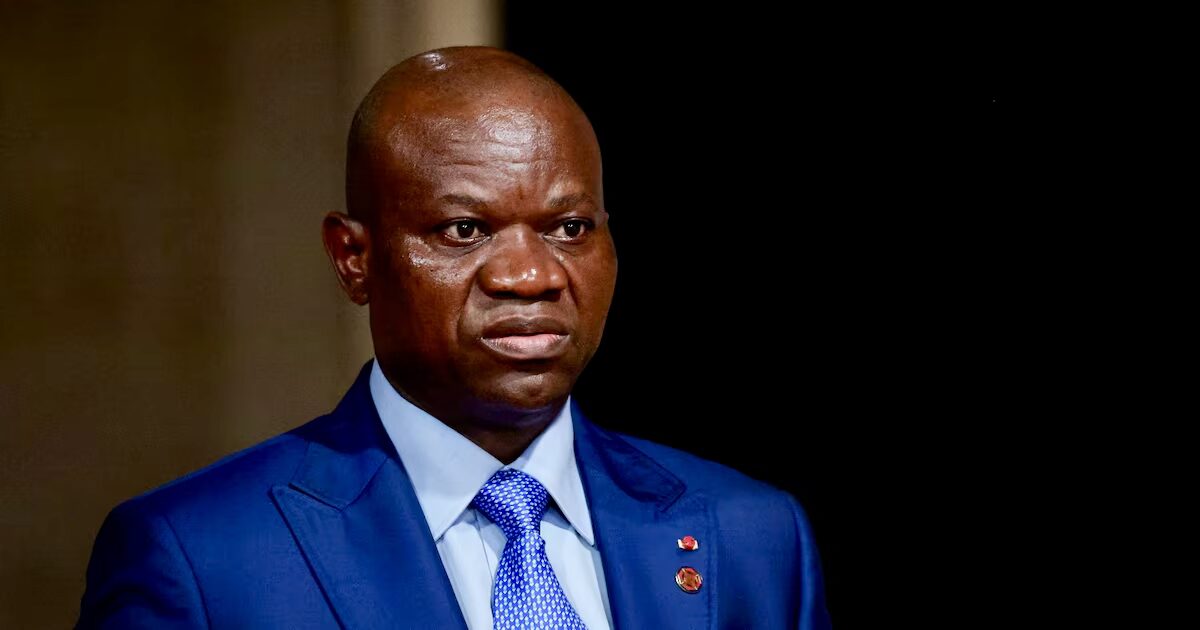
Gabon has achieved a significant milestone in its external financing strategy, surpassing initial expectations with a $920 million eurobond issuance—the country’s largest return to international markets in years. While this marks substantial progress compared to the 2025 operation, the borrowing cost remains elevated, reflecting lingering investor caution despite ongoing reforms.

Record-breaking issuance exceeds projections
On July 30, 2026, Gabon finalized terms for a $920 million eurobond (approximately 524 billion CFA francs), exceeding its initial target of $750 million by 22.7%. The transaction attracted strong investor demand, with indications pointing to subscriptions surpassing $1 billion. Ultimately, Libreville secured $920 million—$170 million more than anticipated.
Settlement is slated for August 5, with bonds maturing in 2033 after a seven-year term, including a three-year grace period where only interest payments will be made before principal amortization begins.
Improvement over 2025 but cost remains high
This issuance marks a notable improvement over Gabon’s February 2025 placement, which raised $570 million with a 2029 maturity and a 9.5% coupon rate. In one year, the borrowed amount increased by 61.4%, while maturity extended from four to seven years. The coupon rate decreased slightly to 9.375%, a reduction of 12.5 basis points.
However, this improvement is nuanced. The true cost of borrowing depends on multiple factors, including issuance price, investor yield demands, and operational fees. In 2025, the bond was issued at par, resulting in an initial yield of 12.7%. The effective yield and issuance price for this year’s eurobond have not yet been disclosed, preventing a precise comparison of financial gains.
Unlike the 2025 operation—which primarily refinanced a maturing eurobond due in June—no debt buyback has been announced this time. A larger portion of the proceeds is expected to directly fund state financing needs after accounting for placement fees and commissions.
Comparative analysis: Gabon vs. Cameroon
While Gabon’s issuance outpaces Cameroon’s in scale, it comes at a higher cost. Cameroon secured two years of grace and implemented a dollar-euro swap mechanism, converting dollar payments into euros to mitigate exchange rate risks for a country pegged to the euro. According to Cameroonian finance ministry data, this reduces the effective cost to 7.79% in euros—significantly lower than Gabon’s 9.375% coupon.
This comparison remains incomplete until Gabon releases its effective yield data. For now, Libreville’s primary achievements lie in the volume of funds raised, extended maturity, and absence of concurrent refinancing rather than a substantial reduction in financing costs.
Moody’s downgrade raises concerns
This eurobond issuance follows Moody’s decision to maintain Gabon’s sovereign rating at Caa2 while shifting its outlook from stable to negative. The agency cited pressing financing needs, limited access to financial resources, and risks of future debt restructuring or refinancing as key factors for the downgrade.
The 9.375% coupon underscores that despite strong commercial success, investors continue to demand high returns to finance Gabon’s sovereign debt.
Funds allocation and remaining borrowing capacity
Government officials state that net proceeds will finance public investment projects and settle arrears, primarily external and multilateral commercial commitments rather than debts owed to local enterprises. The eurobond amount remains below the revised borrowing ceiling set by the July 17 supplementary finance law, which permits up to 857.9 billion CFA francs (approximately $1.5 billion) in international market borrowings.
With $920 million raised, Gabon has utilized nearly 61% of this allowance, leaving an estimated $580 million theoretical capacity. No additional issuance has been announced at this stage. The law also permitted maturities of up to ten years, though the final term secured was seven years—an unexplained discrepancy by authorities.
IMF negotiations in focus
Preceded by a preliminary prospectus published on July 27 and overseen by Finance Minister Thierry Minko, this operation serves as a signal to international markets. Authorities view it as proof of renewed investor confidence in Gabon’s economic trajectory and reform progress over recent months.
This perception may strengthen with the anticipated conclusion of an agreement with the International Monetary Fund. Technical discussions are ongoing, with an IMF mission expected in Libreville in September to finalize an economic and financial program before the end of 2026.
Despite this commercial success, Gabon faces a persistent reality: reaccessing international markets comes at a premium, reflecting ongoing risk perceptions.