
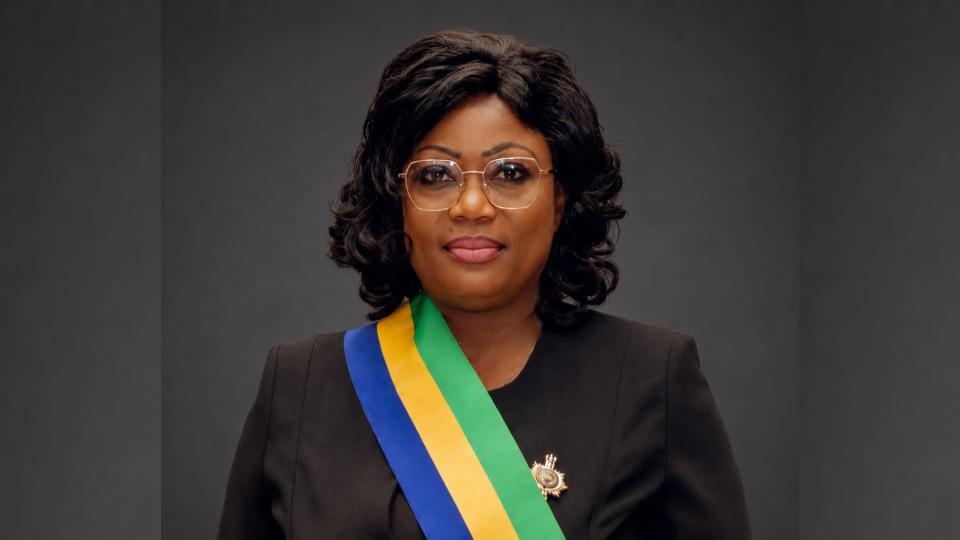
The latest political tensions in Gabon have taken a troubling turn, with harsh rhetoric directed not only at the nation’s leadership but also at the family members of President Brice Clotaire Oligui Nguema. In response, Deputy Daisy Léance Akinikoussou has issued a strong condemnation, drawing a clear line between legitimate political criticism and personal attacks on a leader’s relatives.
In a statement titled “Enough is enough!”, the parliamentarian from the Plateaux department emphasized that while public figures must be held accountable, their family members should not bear the brunt of political frustrations. “The mother of a president is still a mother,” she declared, stressing that dignity should not be compromised simply because of familial ties to power.
Protecting dignity beyond political lines
As Secretary-General of the National Network of Women Parliamentarians (RENAFED), Daisy Léance Akinikoussou framed the issue as a matter of gender equality and respect. She argued that defending the dignity of one woman should never come at the expense of another, regardless of political alignment. “The fight for women’s rights cannot be selective,” she asserted, calling for a unified stand against all forms of humiliation, whether online or in public discourse.
Her stance reflects growing concerns about the erosion of civil discourse, particularly on social media, where insults and personal attacks have become alarmingly normalized. The deputy warned that tolerating such behavior today sets a dangerous precedent—one that could easily be turned against any citizen tomorrow.
Where should the line be drawn?
The activist known as Landry Mbeng, or “Lanlaire” on social platforms, has been at the center of the controversy following remarks targeting the President’s mother. While political opposition is a cornerstone of democracy, Daisy Léance Akinikoussou argued that it must not devolve into attacks on personal integrity. “We can challenge a leader’s policies without stripping away the dignity of their loved ones,” she stated.
Her intervention comes amid broader calls from civil society to restore civility in public debates. The deputy’s message is unequivocal: democracy thrives on robust debate, but not at the cost of human decency. “We must draw the line now,” she urged, “before this culture of insult becomes irreversible.”