
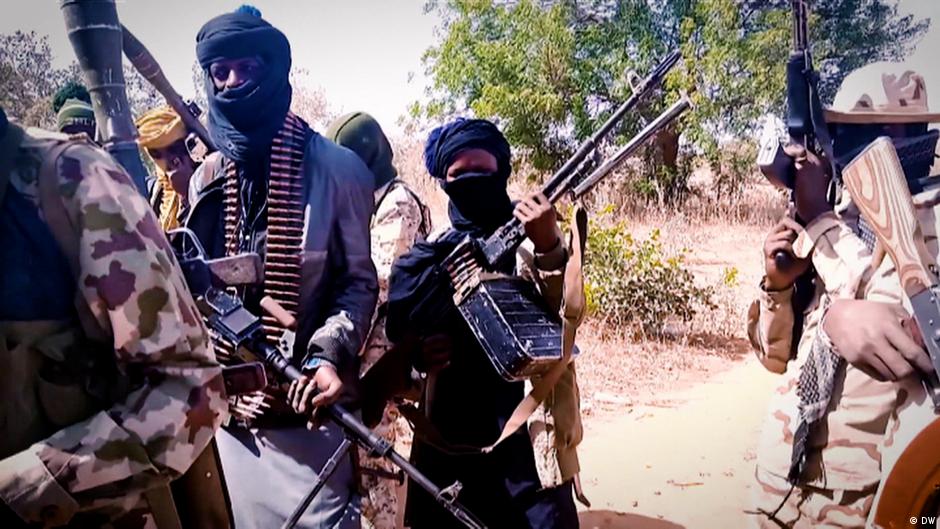
Kidnapping economy: how Boko Haram funds its insurgency across West Africa
A deep dive into the kidnapping industry fueling Boko Haram’s operations across Nigeria, Chad, Niger and Cameroon. How ransom payments became the group’s financial lifeline.
the scale of the kidnapping epidemic
While the crisis spans multiple countries, Nigeria bears the brunt of the violence. Security risk assessments indicate a structured and highly profitable kidnapping industry operating nationwide. Between July 2024 and June 2025 alone, nearly 4,700 people were abducted in nearly 1,000 incidents, with hundreds killed. Schools remain frequent targets, particularly in northern Nigeria, though attacks have spread to central regions.
The insurgency’s reach extends beyond Nigeria’s borders. In Cameroon’s Far North, Boko Haram militants recently kidnapped passengers from a bus in Ziguinchor. In Niger, the group abducted seven Chadian nationals near the Chad border in late March, with one victim executed and the rest still held captive.
According to security experts, these mass abductions serve dual purposes: recruitment through coercion and financial gain through ransom payments. Young men are forced into combat, women and entire communities are pressed into service as laborers or sex slaves, while families, communities and occasionally governments pay exorbitant sums to secure releases.
ransom demands: a billion-naira industry
In one recent case, Boko Haram demanded 50 million CFA francs for five Chadian hostages, escalating to 500 million for a physician among them. Such figures underscore how kidnapping has become a multi-million-dollar revenue stream for the group.
Nigeria’s state and federal governments officially deny paying ransoms to avoid legitimizing terrorism. A 2022 law even criminalizes ransom payments with up to 15 years imprisonment. Yet this legislation appears rarely enforced, as families and authorities continue to negotiate and transfer funds. Reports suggest authorities secretly paid ransoms to secure the release of 230 Catholic school students and staff abducted in Niger State in late 2025, despite public denials. Estimates of the payment range from €6 million to €1.3 million, allegedly delivered in cash via helicopter to a Boko Haram commander in Borno State.
Analysts warn that acknowledging such payments risks boosting the group’s propaganda, but the financial imperative appears to outweigh policy concerns in many cases.
Boko Haram’s rise and regional expansion
Founded in 2002 in Maiduguri by preacher Mohammed Yusuf, Boko Haram sought to establish a radical Islamic state, rejecting Western education and influence. Its name, meaning “Western education is sin” in Hausa, reflects this ideology. Over time, the group evolved from a local threat into a regional menace, spreading across the Lake Chad Basin into Niger, Chad and Cameroon.
The Lake Chad region plays a pivotal role in Boko Haram’s strategy. As a transborder space, it serves as a nexus for arms smuggling from Libya and a recruitment hub for affiliates of the Islamic State in the Greater Sahara. The area’s geographic isolation—marked by islands, swamps and dense forests—creates natural hiding places when military pressure intensifies. Additionally, its marginal location, where state presence has historically been weak, enables the group to exploit local agricultural and pastoral economies, sustaining both its fighters and logistical networks.
the iswap split: a rival with a different approach
In 2016, a faction of Boko Haram splintered off to form the Islamic State’s West Africa Province (ISWAP). Unlike the group’s founder Abubakar Shekau, whose indiscriminate violence alienated even Muslim communities, ISWAP adopted a more organized and strategic approach. It seeks to build support among local populations through service provision and governance, rather than relying solely on terror.
Today, Boko Haram and ISWAP compete violently for territory and resources across the Lake Chad Basin, engaging in a brutal internal war that further destabilizes the region.
regional responses: between military force and development
Countries in the region have attempted a coordinated response through the Lake Chad Basin Commission, which established the Multinational Joint Task Force (MNJTF). While initial efforts focused on military action, the strategy has expanded to include regional stabilization programs, aiming to restore state presence and economic development in affected communities.
Despite these measures, Boko Haram has shown remarkable adaptability and resilience. Over 15 years, the insurgency has claimed over 40,000 lives and displaced two million people in northeastern Nigeria alone—sub-Saharan Africa’s most populous nation. The crisis has drawn international support, including the deployment of approximately 200 U.S. troops to train and assist Nigerian forces in combating the threat.