
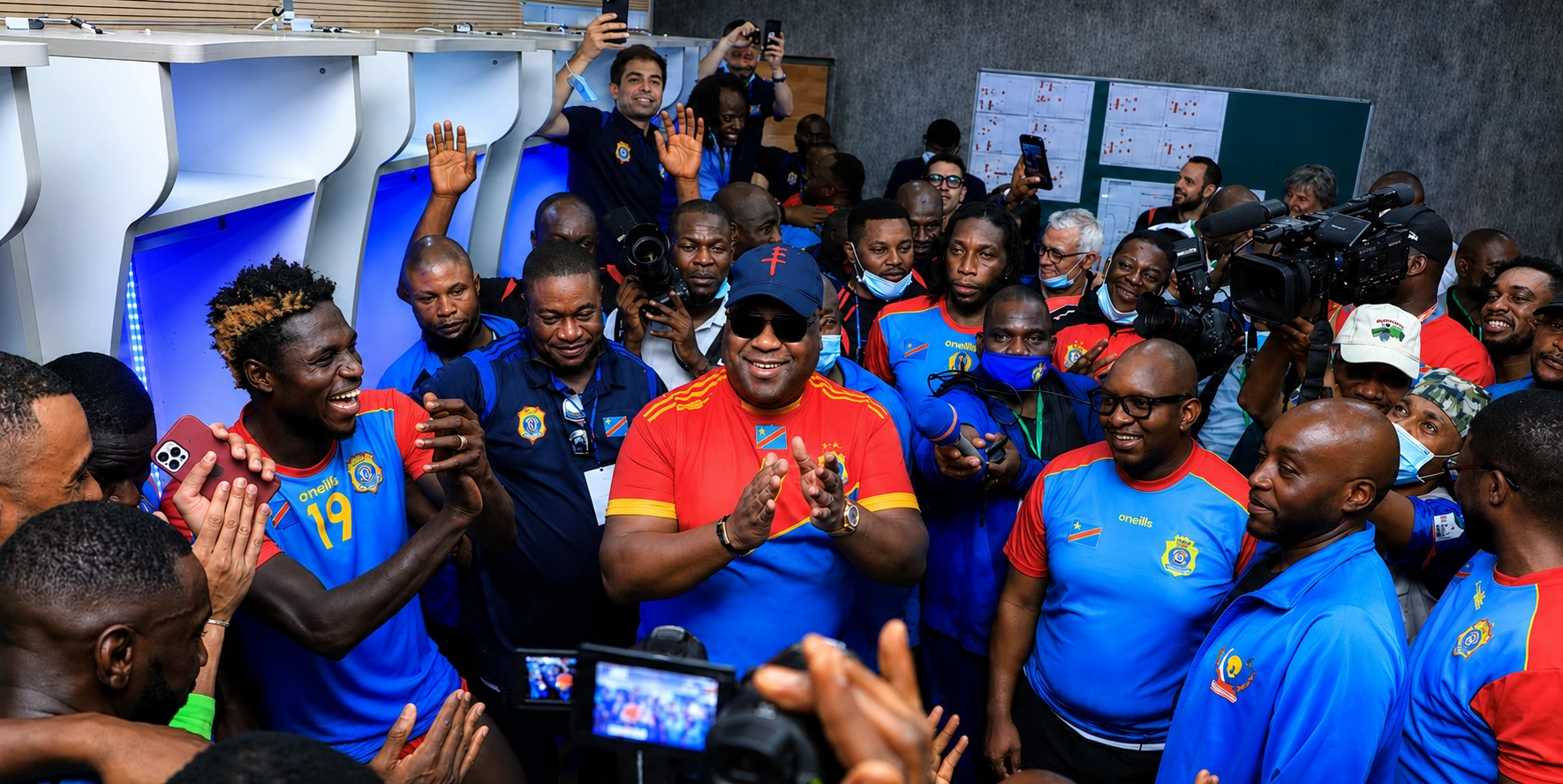
By guiding the Léopards to at least the round of 16 in the World Cup, the Democratic Republic of Congo is doing more than just marking a sporting achievement. This journey highlights a deliberate political ambition: transforming football into a catalyst for national cohesion and a symbol of a strengthening state. This is a strategy that President Félix Tshisekedi has championed for several years.
The scenes of celebration will be remembered for a long time. From the streets of Kinshasa and Lubumbashi to Kisangani and Mbuji-Mayi, and even in the conflict-affected cities of the East, citizens gathered to cheer the historic qualification of the Léopards on June 28. For those moments, political disagreements and regional divisions vanished, replaced by the shared pride of a single flag.

In a nation often defined by security struggles, this sporting saga offers a different narrative—one of a country regaining its self-assurance. While football cannot solve every problem, it acts as a powerful catalyst. Behind the Léopards’ success lies a deeper drive to rebuild national honor in a land that has endured decades of instability and external pressures.
A presidential vision for the nation
This development is no accident. During his address to the nation last December, Félix Tshisekedi dedicated a significant portion of his speech to the importance of sport. He praised the dedication of Congolese athletes and noted that every victory and every raised flag serves as a building block for national identity and the foundation of unity.
This perspective clarifies a specific political outlook. For the Head of State, football is far more than entertainment; it is a tool for social glue. it serves as a reminder that despite various tensions, there is a collective Congolese destiny.
In that same address, Félix Tshisekedi emphasized that the Democratic Republic of Congo remains “one and indivisible.” In the face of external threats and internal fragmentation, every goal scored by the Léopards serves as a symbolic testament to this enduring unity.
Sport as a pillar of sovereignty
For years, the Congolese leadership has increased efforts to place sport at the heart of its strategic agenda. From hosting major continental events to reforming sports governance and providing direct support to national teams, the goal is clear: a country’s influence is also measured by its athletic triumphs.
The recent leadership changes at FECOFA, including the roles played by Véron Mosengo-Omba and Amadou Diaby, reflect this new era. They promote a modern vision of the game where professional standards and international reputation go hand in hand. This administrative shift is supporting a talented generation of players who are finally turning the country’s vast potential into tangible results.
The resonance of “Fatshi béton”
Amidst security challenges in the East and significant structural reforms, this sporting success provides President Tshisekedi with a potent political symbol. While the credit for the victories belongs to the players and their coaching staff, the President has consistently positioned sport as a primary lever for national togetherness.
As a visible supporter of the national team, the Head of State uses these moments to bolster a wider story: a Democratic Republic of Congo that is looking toward the future with renewed confidence. The popular phrase “Fatshi béton” illustrates the connection he maintains with the public, bridging gaps across the political spectrum through shared national milestones.
A new narrative for the DRC
Decision-makers in the DRC are increasingly focused on shifting the global perception of the country. Long associated primarily with conflict or resource extraction, the nation now seeks to be recognized for its reforms, economic potential, and regional leadership. The Léopards have become the perfect ambassadors for this transition.
Football will not single-handedly fix security issues or development hurdles. However, it highlights a fundamental truth: when an entire people rallies behind a single team, from the capital to the most remote territories in the East, it is a powerful affirmation of a nation’s existence and its will to remain united.