
The political landscape in Chad, under the leadership of Mahamat Idriss Déby Itno, frequently sparks debate regarding his true alignment: is he a genuine sovereignist, committed to asserting Chad’s independence on the global stage? This question lies at the heart of many discussions surrounding the nation’s direction and its evolving role within the Sahel region.
A strategic visit to Ouagadougou
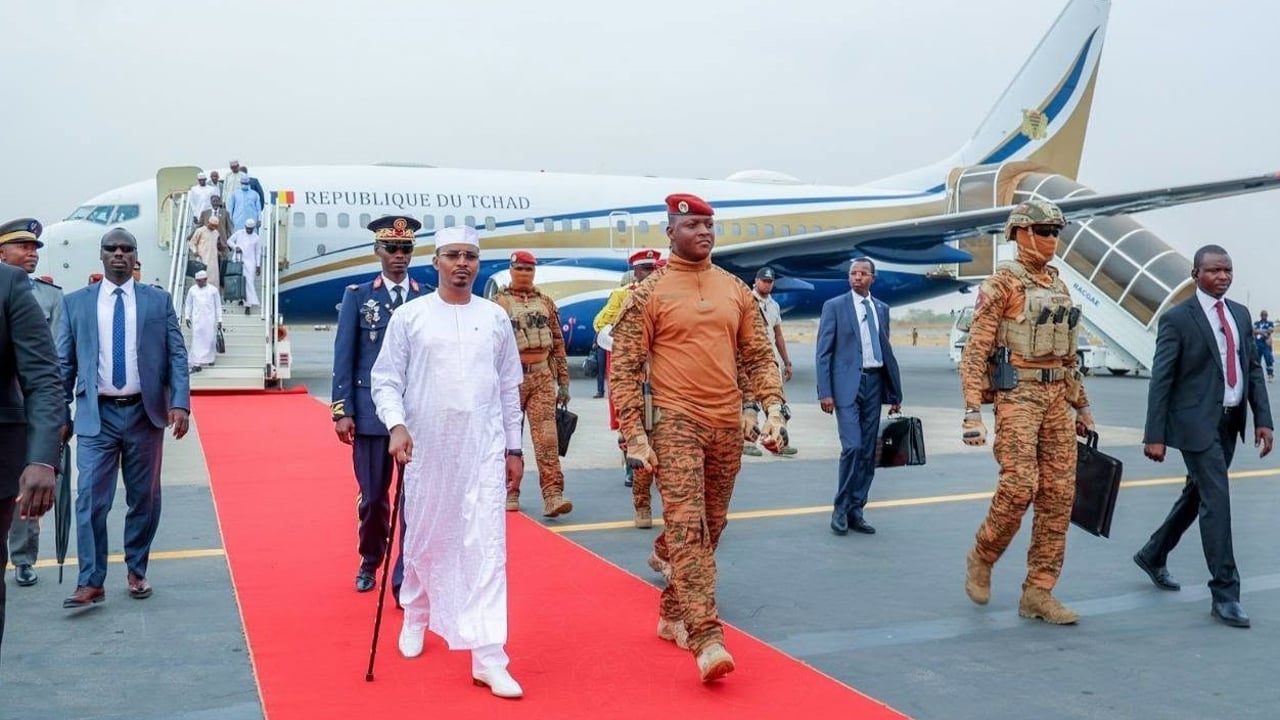
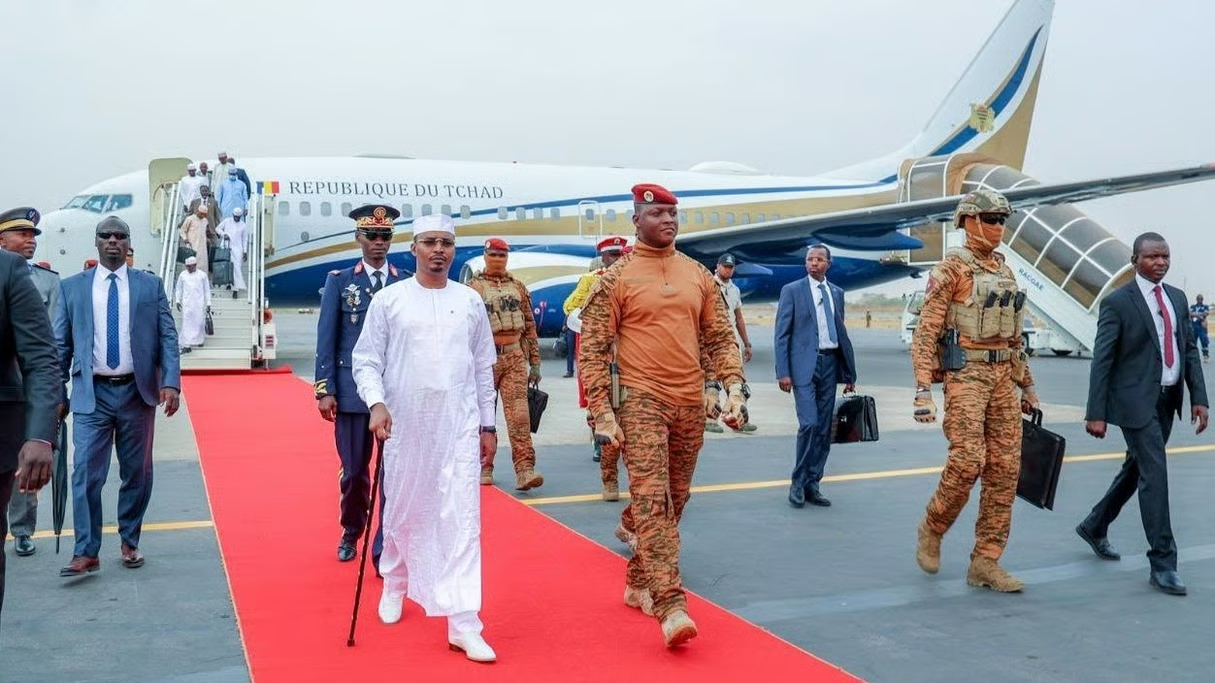
A recent key event that offers insight into Mahamat Idriss Déby Itno’s strategic thinking was his visit to Ouagadougou, the capital of Burkina Faso, on February 21, 2025. During this significant encounter, he was formally welcomed by Ibrahim Traoré, the leader of the Burkinabè junta. This high-profile meeting between two prominent figures from the Sahel region is particularly noteworthy, given the prevailing geopolitical shifts and the emergence of new regional alliances. Such engagements can be interpreted as a demonstration of solidarity among certain Sahelian states, often seen as a cornerstone of sovereignist aspirations to reshape regional power dynamics.
The interaction in Ouagadougou hints at a potential alignment with the broader objectives of the Alliance des États du Sahel (AES), a bloc that includes Burkina Faso and Mali, led by figures like Assimi Goïta. These alliances often emphasize self-determination and reduced foreign influence, resonating with a sovereignist agenda. The focus on strengthening intra-African ties, particularly among nations facing similar security and developmental challenges, could be a deliberate move to project an image of robust national sovereignty and regional autonomy.
Navigating complex international relations
However, the question of Mahamat Idriss Déby Itno’s sovereignist stance is complex, influenced by Chad’s intricate web of international relationships. While his engagement with regional partners like Ibrahim Traoré and the implied connection to the Alliance des États du Sahel might suggest a leaning towards greater independence, Chad also maintains significant ties with other global powers. The continued presence of international actors, including those represented by figures such as Emmanuel Macron, and Chad’s engagement with nations like the United Arab Emirates, indicate a multifaceted foreign policy.
These diverse relationships require careful balancing, potentially tempering any absolute sovereignist declarations. The legacy of his father, Idriss Déby Itno, who skillfully navigated various international partnerships, also plays a role in understanding the current leader’s approach. Ultimately, whether Mahamat Idriss Déby Itno is truly a sovereignist remains a subject of ongoing observation, with his actions and diplomatic engagements continuing to define Chad’s path in a rapidly changing world.