
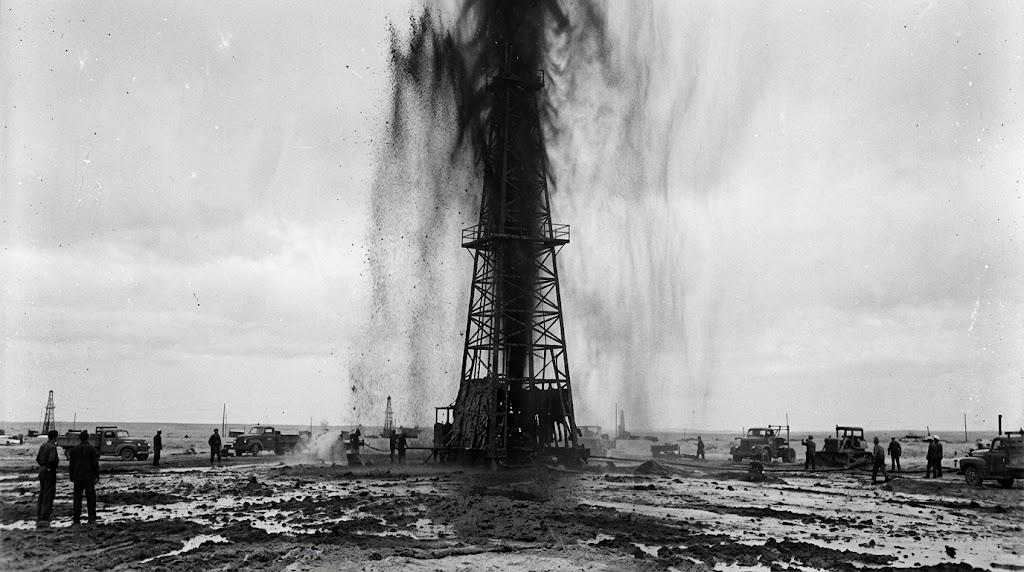
The clock is ticking. Since September 25, 2026, the Goumeri W-8 well in Niger’s Agadem block has been spewing crude oil and gas over 10 meters into the air—a disaster of unprecedented scale for a country that has relied on oil production for just 15 years. What began as a localized emergency has spiraled into a national energy crisis, forcing Niamey to confront a harsh reality: domestic expertise may not be enough to contain the blowout.
Niger’s agonizing delay in acknowledging the crisis
For 17 days, official silence shrouded the unfolding catastrophe at Goumeri W-8. It was not until October 12—weeks after the eruption began—that the government acknowledged the severity of the blowout. By then, environmental advocacy groups such as the Nigerian Environmental Rights Network (GREN) had already warned of irreversible damage to soil and groundwater from the unchecked spill. Even now, authorities have yet to quantify the volume of lost oil or assess the full environmental toll.
Sovereignty vs. capability: the paradox of Niger’s energy ambitions
Niger’s leadership has long championed energy independence, mandating that 80% of CNPC Niger Petroleum’s workforce consist of local hires. Yet the Goumeri W-8 blowout has laid bare a stark contradiction. With specialized well-control systems unavailable domestically, Niamey has been forced to look beyond its borders. Algeria’s Sonatrach, a global leader in oil crisis management with over 60 years of experience in the Sahara, has emerged as the strategic partner of choice.
Sonatrach to the rescue: a test of regional cooperation
The collaboration between Niamey and Algiers extends beyond emergency response. Algerian engineers are conducting an independent audit to determine the root cause of the failure, while Sonatrach also plays a key role in the Kafra permit and commercialization of Agadem crude. Despite these efforts, no timeline has been set for the permanent sealing of the well—a delay that only deepens public concern over the country’s capacity to safeguard its resources.
What’s at stake for Niger’s oil future
The stakes extend far beyond the immediate environmental fallout. The Goumeri W-8 blowout threatens to disrupt the supply chain for Niger’s only producing field, cripple local economies dependent on oil revenues, and erode confidence in the sector. For a nation betting big on energy self-sufficiency, the disaster is more than a technical failure—it’s a sobering question of national resilience.
Can Algeria plug the gap—or will Niger remain vulnerable?
As Sonatrach’s experts arrive on-site, Niger faces a pivotal moment. The outcome could either strengthen regional alliances or expose the fragility of its energy independence goals. One thing is clear: without decisive action, the Goumeri W-8 blowout won’t just be a crisis of containment—it will become a turning point for Niger’s oil sovereignty.