
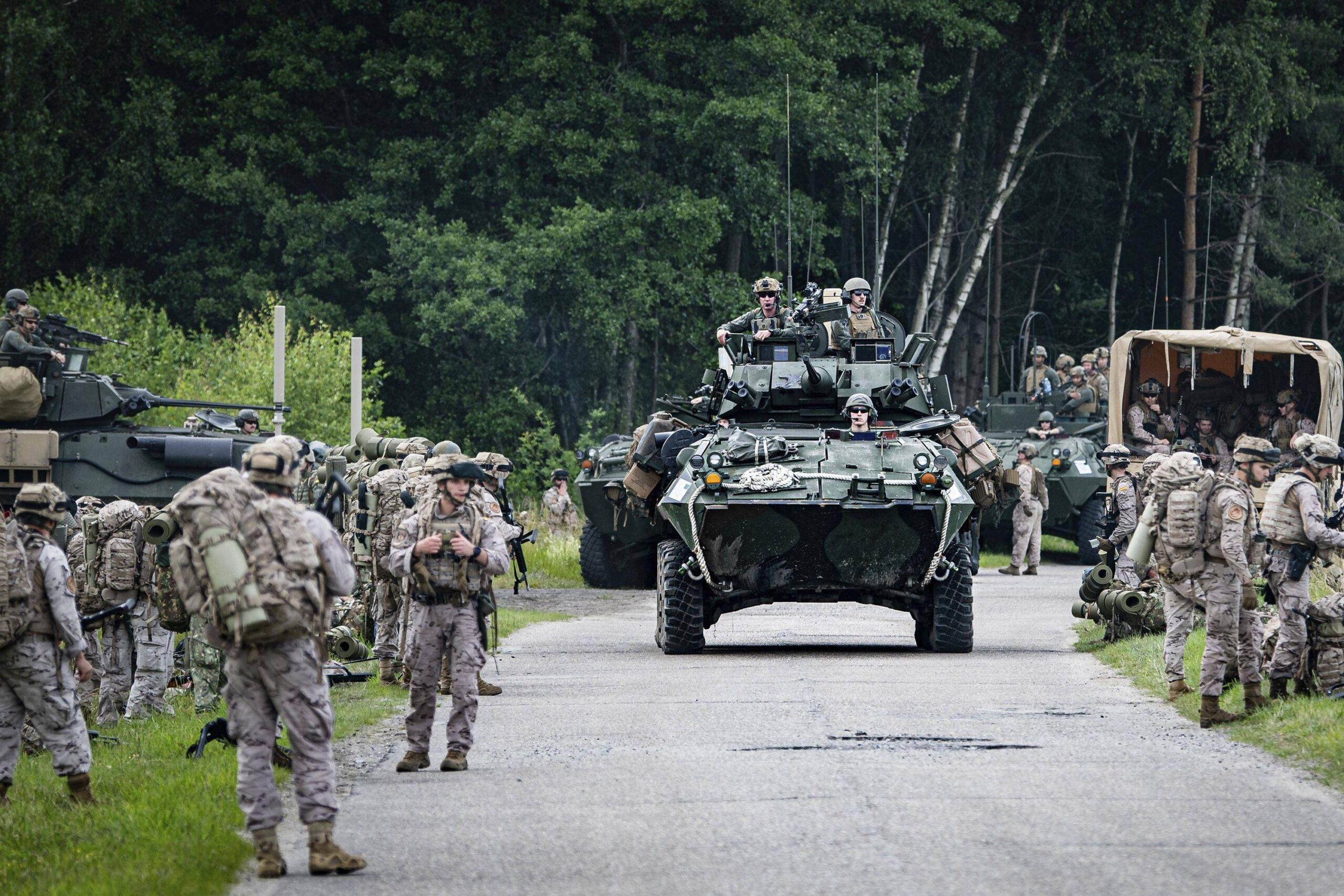
As Moscow’s hybrid tactics escalate across Europe, Poland has taken a decisive step that could redefine regional security. Along its northeastern frontier, just kilometers from the heavily militarized exclave of Kaliningrad, Warsaw has launched an unprecedented security operation. The move comes as unmanned aerial intrusions, suspected sabotage plots, and covert infiltration attempts have surged, leaving policymakers in Baltic capitals scrambling to respond.
Why Poland’s bold border move isn’t just about Russia—it’s about Europe’s future
At the heart of this strategic shift lies a stark reality: the Baltic region is no longer a passive observer in the Kremlin’s shadow war. Poland, positioned at the crossroads of NATO’s eastern flank, has transformed its northeastern border into a multilayered shield. This isn’t merely about stopping migrants or smugglers anymore—it’s about blocking a tidal wave of hybrid threats designed to destabilize the continent without firing a single shot.
From cyberattacks on energy grids to drone incursions into sovereign airspace, the tactics unfolding here mirror those seen in Ukraine yet remain largely unnoticed by global headlines. Yet, Warsaw’s response signals a turning point. By deploying elite counterterrorism units alongside border guards and military battalions, Poland is making an unequivocal statement: hybrid warfare has met its match.
How the new security grid works: drones, sabotage, and the fight for control
The operation underway is a far cry from routine border patrols. Authorities have implemented a three-tier surveillance system designed to neutralize threats at every stage:
- Real-time monitoring: High-resolution cameras, thermal imaging, and AI-driven analytics track movements across 200+ kilometers of frontier. Suspicious behavior triggers immediate alerts to rapid-response teams.
- Rapid interdiction units: Specially trained soldiers and police can intercept infiltrators within minutes, equipped with drones of their own to scout ahead.
- Critical infrastructure lockdown: Power plants, railway hubs, and telecommunications nodes are now under 24/7 armed guard, with sabotage drills conducted weekly.
The system’s backbone? A joint command center where military, police, and intelligence agencies share data in real time—a model now being studied by NATO allies for future adaptations.
Beyond Kaliningrad: What Poland’s strategy means for the entire alliance
For decades, Kaliningrad has served as Moscow’s strategic dagger aimed at the heart of NATO’s eastern flank. But Poland’s countermeasure isn’t just defensive—it’s a preemptive deterrent. By sealing off its border, Warsaw is forcing the Kremlin to reconsider the cost of hybrid aggression.
The message is clear: any attempt to exploit Poland’s vulnerabilities—whether through disinformation campaigns, orchestrated migration flows, or targeted sabotage—will meet with overwhelming force. In this high-stakes game, Poland has chosen to lead by example. As tensions simmer across the Baltic, one question looms larger than ever: Could this be the blueprint Europe needs to stay a step ahead?
What’s next for the Baltic security puzzle?
The operation’s success hinges on two critical factors. First, sustained political will from Warsaw and its allies to maintain funding and troop deployments. Second, the ability to adapt as hybrid tactics evolve. Already, reports indicate that drones are being tested with longer ranges and AI-enhanced evasion capabilities—a challenge Polish forces are racing to counter.
As the sun sets over the Baltic coast, a new chapter in Europe’s shadow war is being written. One thing is certain: Poland isn’t waiting to see what Moscow does next. It’s already locking the door.