
Why gold-backed security deals could cost Sahel nations their sovereignty
In an era where security partnerships are increasingly measured in gold reserves rather than bullets, African nations are grappling with a critical dilemma. What happens when military protection comes with strings attached to natural resources? This question has taken center stage as new reports detail how security arrangements with Russian-linked entities are reshaping economic and political landscapes across the Sahel.
From Bangui to Bamako: how a new security-for-resources model emerged
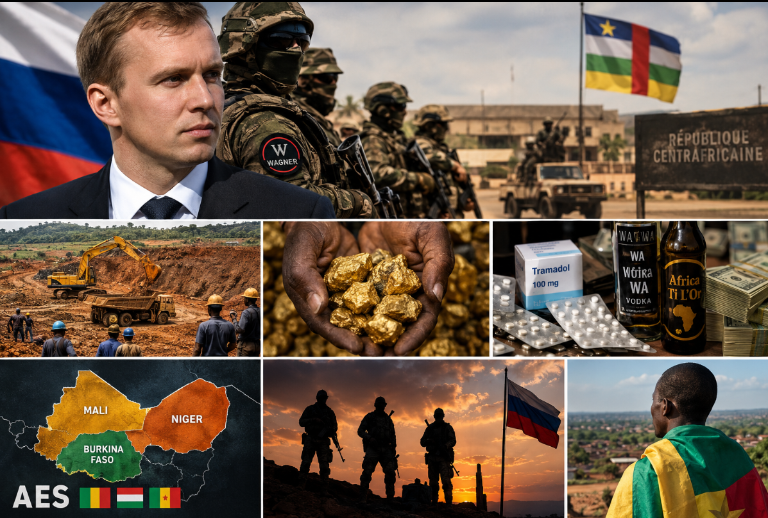
In the Central African Republic (CAR), a shadowy network once led by the late Yevgeny Prigozhin’s son, Pavel, appears to have built an economic empire worth over $400 million annually. While his fighters helped prop up President Faustin-Archange Touadéra’s regime, his companies quietly secured lucrative gold mining concessions. This model—where protection, profit, and power converge—is now raising alarms across the Alliance of Sahel States (AES).
Pavel Prigozhin’s reported $400 million annual revenue stream doesn’t come from traditional military contracts. Investigations suggest his network operates beyond security services, allegedly engaging in arms trafficking, alcohol distribution, and even control over parts of the tramadol market. These activities, while unproven in court, highlight a troubling trend: when armed groups act as both protectors and economic players, the lines between national security and private gain blur dangerously.
The CAR precedent: how security became a currency for gold
CAR’s gold-rich regions have become the testing ground for this new model. One major mining operation linked to Prigozhin’s network reportedly generates $250 million yearly in production alone. Yet questions linger about where these profits go. Are they reinvested in local development, or do they disappear into offshore accounts? With no independent audits and opaque export chains, the true beneficiaries remain unclear.
This arrangement isn’t just about paying for protection—it’s about creating a self-sustaining ecosystem. Once Wagner-linked forces ensure regime stability, their economic foothold grows, making them indispensable. The longer this cycle continues, the harder it becomes for host nations to regain full control over their resources or security policies.
Will the Sahel follow the CAR playbook?
The Alliance of Sahel States—comprising Mali, Burkina Faso, and Niger—faces similar pressures. With jihadist threats escalating and ties with Western partners strained, these nations have turned to Moscow for military support. But the CAR model offers a cautionary tale.
In Mali, Russian contractors operate amid controversy over civilian casualties and unclear accountability. Burkina Faso and Niger watch closely as mineral concessions and security contracts are negotiated behind closed doors. The real concern isn’t just whether Russian presence improves security—it’s whether these deals come with hidden costs in sovereignty and resource control.
What sets the AES apart from CAR’s experience?
Unlike CAR, where Wagner’s influence became institutionalized, the AES nations have yet to fully replicate this system. Their governments are still negotiating the terms of cooperation, leaving room to define boundaries. Will they demand transparency in mining contracts? Will they insist on civilian oversight of foreign fighters? These choices could determine whether security partnerships enhance national strength or erode it.
The Kremlin’s double game: influence vs. economic control
Russia’s official response to Wagner’s mutiny in 2023 was to rebrand its African operations under the Africa Corps, now under defense ministry control. But this restructuring hasn’t dismantled existing networks. In CAR, Pavel Prigozhin reportedly maintained autonomy, leveraging local connections to preserve his empire. This suggests Moscow’s African strategy may still rely on decentralized, profit-driven entities rather than centralized state control.
For Sahel nations, this raises a critical question: Is Russia’s military support a means to strengthen their sovereignty, or is it a Trojan horse for long-term economic and political influence? The answer depends on how these governments structure their contracts and enforce oversight.
Can sovereignty survive gold-backed security deals?
The true test of any security partnership lies not in battlefield victories, but in who ultimately benefits from the arrangement. When a foreign entity provides protection in exchange for resource access, the host nation risks losing more than gold reserves—it risks autonomy over its own future.
For the AES, the path forward requires three key safeguards:
- Transparent contracts: Every security and mining agreement must be public, with clear terms on revenue sharing and resource access.
- Independent oversight: Civil society groups and international auditors should monitor operations to prevent corruption and ensure profits fund public services.
- Civilian-led security policies: Military partnerships must align with national development goals, not the economic agendas of foreign actors.
Gold may buy temporary security, but without these safeguards, it could cost these nations their most precious asset: sovereignty.
A warning, not a destiny
CAR’s experience isn’t an inevitability for the Sahel—it’s a warning. The choice to accept Russian security support doesn’t have to mean conceding control over gold mines or national decision-making. But the alternative isn’t isolation—it’s demanding better terms.
As gold prices soar and geopolitical tensions rise, the stakes have never been higher. Will the Sahel nations let gold trade dictate their security policies? Or will they rewrite the rules before it’s too late?