
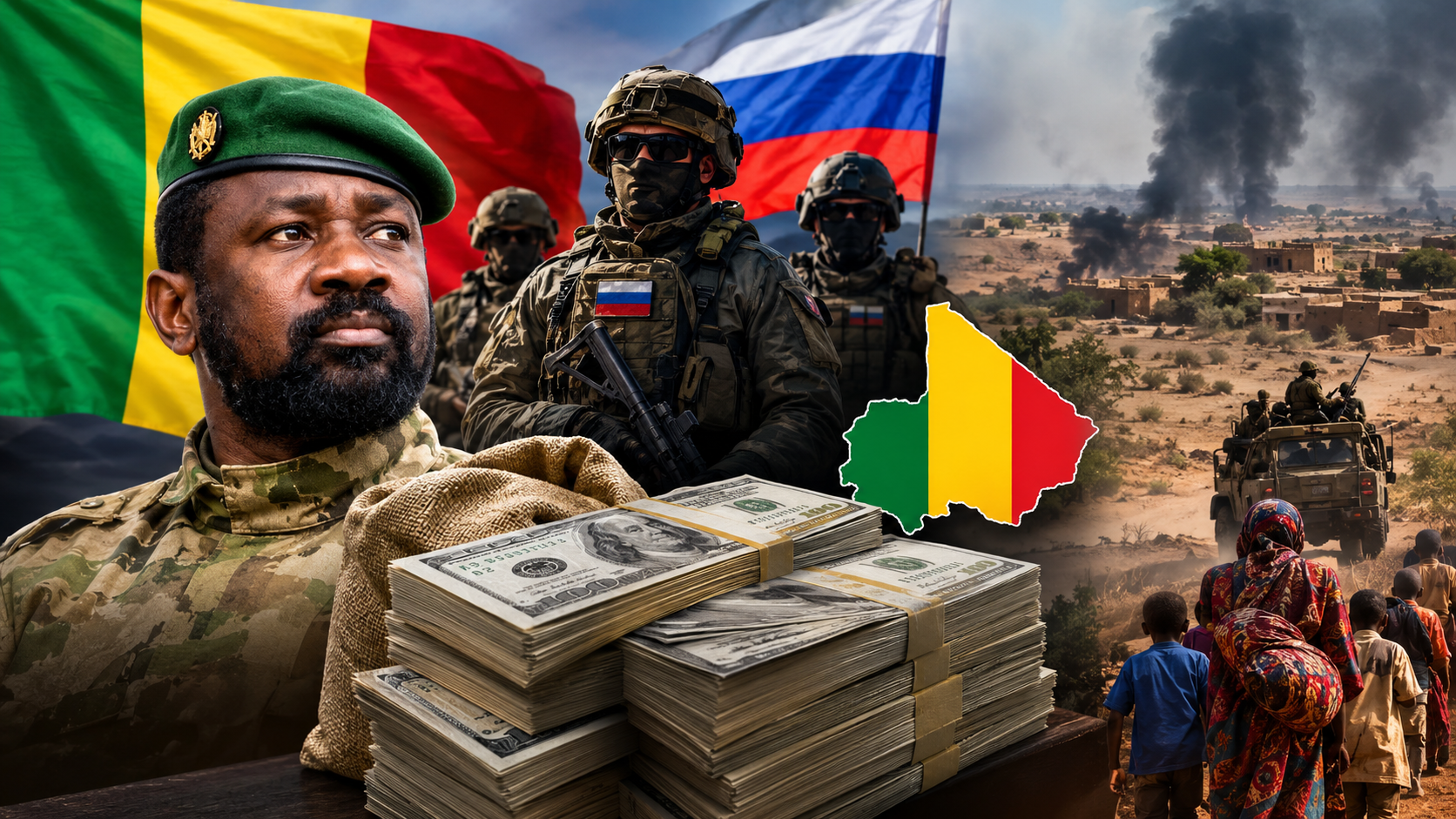
Why Bamako bet $1 billion on Russian military support
Mali has committed nearly a billion dollars to a military partnership with Russian forces, first through Wagner Group operatives and later via the Africa Corps structure. With each contractor reportedly costing around $10,000 per month, the financial burden has raised a critical question: after such a substantial investment, what tangible security improvements has Bamako actually achieved?
From strategic shift to financial strain
The Malian transitional authorities severed long-standing military ties with Western partners, notably France, and pivoted toward Moscow with promises of enhanced sovereignty and improved security outcomes. Yet the true measure of any military strategy lies not in the nationality of its allies but in measurable results: reduced attacks, protected civilians, operational roads, and restored state authority across contested regions.
The paradox of sovereignty and outsourcing
While the government frames this cooperation as a bold assertion of independence, the continued reliance on foreign fighters at an exorbitant cost raises fundamental concerns. Sovereignty, after all, implies control over decisions, transparency in costs, and accountability for outcomes. When a nation outsources core security functions to external forces, it must justify not only the choice of partner but the effectiveness of that partnership in delivering public safety.
A billion-dollar question: what has changed on the ground?
The transition from Wagner to Africa Corps represents a rebranding effort rather than a fundamental shift in operational capacity. But rebranding alone does not secure villages, protect supply routes, or reduce insurgent violence. For Mali, the critical test is whether this partnership has enhanced intelligence sharing, strengthened national military capabilities, or improved the safety of civilians in conflict zones.
Moreover, a sustainable security strategy cannot depend indefinitely on foreign fighters. A professional, well-equipped national army remains essential to holding territory and maintaining long-term stability. If Mali’s security continues to rely on costly external support, the long-term feasibility of this approach and the government’s stated goal of autonomy must be scrutinized.
The human cost of unmet expectations
Beyond balance sheets and geopolitical narratives lies the daily reality of Malians living under threat. Families in rural areas, traders dependent on open roads, farmers unable to access fields, and displaced communities waiting to return home measure success not in press releases but in safety and stability. If attacks persist, military outposts remain vulnerable, and civilians remain at risk, then the value of this billion-dollar investment must be questioned.
Transparency is equally vital. Citizens deserve clear answers: How much has been paid? What specific missions have been conducted? How have security indicators changed since the deployment of Russian forces? Without verifiable data, the public cannot assess whether this partnership delivers real value or merely sustains a costly status quo.
Can a new alliance justify its price tag?
Mali’s leaders have framed the shift toward Russia as a strategic victory a move away from dependence on former colonial powers and toward greater self-determination. But sovereignty is not achieved through rhetoric alone. It is demonstrated through results: fewer attacks, restored civilian life, and a state that can protect its people without perpetual reliance on foreign fighters.
The failure would not be in choosing a new partner, but in failing to hold that partner and the strategy itself accountable for tangible improvements. A billion dollars is a staggering sum. The question is not how much was spent, but how much security was gained in return.
The path forward: accountability and evidence
As Mali navigates a prolonged security crisis, its leaders must move beyond political justifications and present concrete evidence of progress. The public deserves to know whether this investment has translated into safer roads, more secure communities, and a sustainable reduction in violence. If not, the government must explain why and outline a credible path to deliver the protection it has promised.
By Henri Nkeng — Journalist