
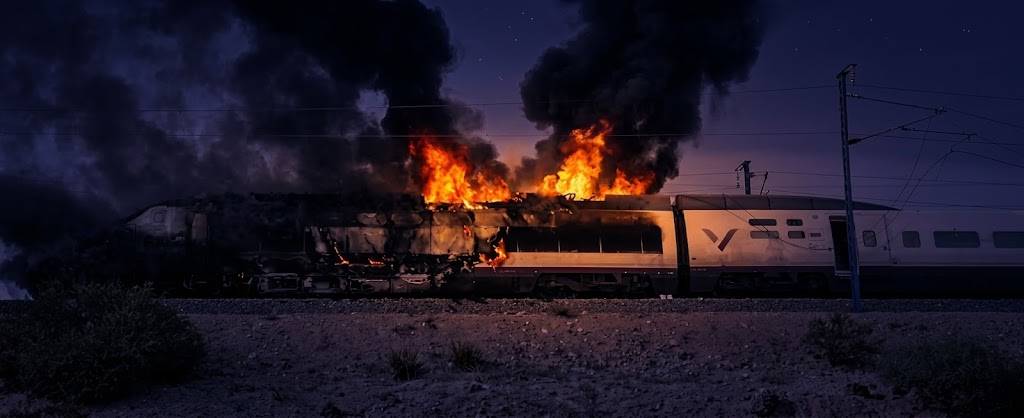
An unexpected mid-afternoon fire aboard a Madrid to Barcelona high-speed train near Ricla, Zaragoza, forced the evacuation of all 283 passengers on Monday, October 12, raising urgent questions about the resilience of Spain’s AVE network.
How an afternoon train fire brought Spain’s busiest high-speed route to a standstill
The incident occurred just after 4:05 p.m., as the Renfe AVE service from Madrid’s Puerta de Atocha to Figueres via Barcelona traveled through Saragossa province. Flames were detected in the rear cabin, triggering an immediate emergency response.
The train, carrying passengers returning from a long weekend, had left Madrid hours earlier but was halted near Ricla. Within minutes, evacuation protocols were activated as firefighters arrived to control the blaze. Despite thick smoke and the risk of fire spread, all passengers exited safely, with no injuries reported in the initial assessment.
Madrid-Barcelona rail traffic halted: what travelers faced during peak disruption
The precautionary shutdown of the AVE line affected thousands of travelers during Spain’s National Day—a period of high mobility following a festive weekend. Trains were stranded across multiple stations, while scheduled departures were canceled without prior notice. Commuters faced forced rerouting, long delays, or uncertainty about reaching their destinations.
The closure highlights how a single technical incident on one of Spain’s most critical rail arteries can cascade into widespread travel chaos, especially on a holiday-affected travel day.
The immediate response: firefighters, evacuation, and post-incident recovery
Emergency teams prioritized passenger safety, ensuring rapid evacuation while suppressing the flames. Firefighters worked quickly to extinguish the fire and assess the damage, allowing teams to begin reviewing the affected section of track once the area was declared safe.
Renfe coordinated support for stranded passengers, offering flexible ticket changes or full refunds. Yet, the company acknowledged it could not immediately estimate how long full service would remain suspended. A gradual resumption followed after safety checks and system reviews were completed.
Why this AVE fire raises serious questions about rail infrastructure safety
While the evacuation was executed flawlessly, the incident underscores critical vulnerabilities in Spain’s high-speed network. Authorities launched an investigation to determine the origin of the fire—whether mechanical failure, electrical fault, or other technical malfunction—and whether existing safety protocols adequately mitigate such risks.
The rear cabin location of the fire triggered concerns about compartmentalization and fire containment in high-speed trains. Could a fire in a less accessible area have led to a more dangerous scenario? Investigators are now examining if design standards and emergency procedures need updating.
As Spain expands its AVE network, the incident serves as a reminder: even the most advanced rail systems are only as safe as their weakest operational link.
Key lessons from the evacuation
- Speed and coordination: The flawless evacuation showcased the importance of real-time emergency response and clear communication between train staff, firefighters, and control centers.
- Disruption ripple effect: A single point of failure in a major transport corridor can paralyze an entire region’s travel plans in minutes.
- Need for transparency: Delayed clarity on service restoration adds to passenger frustration, highlighting the need for accurate, timely updates during crises.
- Long-term infrastructure scrutiny: The fire’s cause remains under review, but even a minor technical flaw can have outsized consequences on high-density routes.
What’s next for Spain’s high-speed rail network?
With the Madrid-Barcelona line gradually returning to service, the real test begins: will this incident prompt structural improvements in safety standards, emergency protocols, or infrastructure design?
Renfe and transportation authorities face growing public pressure to ensure that such an evacuation never becomes a near-miss. The incident has already sparked broader debate on the long-term reliability of Spain’s flagship high-speed rail system.
For now, the question remains: Is Spain’s AVE network truly prepared for the unexpected?