
Why sustainable cities in Benin are not just an environmental choice but a daily necessity
What if the future of Benin’s urban environment wasn’t just about steel and concrete, but about the real, tangible quality of life for millions of citizens? From reliable housing to safe roads, from clean neighborhoods to flood protection — the stakes are high. The FIC 2026 forum in Cotonou didn’t set out to build theoretical cities. It aimed to chart a path where environmental responsibility meets daily convenience, where green policies don’t just sound good in speeches but tangibly improve how people live, work, and move.
The fourth edition of the International Forum on Living Environment (FIC 2026), held from October 8 to 10, 2026, brought together urban planners, policymakers, and innovators around one core question: How can Benin build cities that are not only sustainable but truly serve their people? The forum’s theme, “African Territorial Economies: Accelerating the Transition to Carbon Neutrality,” underscored that sustainability must go beyond emissions targets — it must deliver on the essentials: affordability, accessibility, and habitability.
Urban planning as the backbone of citizen well-being
A city’s true value lies in how it serves its residents every day. When homes, schools, jobs, and services are poorly distributed, commutes become longer, costs rise, and frustration builds. The reverse is also true: thoughtful urban planning can shorten distances, reduce expenses, and improve quality of life.
The mobility challenge is particularly pressing in Benin’s fast-growing cities like Cotonou. Overcrowded streets, limited public transport, and unsafe pedestrian conditions don’t just waste time — they risk lives and limit economic opportunities. Innovative solutions are needed, such as:
- Dedicated bus lanes and priority routes for public transit
- Pedestrian-friendly infrastructure and safe crossings
- Digital platforms for route planning and real-time transit updates
- Decentralization of services to bring jobs and education closer to neighborhoods
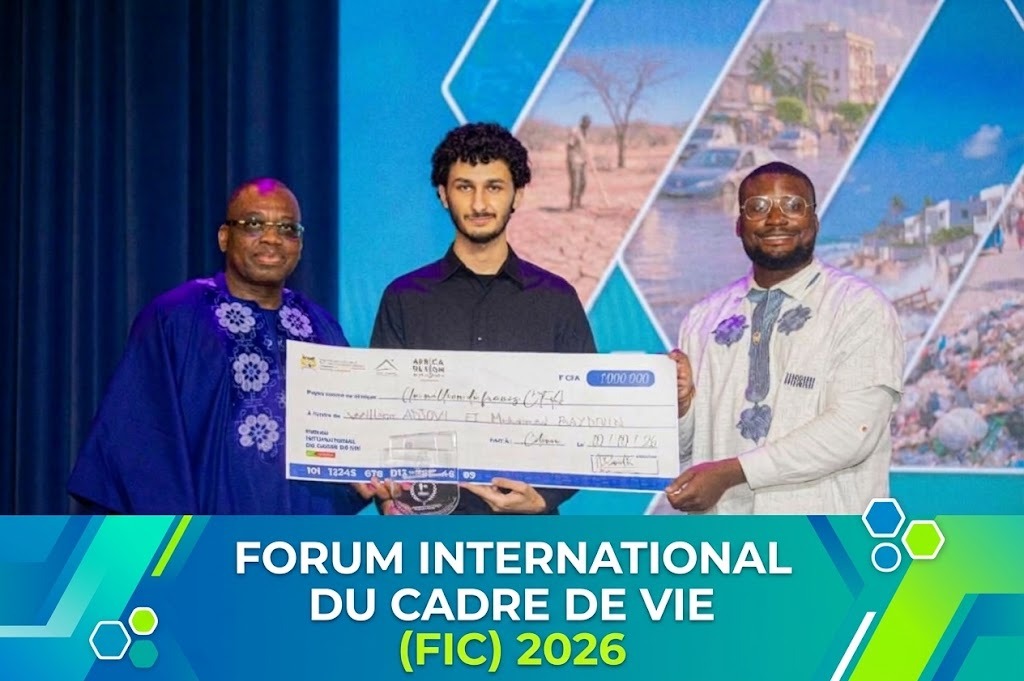
A standout proposal emerged during the FIC 2026 hackathon: the Fifa Bus Stop project, developed by Wilson Edwin Mardochet Adjovi and Mohamed Baydoun. Recognized for its practical approach to urban mobility, the project highlights how young innovators are applying creative thinking to solve real problems faced by commuters.
Housing that’s affordable, durable, and climate-resilient
Shelter is more than four walls and a roof — it’s security, comfort, and a foundation for stability. In Benin, where climate variability and rising costs strain household budgets, sustainable housing must be both eco-friendly and economically viable. That means using local materials — when done right — to support national industries and reduce costs.
Natural materials like compressed earth blocks, bamboo, and stabilized earth can cut construction costs while lowering carbon footprints. But their adoption requires more than goodwill — it needs standards and certification. Without reliable quality control, families risk investing in poorly built homes that won’t last through the rainy season or rising temperatures.
According to Ismail Yasso, Director General of Construction and Housing, standardization is the key to unlocking trust. By certifying local materials, Benin can foster a construction sector that’s not only greener but also more inclusive — creating jobs for artisans, suppliers, and small businesses. The goal isn’t just to build green, but to build smart: affordable homes that stand the test of time and climate.
Clean neighborhoods and flood-proof communities: the cost of inaction
Poor waste management and inadequate drainage systems don’t just create eyesores — they pose serious health and safety risks. In low-lying neighborhoods, heavy rains often lead to flooding, damaging homes, disrupting livelihoods, and increasing disease risks. It’s a cycle of poverty and vulnerability that sustainable urban planning must break.
A holistic approach is essential — one that integrates land use, infrastructure, flood risk mapping, and ecosystem preservation. Wastewater treatment, for instance, remains a critical gap. A winning hackathon project by Nelly Mahouna Gbaguidi and Meryl Agnikpe proposed decentralized sanitation systems tailored to informal settlements, offering a scalable model for cleaner, safer communities.
But technology alone isn’t enough. Effective implementation demands:
- Clear regulatory frameworks for waste collection and disposal
- Investment in drainage networks and retention ponds
- Community engagement to ensure long-term maintenance and behavioral change
- Coordination between local authorities, private contractors, and residents
The reward? Neighbourhoods that breathe easier, streets that stay dry, and families that sleep safer.
Carbon neutrality as an engine for local economic growth
Sustainability isn’t a cost center — it’s a development opportunity. Transitioning to low-carbon cities can unlock new economic pathways: green construction, recycling industries, eco-tourism, and renewable energy integration. These aren’t just environmental initiatives; they’re job creators and skill builders for the next generation.
Young participants at FIC 2026 demonstrated this potential through their innovation. From solar-powered transit hubs to upcycled construction materials, youth-led solutions offer fresh perspectives on urban challenges. Yet, as Ismail Yasso emphasized, ideas must mature beyond hackathons and forums. They need financing, technical support, and policy backing to scale into real services and infrastructure.
For carbon neutrality to deliver real benefits, the focus must shift from planning to execution. Every ton of CO₂ reduced should translate into cleaner air, lower energy bills, and healthier communities — measurable improvements that people can see and feel.
From forum recommendations to neighborhood transformation
The FIC 2026 didn’t end with applause — it ended with a call to action. Speaking at the closing ceremony, Georges Ale, Minister of Living Environment and Transportation, urged participants to turn dialogue into tangible results. “Let’s move from recommendations to responsibilities,” he said. “Each of us must own a piece of this transition.”
He also highlighted a symbolic gesture: tree planting at the public primary school in Fidjrossè. It was a reminder that sustainability begins at the grassroots level — in schools, in homes, and in the daily choices of citizens. But planting trees is only the first step. Long-term success depends on maintenance, monitoring, and community stewardship.
For Benin’s sustainable city vision to succeed, it must deliver on the most basic promise: better lives for its people. That means more than solar panels on rooftops or bike lanes on maps. It means homes that won’t flood, buses that won’t leave neighborhoods stranded, and neighborhoods that don’t choke on waste. It means cities that work — for everyone.
The question is no longer whether Benin can build sustainable cities — it’s whether it can build cities that truly improve daily life.