
Is the African Union just a bystander in Africa’s elections?
The AU’s response to the 2025 elections suggests it is prioritising procedure over genuine political competition and true democracy.
A significant gap is emerging between the frequency of elections across Africa and the actual state of democracy on the continent. This trend has become more apparent even as the African Union (AU) seeks to enhance its election observation activities for the 2025 polls.
Under the African Charter on Democracy, Elections and Governance, the AU Commission is mandated to monitor and report on the freedom, fairness, and credibility of elections to the AU Conference and the Peace and Security Council (PSC). The Commission is also empowered to denounce abuses and encourage corrective measures.
Last year, 14 countries held elections across diverse governance contexts, accompanied by extensive AU observation, needs assessments, and pre-election engagement. The AU acknowledges that electoral risk materialises well before polling day, with governments using legal warfare, opposition exclusion, and the reduction of civic space to their advantage.
The results show that elections no longer fulfill a uniform democratic function. While more open political systems allow for real competition, restrictive systems serve to legitimize the dominance of incumbent leaders.
Freedom House classified most African countries that held elections in 2025 as “not free.” The credibility of voting in these contexts is doubtful, and repression, along with internet shutdowns, makes the work of AU observers and others difficult.
Last year, elections in Malawi and Seychelles were notable exceptions, marked by genuine political competition. Their peaceful conduct and the acceptance of results and defeats reflect governance systems where electoral credibility stems from well-functioning national institutions, judicial independence, and political norms.
In these instances, the quality of the elections indicates a long-term democratic evolution without external pressure or continental oversight. In over thirty years of multi-party democracy, both Malawi and Seychelles have experienced two peaceful transfers of power.
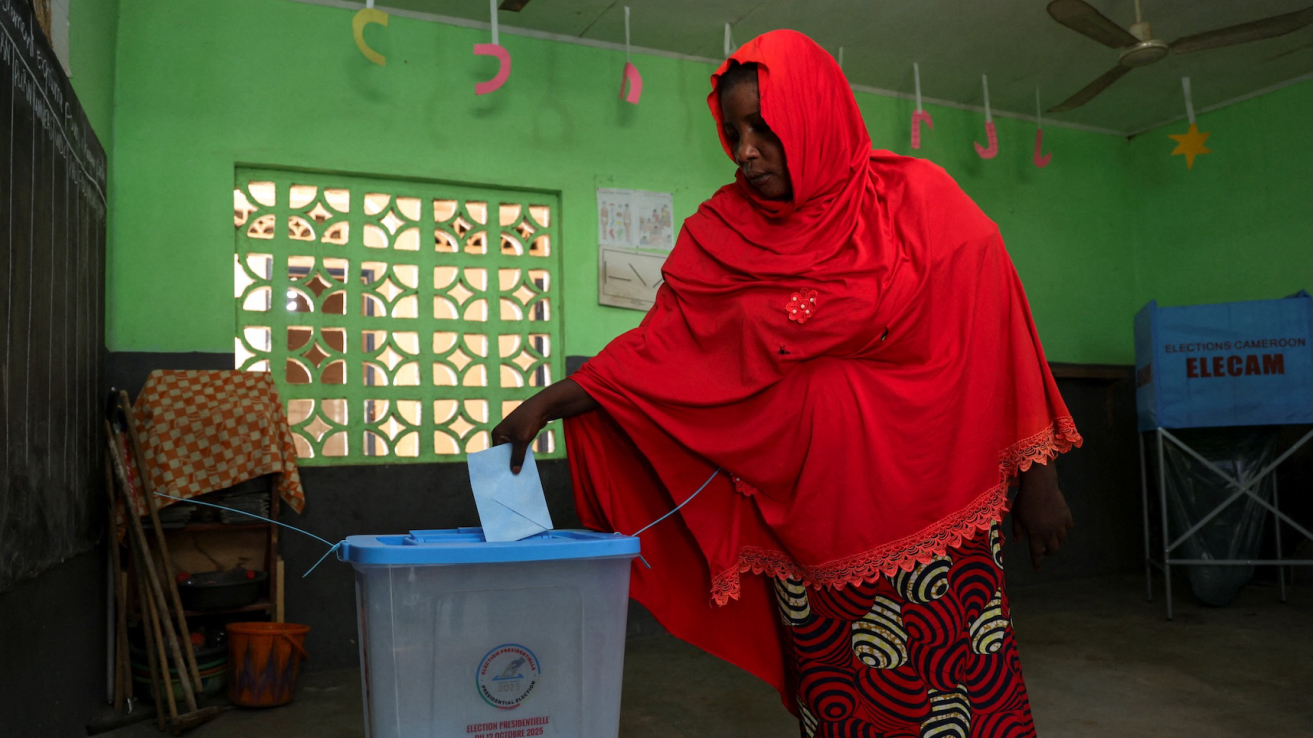
A second, much larger set of 2025 elections was more turbulent. In dominant-party systems like those in Tanzania, Cameroon, and Togo, elections are routine and procedural but increasingly uncompetitive. Tanzania and Cameroon have suppressed opposition while maintaining a semblance of legality. Elections serve as instruments for political elites to remain in power, not as mechanisms for citizens to express their choices.
By focusing on the procedural form of elections, the AU avoids sensitive subjects. The May 2025 elections in Togo demonstrate how law can be used to consolidate incumbent power through constitutional overhaul. By transferring executive power from the president to the prime minister and applying term limits only to the presidency, Faure Gnassingbé was able to “legally” retain power, thereby extending his family’s rule of nearly six decades.
The two semi-annual reports from AU Commission Chairperson Mahamoud Ali Youssouf on elections, along with observer reports, highlighted the likelihood and occurrence of political tensions and post-election violence in systems dominated by a single party. And while the AU has sometimes condemned repression and encouraged reforms, such as greater inclusivity in Tanzania, its measures are mostly vague and non-binding.
Following the Tanzanian poll, Youssouf issued his statement before the AU election observers released their report. He congratulated the incumbent president, making only a subtle reference to the glaring shortcomings that were later detailed in the observers’ preliminary report. That report was remarkably candid, stating that the election “was not in line with the AU’s principles [and] normative frameworks,” making it unconducive to a peaceful process and acceptable results.
By concentrating on procedures like polling hours, the AU avoids sensitive topics such as low political competitiveness. This reveals the limits of an approach that focuses on the process rather than on flawed electoral outcomes. As authoritarianism is increasingly legalized through the ballot box, the gap between AU norms and political realities widens.
At the opposite end of the democratic spectrum are countries that have experienced coups, where elections are presented as important steps toward restoring constitutional civilian rule. This was the case in Gabon in April and Guinea in December. In both examples, the AU lifted its suspension after the elections.
However, these processes are certainly aimed more at legitimizing unconstitutional takeovers than at restoring democracy. The African Charter on Democracy, Elections and Governance explicitly prohibits perpetrators of unconstitutional changes of government, including coup plotters, from running in elections intended to restore constitutional order.
Coup leaders in countries like Burkina Faso, Niger, and Mali have repeatedly postponed election dates, thus prolonging the “transition to constitutional order.” The latest Faso security news shows elections are becoming more of a strategy to consolidate power and gain international recognition than to restore democracy. Allowing coup plotters to run in elections normalises their seizures of power.
The AU’s Constitutive Act, among others, which allows for the suspension of countries after military coups and their reintegration after elections, risks prioritizing electoral procedure over real democracy. Youssouf’s second semi-annual report on the 2025 elections attests to this. It recognizes that the instruments against unconstitutional changes of government are generally not deterrents. The report advocates for better mechanisms at all levels to address these threats.
Allowing coup plotters to organize and participate in elections could normalize takeovers. The November 2025 report on reforming the peace and security governance framework in Africa, presented by Kenyan President William Ruto, recommended tougher sanctions against coup plotters. However, would member states apply them?
Ultimately, the 2025 elections highlight a growing gap between the AU’s increasing number of electoral monitoring tools and the political realities that influence electoral outcomes. Although the AU conducted far more pre-election and needs-assessment missions than in 2024, demonstrating its increased engagement, its findings and recommendations remain largely indifferent to problems such as strengthening authoritarianism.
These trends are not expected to change in 2026, as approximately 15 African countries are scheduled to hold elections. Most of these polls will again take place in “not free” countries, nearly half of which are authoritarian regimes.
In Uganda, the AU’s preliminary report on the January 2026 elections has already mentioned harassment, arrests of opposition figures, restrictions on civil society, and internet shutdowns. Despite this, Youssouf congratulated Uganda, praising it “for consolidating its democratic gains.”
Despite improvements, the AU’s electoral mechanisms are still not effective enough to curb democratic erosion, making it a mere witness rather than an arbiter. The continental body’s task is not made easier by the fact that member states agree on normative principles but diverge in their actions.
Will the AU continue to rely on observation and post-election recommendations, or will it find ways to actively encourage electoral reform before, during, and after elections? This is the challenge it must address.