
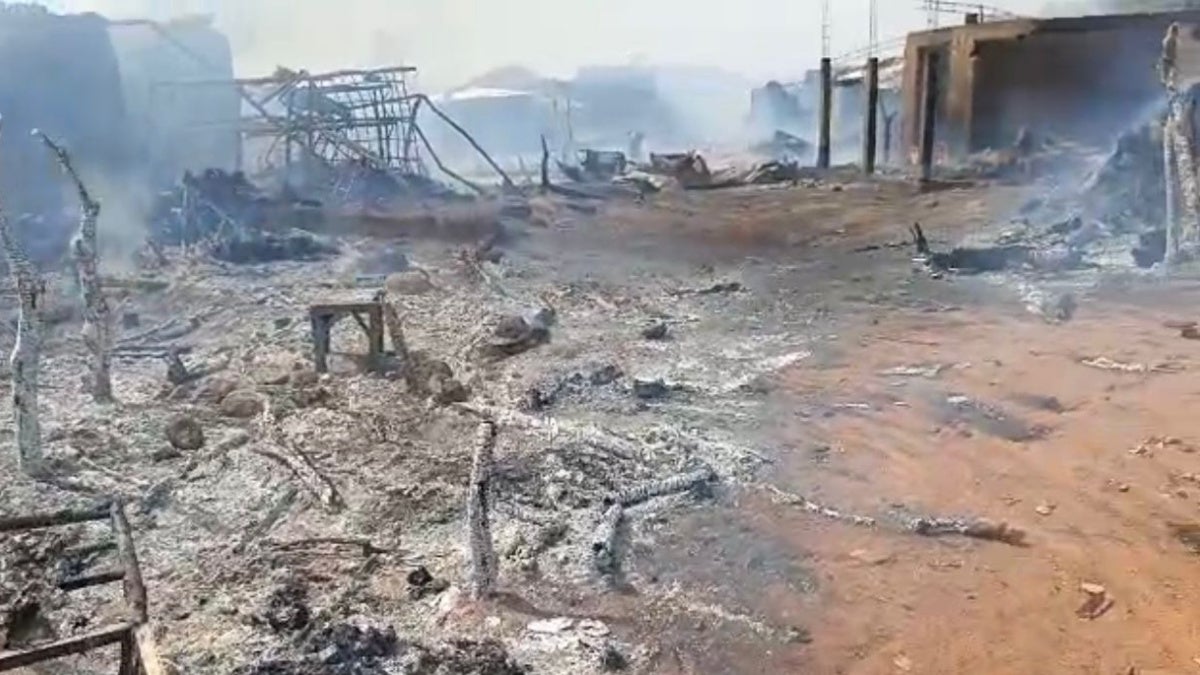
An aerial attack likely carried out by a Nigerien military drone resulted in the deaths of at least 17 civilians, including four children, at a busy marketplace in western Niger on January 6, 2026. Human Rights Watch reported that the strike, which also wounded 13 others, may constitute a war crime due to its indiscriminate nature, violating established laws of armed conflict. While three Islamist insurgents were also killed, the high toll on non-combatants raises serious legal concerns.
Tragedy in the Tillabéri region
The incident occurred in the village of Kokoloko, situated in the Tillabéri region, approximately 120 kilometers from the capital, Niamey, and very close to the Burkina Faso border. Local residents noted that the Islamic State in the Sahel (EIS) has been active in the Kokoloko area for years. Since 2019, various armed Islamist groups have frequently targeted both military personnel and civilians across Niger.
“The military operation in Niger successfully targeted three insurgents but at the cost of numerous civilian lives at a public market,” stated Ilaria Allegrozzi, a senior Sahel researcher. “It is imperative that the authorities in Niger conduct a transparent, neutral investigation, hold those responsible accountable, and provide fair restitution to the grieving families.”
Evidence and testimonies
To document the event, investigators spoke with 15 individuals, including six direct witnesses and nine experts from international and local NGOs. The investigation also involved the analysis and geolocation of three videos showing the aftermath, alongside high-resolution satellite imagery. Despite inquiries sent to the military junta that seized power in July 2023, the government has remained silent regarding the strike.
Witnesses observed a white drone circling Kokoloko twice before it released a munition around 1:30 PM. At that time, the market was filled with hundreds of people, including women selling food and children playing nearby. One merchant described hearing a whistling sound followed by a massive explosion that tore through the crowded stalls.
- Casualties: 17 civilians dead (11 women, 2 men, 4 children).
- Injuries: 13 people wounded (4 women, 7 men, 2 children).
- Displacement: Nearly 1,200 residents fled to neighboring areas or across the border into Mali.
Analysis of the strike
While the exact type of munition remains unconfirmed, the Niger military has recently updated its arsenal with Turkish-made drones, such as the Bayraktar TB-2, Karayel-SU, and Aksungur UCAV. These platforms are typically equipped with advanced sensors and precision-guided weapons. However, witnesses reported that the explosion caused massive fires, fueled by wood and gasoline at the market, which charred bodies beyond recognition.
Satellite data from NASA’s FIRMS confirmed active fires in Kokoloko exactly at the time of the reported strike. Imagery from the following days showed extensive burn scars along the village’s main thoroughfare. Survivors described a harrowing scene where EIS fighters eventually helped locals gather remains for burial in mass graves.
Legal implications and patterns of violence
Under international humanitarian law, combatants must always distinguish between military targets and civilians. Using explosive weapons in a densely populated market is considered an indiscriminate attack. If such actions are taken with reckless or deliberate intent, they qualify as war crimes. The Tillabéri region has become a flashpoint for such violence, with the highest number of civilian casualties in the central Sahel recorded in 2025.
This is not an isolated incident. In September 2025, an airstrike in Injar reportedly killed over 30 civilians, and a similar event occurred in Tiawa in early 2024. Advocates are calling on foreign governments that provide military support to Niger to demand better safeguards for local populations and to ensure that victims of these tragedies receive the medical and financial support they deserve.