
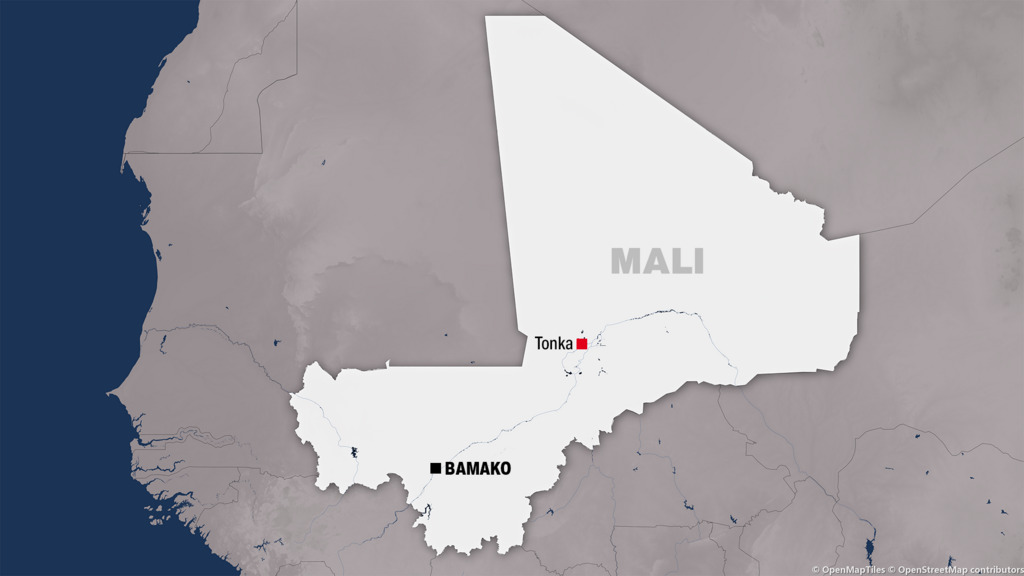
In the heart of the Tombouctou region, the town of Tonka has once again become the scene of a brutal jihadist attack. This time, the victim was Abdoul Salam Maïga, a respected Quranic teacher whose life was cut short in broad daylight. Witnesses recount how armed militants from the Jama’at Nusrat al-Islam wal Muslimin (JNIM) stormed the gathering, dragging him away under the guise of questioning before executing him publicly.
Religious or political motives? The motives behind the murder remain unclear
Local notables, who spoke on condition of anonymity, suggest multiple possible explanations for the killing. Some speculate it may have been tied to religious disputes, with rumors circulating that Maïga may have refused to cooperate with the militants. However, the prevailing belief among residents points to a different motive: his alleged ties to Malian security forces. This follows a pattern of targeted assassinations in the region, including the high-profile killings of a young social media influencer and a local youth leader in recent months.
Tonka under siege: a community gripped by fear
The string of targeted killings has left the community in a state of shock. Residents in Tonka, as well as nearby towns like Diré, Goundam, and Tombouctou, describe a growing climate of terror. «The people here are terrified,» shared a local resident. «Every time someone is taken away, we fear it will be the last time we see them alive.» The assassinations have not only claimed lives but also eroded trust within the community, leaving families afraid to speak out or seek justice.
Escalating violence in Mali’s northern regions
Tonka, once a relatively stable area, has become a hotspot for jihadist activity. The recent spate of killings highlights the increasing boldness of armed groups operating in the Tombouctou region. Authorities have yet to respond publicly to the latest attack, but the pattern of violence suggests a coordinated effort to destabilize local governance and instill fear among civilians. With no military presence in Tonka, residents feel abandoned, caught between the demands of armed groups and the absence of state protection.