Kémi Séba and the twisted face of modern pan-africanism
The imminent ruling of the South African court on Kémi Séba’s fate has reignited debates about his role as a modern pan-African icon. The activist, with over 1.5 million social media followers, was arrested in April while attempting to enter Zimbabwe. Writer Venance Konan examines whether Séba truly embodies pan-African ideals or merely represents a distorted version of the movement.

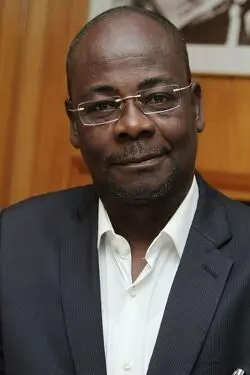
Kémi Séba at the Pretoria court on April 20th
As judicial proceedings unfold, questions arise about Séba’s alliances. The activist, who holds both Bénin and Niger passports, was detained alongside his 18-year-old son and François Van der Merwe, a South African white supremacist nostalgic for apartheid. Their alleged plan? An illegal crossing into Zimbabwe, potentially continuing to Europe.
Bénin has charged Séba with “incitement to rebellion and glorification of state security crimes” after he publicly backed soldiers involved in a failed December coup. An international arrest warrant has been issued. Yet Séba’s controversial stances—anti-French, anti-Franc CFA, and antisemitic—have overshadowed his pan-African activism, including his role as president of the NGO Urgences panafricanistes.
Russian propaganda and support for Sahel dictators
Séba joins figures like Franklin Nyamsi and Nathalie Yamb, vocal pan-Africanists in Francophone Africa who oppose French influence but align with Russian interests. All three actively support the military juntas of the Alliance of Sahel States (AES)—Assimi Goïta (Mali), Ibrahim Traoré (Burkina Faso), and Abdourahamane Tiani (Niger)—while rejecting democracy. Has modern pan-Africanism reduced itself to replacing French dominance with Russian?
The evolution of pan-Africanism: from liberation to disillusionment
Pan-Africanism emerged in the early 20th century among Black intellectuals in the Americas and Caribbean, later fueling anti-colonial struggles across Africa. Leaders like Kwame Nkrumah, Sékou Touré, and Patrice Lumumba championed unity, self-determination, and economic cooperation. The Fédération des étudiants d’Afrique noire en France (FEANF) became a key platform for this ideology, advocating decolonization until its dissolution in 1980.
Post-independence, pan-Africanism struggled to transcend micro-nationalisms. Attempts at unification, such as Muammar Gaddafi’s push for an African Union in 2002, failed. The New Partnership for Africa’s Development (NEPAD), launched in 2001, faded into obscurity. Today, pan-Africanism often serves as a political label rather than a transformative force.
From civil wars to xenophobia: the contradictions of today’s Africa
While African nations denounce colonialism, they frequently turn against their own people. South Africa deports migrants, while West African states—despite CEDEAO’s goals—engage in diplomatic standoffs. Even self-proclaimed pan-African leaders like Laurent Gbagbo (PPA-CI, Côte d’Ivoire) or the PASTEF party in Sénégal prioritize domestic agendas over continental unity.
The urgent need for genuine pan-Africanism
Who remains of the original pan-African vision? Séba, Nyamsi, and Yamb dominate social media with anti-Western rhetoric, yet their ties to Russian influence and authoritarian regimes expose a hollow agenda. A leaked conversation suggests Nyamsi and Yamb may even serve Togo’s Faure Gnassingbé—a far cry from liberation. Séba himself has reportedly lamented losing his French citizenship, revealing his priorities.
True pan-Africanism demands more than slogans. As global powers exploit Africa’s divisions, the continent’s survival hinges on authentic unity—urgently.