
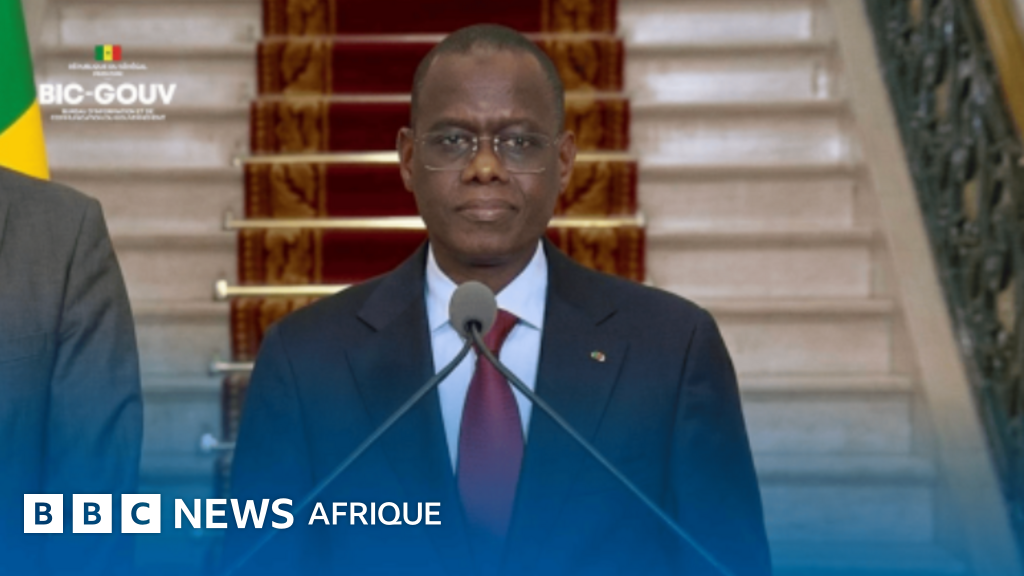
The newly unveiled government in Sénégal marks a pivotal moment for the nation, as President Bassirou Diomaye Faye reshapes the executive team to tackle urgent economic and political challenges. Ten days after dismissing former Prime Minister Ousmane Sonko, the administration led by Prime Minister Ahmadou Al Amine Mohamed Lo now faces the task of steering the country through a complex landscape of soaring debt and social unrest.
The 30-member cabinet—comprising 26 ministers and four deputy ministers—includes just four women, none of whom hold sovereignty portfolios. This composition arrives amid heightened tensions, with the PASTEF party boycotting participation due to deep disagreements over governance direction, exacerbating an already delicate parliamentary balance.
a government without parliamentary majority
Hours before the cabinet was announced, PASTEF reiterated its refusal to join the government, citing fundamental differences with the administration. Prominent party figures such as Birame Souley Diop (Energy), Yacine Fall (Justice), and Amadou Ba (Culture) exited the government in line with party directives, while others were retained despite the boycott—including Balla Moussa Fofana (Urban Planning), Yancoba Diémé (Defense), and Ibrahima Sy (Health). Cheikh Diba’s retention in Finance—now expanded to include Economy and Planning—further underscores the strategic continuity in economic portfolios.
New faces from PASTEF also entered the cabinet, aligning with allies of Sonko: Cheikh Tidiane Dieye (Sanitation), Déthie Fall (Infrastructure), Moustapha Guirassy (National Education), and Mamadou Lamine Dianté (Civil Service). Boubacar Camara assumed the Ministry of Higher Education, Research, and Innovation, while coalition allies secured key roles, such as El Hadj Abdourahmane Diouf at Energy and Petroleum. Legal expert Me Moussa Sarr took charge of Justice.
underrepresentation of women in governance
With only four women among 30 cabinet members—down from five in the previous 31-person team—critics highlight a stark gender imbalance. Three hold full ministerial posts, while one serves as a deputy minister. The appointees include Marie Angélique Mame Selbé Diouf (Family and Social Action), Djirèye Clotilde Coly (Sports and Youth), Ami Mara (Fisheries and Maritime Economy), and Mame Coumba Diop (Culture, Creative Industries, and Historical Heritage).
Women’s rights advocates have condemned this limited representation. Dr. Coumba Mar Gadio of the African Women Leaders Network-Sénégal stated that the configuration “fails to reflect either the demographic weight or the expertise of women in strategic sectors.” She urged corrective measures to strengthen female participation in decision-making, emphasizing that “several ministries could benefit from their skills and experience.”
Despite a 2010 parity law aimed at ensuring gender equality in elected institutions, its application remains confined to electoral contexts, leaving governance appointments largely unaffected.
debt crisis and IMF negotiations loom large
Sénégal is burdened by a colossal debt, compounded by a hidden liability exceeding $7 billion inherited from the previous administration. The issue has fueled tensions between President Faye and former Prime Minister Sonko during coalition talks. Economists warn that the country’s economic outlook—marked by sluggish growth (projected at just 2.2–2.5% for 2026), rising unemployment, and social unrest—demands urgent restructuring.
Amath Ndiaye, an economist at the University Cheikh Anta Diop of Dakar, notes that “it appears we are heading toward a new direction on debt management.” He stresses the necessity of reaching an agreement with the IMF to restructure the debt sustainably, acknowledging the government’s dual challenge: securing financial relief while addressing public demands for reduced living costs, improved services, and job creation.
“The government is caught between two contradictory imperatives,” Ndiaye explains. “On one hand, negotiating with the IMF for debt reprofiling risks reducing subsidies and straining public services. On the other, failing to act risks deepening social and economic instability.”
an unprecedented political landscape
The political configuration in Sénégal is described as “unprecedented” by Moussa Diaw, emeritus professor of Political Science at the University Gaston Berger of Saint-Louis. The current scenario stems from a rift between the legislative majority—dominated by PASTEF following the November 2024 elections—and a presidency aligned with the same party but now governing in opposition to its parliamentary base.
Diaw attributes the divide to fundamental disagreements over governance priorities, including debt resolution, accountability, and justice for victims of the 2021–2024 protests, which claimed over 80 lives. “There is no longer consensus on the political direction needed to address these critical issues,” he observes.
The result is a de facto cohabitation: a president without a parliamentary majority attempting to govern by broadening alliances, while a dominant legislature—led by Sonko—sets conditions for collaboration that have yet to materialize. Diaw warns that without careful navigation, this dynamic risks institutional gridlock and a broader crisis.
“A government without a majority is inherently weakened,” he states. “Prime Minister Al Aminou Lo cannot afford to take bold initiatives that diverge from the parliamentary majority’s agenda. He must avoid power struggles and focus on pragmatic governance.”
a constitutional framework for stability
In Diaw’s view, the stability of Sénégal hinges on the President and the National Assembly president upholding the constitution and prioritizing national interests over partisan agendas. Each institution must exercise its constitutional prerogatives responsibly to prevent conflict at the highest levels of the state.
“Both institutions are essential for the country’s stability,” he emphasizes. “The presidency and parliament each have defined roles, and their leaders must act with courage and patriotism to ensure the institutions function smoothly.”
Diaw calls for dialogue, restraint, and a shared commitment to Sénégal’s higher interests, warning that politicized ambitions could trigger tensions and paralyze governance in an already fragile economic climate.