
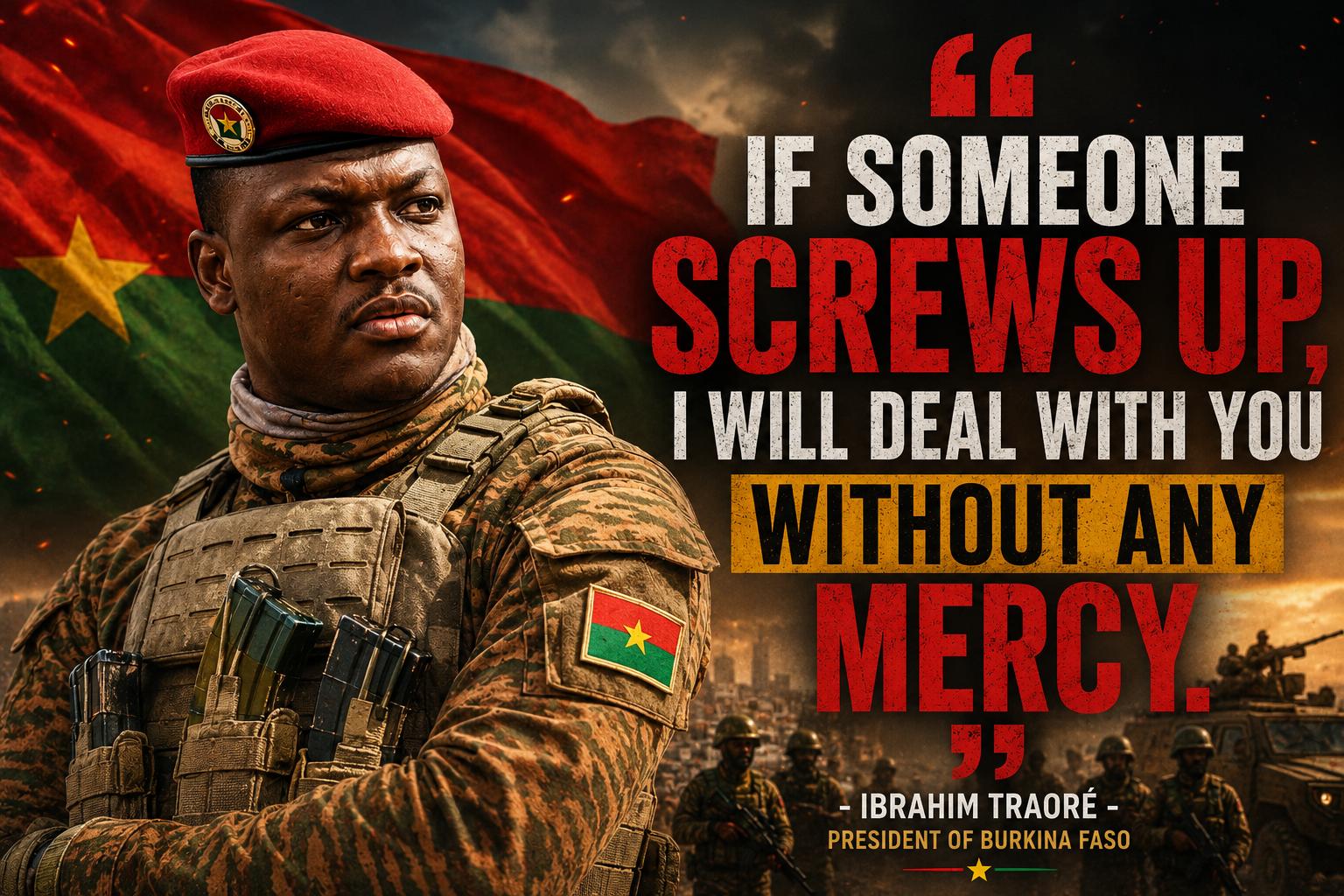
While Captain Ibrahim Traoré’s bold rhetoric echoes across Burkina Faso—“If someone screws up, I’ll crush them without hesitation”—a quieter but fierce power struggle simmers beneath the surface of the military and transitional government.
The captain’s uncompromising stance may project strength, yet it also reveals deep-seated divisions within the armed forces. Whispers of internal destabilization and command disputes have grown louder, exposing a fragile foundation beneath the junta’s authority.
Fractures within the ranks
Since the September 2022 coup, cohesion among the armed forces has become a critical concern. Disagreements have flared over territorial security operations and the distribution of leadership roles, while persistent battlefield setbacks against armed groups have strained command structures. These mounting pressures have fueled frustration and factional infighting, eroding trust between key military units and even among senior officers.
Some commanders openly question the tactical decisions and political direction guiding the transition, adding to the growing sense of instability.
Security paranoia and internal crackdowns
In response to these rumblings, presidential intelligence services have escalated surveillance and monitoring of officers and non-commissioned officers deemed disloyal or indecisive. Several recent arrests and dismissals underscore the regime’s determination to preempt any dissent before it gains momentum.
This climate of pervasive suspicion forces military leaders to publicly pledge allegiance, even as covert debates about the transition’s future continue to stir unrest in barracks across the country.
The urgency of unity amid rising instability
For Captain Ibrahim Traoré, quelling internal rivalries is not just a priority—it’s a necessity to preserve state stability. In a landscape where even the smallest fissure at the top can be exploited by adversaries or external actors, the junta’s leadership is tightening its grip, wielding harsh rhetoric as a tool to deter rebellion.