

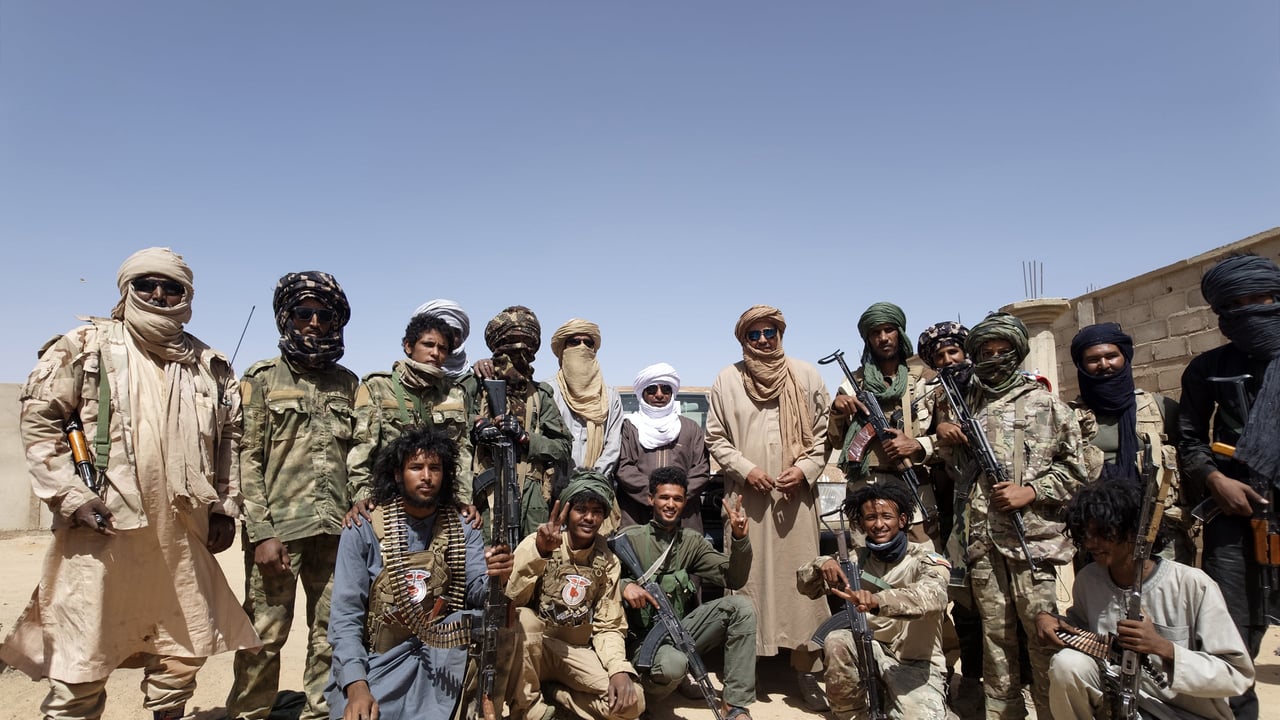
In the heart of northern Mali, the city of Kidal stands as a stark reminder of the region’s unresolved conflict. Once a strategic stronghold, it now embodies the persistent instability that has plagued the area for years. Recent developments have only deepened the sense of unease among residents and observers alike.

An atmosphere of tension and uncertainty
The city of Kidal, long considered a focal point of rebellion, continues to simmer with tension. Despite periodic military interventions, the region remains mired in conflict, with armed factions maintaining a visible presence. The streets, once bustling with daily activity, now reflect a community on edge, navigating the delicate balance between survival and resistance.
Local leaders, including prominent figures such as Alghabass Ag Intalla, head of the Front de libération de l’Azawad (FLA), have become central to the ongoing narrative of the region. Their actions and statements are closely scrutinized, as they navigate a complex web of alliances and rivalries that define the conflict’s trajectory.
Military presence and shifting dynamics
The Malian military, alongside allied forces, has sought to assert control over the area, but the situation remains fluid. Reports from the ground indicate that clashes persist, with sporadic outbreaks of violence disrupting any sense of stability. The rugged terrain of northern Mali further complicates efforts to establish lasting peace, allowing armed groups to regroup and launch attacks with relative ease.
Residents describe a climate of fear, where the threat of violence looms large. Many have adapted to a life of vigilance, where the sound of gunfire or the sight of armed patrols can trigger immediate responses. The psychological toll on the population is palpable, as families grapple with the constant uncertainty of what the next day might bring.
Humanitarian crisis and resilience
Beyond the immediate security concerns, Kidal faces severe humanitarian challenges. Access to essential services such as healthcare, education, and food remains severely limited. International aid organizations have struggled to operate effectively in the region, hindered by ongoing hostilities and logistical barriers. Despite these obstacles, local communities continue to demonstrate remarkable resilience, finding ways to support one another in the face of adversity.
The international community’s role in addressing the crisis has been a subject of debate. While some advocate for increased intervention, others emphasize the importance of local solutions tailored to the unique dynamics of the region. The path to stability in northern Mali remains uncertain, but the determination of its people offers a glimmer of hope amidst the chaos.
Key players in the conflict
- Alghabass Ag Intalla: Leader of the FLA, a key figure in the region’s political and military landscape.
- Iyad Ag Ghaly: A prominent leader associated with armed factions, whose influence extends across northern Mali.
- Assimi Goïta: Head of the Malian transitional government, tasked with restoring stability and security in the country.