

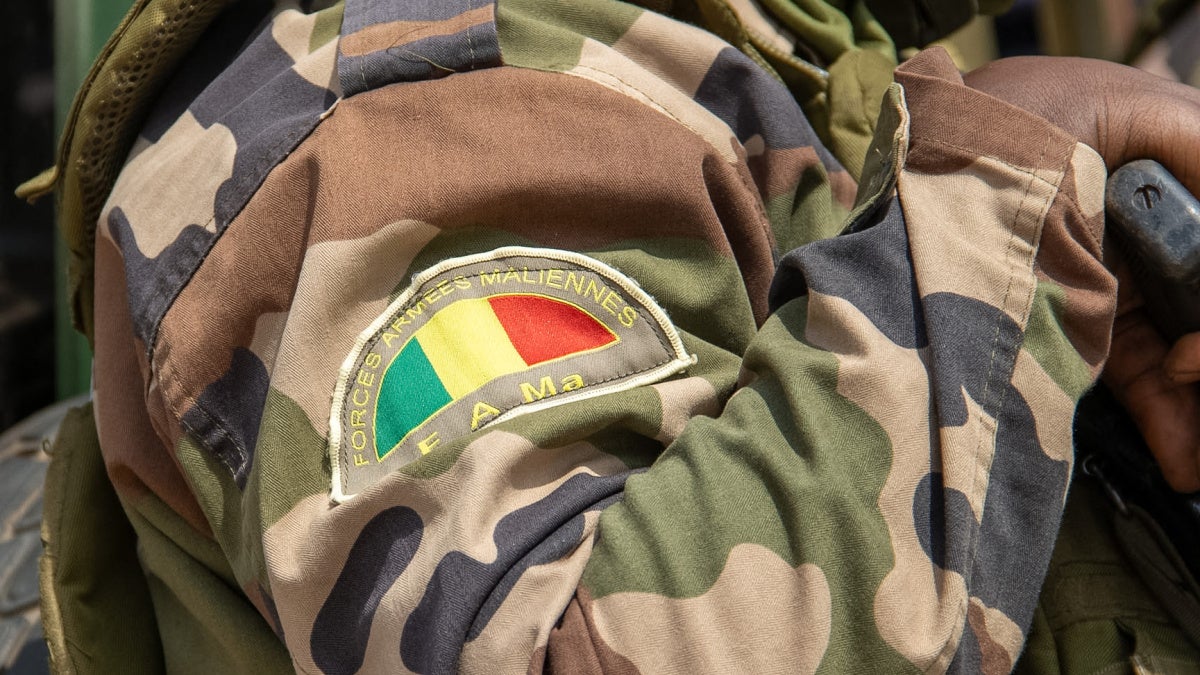
Civilian massacres linked to alleged military-militia operations in central Mali
The Malian military, alongside allied militias, stands accused of executing at least 31 civilians and torching homes in two villages in the Ségou region during early October, according to detailed accounts from survivors and local witnesses. The incidents, occurring on October 2 and 13, unfolded in villages under the influence of the Group for the Support of Islam and Muslims (GSIM), an Al-Qaeda-affiliated armed faction.
On October 2, soldiers and members of the Dozos—traditional hunters primarily from the Bambara ethnic group who have participated in counterinsurgency efforts for over a decade—entered Kamona village around 10 a.m. in seven pick-ups and three armored vehicles, accompanied by motorized Dozos. Survivors reported that GSIM fighters had warned locals of the approaching forces, prompting many to flee. Those unable to escape were rounded up and executed, witnesses stated.
« People who couldn’t run were gathered and shot dead, » recounted a survivor who hid with his 9-year-old daughter in an abandoned house. By 4 p.m., he discovered 17 bodies under a tree, including those of 17 men aged 20 to 65, along with shell casings scattered nearby. Four additional bodies were found north of Kamona, all bearing gunshot wounds to the head and torso. Villagers provided a list of 21 victims, though some believe the toll may be higher due to unconfirmed reports of additional deaths in surrounding areas.
The attackers allegedly burned at least 10 huts and three storehouses belonging to Fulani ethnic residents. A 40-year-old herder described the scene: « One victim’s skull was completely shattered, and the bodies were riddled with bullets. »
Second attack: Balle village under siege
On October 13, soldiers in five pick-ups and Dozos on 30 motorcycles entered Balle village around 1 p.m., triggering panic among residents. A 24-year-old man recounted: « I didn’t flee immediately, but when I saw soldiers going door-to-door and assaulting men, I escaped. From my hiding place, I heard gunfire. »
Witnesses reported that soldiers and Dozos killed 10 civilians, including a 55-year-old woman, and nine men aged 22 to 67. The assailants also stole over 100 cattle. A 33-year-old man found the bodies scattered in the village center: « They were lined up, all shot. Some had broken limbs. »
The victim’s 21-year-old daughter witnessed her mother’s killing. « My mother shouted at the soldiers, accusing them of abusing villagers, » she said. « They took her to where the men were gathered and shot her. »
Military’s version contradicts witness accounts
The Malian military’s chief of staff claimed in a statement that a « reconnaissance operation » on October 13 near Balle resulted in the « neutralization » of « about twenty terrorists » and the seizure of military equipment. However, locals disputed this, asserting that Balle had been under GSIM control for years. « We pay *zakat* annually, and disputes are resolved by the jihadists, » said one resident. « There are no soldiers or police here. The army doesn’t distinguish between us and them. »
These attacks followed a GSIM siege on Bamako in early September, which disrupted fuel supplies and forced the military junta to temporarily close all schools and universities in the capital. The escalation has intensified the already dire humanitarian crisis in Mali, displacing over 402,000 people since 2012, according to relief agencies.
International humanitarian law prohibits attacks on civilians, summary executions, and torture. Parties involved in the conflict—including the Malian military, militias, and armed groups like GSIM—are bound by these laws. While Mali withdrew from the International Criminal Court (ICC) in September 2025, it remains subject to the court’s jurisdiction until September 2026. The ICC has investigated alleged war crimes in Mali since 2012.
The African Union (AU) has faced criticism for its limited response to the deteriorating conflict, despite its mandate to uphold peace and security. Human rights advocates urge the AU’s Peace and Security Council to prioritize accountability, including through diplomatic pressure and coordinated regional actions.
« The AU must make Mali a top priority, » stressed a senior Sahel researcher. « Regular briefings, strengthened diplomacy, and coordinated international efforts are essential to ensure justice for victims of abuses by all parties. »