
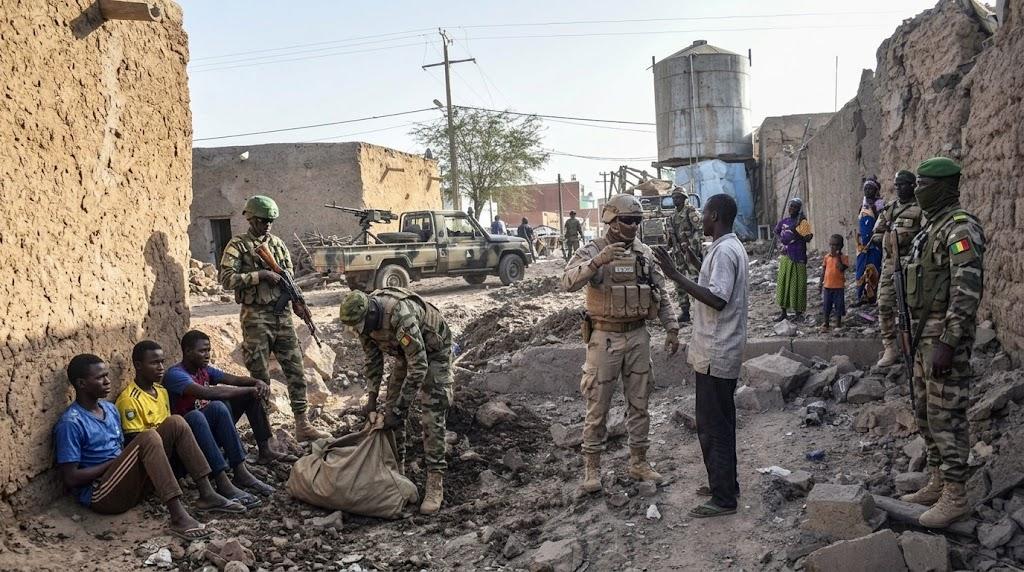
When acknowledgment isn’t enough: why Mali’s military remains silent on civilian deaths
The Malian army’s latest statement is a masterclass in brevity—and opacity. On October 14, 2026, the General Staff acknowledged a “tragic incident” in a military operation zone, confirming human losses and injuries but offering no details on location, date, casualty figures, or the circumstances behind the event. The terse announcement arrives amid rising reports of deadly airstrikes in central Mali and mounting accusations of human rights violations tied to both Malian forces and their foreign partners.
For families in Zanakoro, a village in the Ségou region, the timing feels less like coincidence and more like a cruel echo. On October 12, just two days before the army’s statement, airstrikes struck a community gathering, killing at least eight people—primarily women and children, including a pregnant woman and three girls under ten. A dozen others suffered life-threatening injuries, with some local sources suggesting the toll could be even higher. Survivors described a relentless barrage that reduced homes to rubble and sent terrified families fleeing into the surrounding bush and neighboring villages.
Yet the army’s communiqué stops short of confirming whether Zanakoro was the site of the incident. Without official verification or an independent investigation, the connection remains speculative. But for those burying their dead and tending to the wounded, the absence of clarity isn’t just frustrating—it’s a barrier to justice.
From Wagner to Africa Corps: a familiar pattern of unanswered allegations
The transition from Wagner Group to Africa Corps was supposed to bring change. Officially under Moscow’s command since 2025, this Russian-backed force has taken over where Wagner left off, supporting Mali’s military operations. But if the name has changed, the accusations haven’t. Human rights organizations warn that the pattern of civilian harm persists—often with impunity.
Amnesty International’s latest report, published in late September 2026, documents seven incidents between June 2023 and December 2025 along the Mauritanian border. In these cases, 34 civilians—including members of the Fulani, Tuareg, and Arab communities—were allegedly killed. Methods included shootings, throat-cutting, and burning. The report also details claims of torture, arbitrary detentions, forced disappearances, looting, and property destruction. Many victims were reportedly targeted based on mere suspicion of supporting armed groups, with little to no evidence.
These findings mirror earlier patterns documented by Human Rights Watch. In July 2026, the organization reported that eight civilians, including three children, were killed in airstrikes attributed to Africa Corps in the village of Kyrnia, Mopti region. Two bombs struck near a village chief’s residence and a livestock market, raising serious concerns about indiscriminate targeting. With armed groups active in the area, the strikes appeared to lack clear military objectives—and sparked urgent questions about proportionality and distinction.
The cost of silence: why transparency isn’t optional in Mali
Mali faces real security threats. Jihadist groups like JNIM have inflicted heavy civilian casualties, displaced thousands, and crippled local economies. The government has every right—and duty—to defend its people. But that responsibility doesn’t end at the edge of the battlefield. International humanitarian law demands strict adherence to principles of distinction, proportionality, and precaution. Civilians are not collateral damage. They are protected persons whose lives matter.
When civilian harm occurs, transparency isn’t a political favor—it’s a legal and moral obligation. Authorities must answer basic questions: Where did the incident occur? When? How many were killed or injured? Were they civilians? Was an independent investigation launched? Have families been informed? Without answers, trust erodes. And where trust erodes, impunity thrives.
Zanakoro’s shadow: the unanswered questions that haunt a nation
The army’s acknowledgment of a “tragic incident” is a rare admission. But it’s also a half-truth. It confirms harm without explaining how, why, or by whose hand. For the people of Zanakoro, this silence is deafening. Their loved ones are dead. Their homes are destroyed. Their community is fractured. And still, they wait for answers that never come.
The questions pile up: Was Zanakoro the site of the October 14 incident? If so, why not say so? If not, where—and when—did the tragedy unfold? How many were killed? Who were they? Were any investigations opened? Did the military take precautions to avoid civilian harm? Without clarity, accountability remains impossible. And without accountability, the cycle of violence continues.
Can Mali break the cycle of violence and impunity?
The path forward is clear: independent investigations, full transparency, and meaningful accountability. The army’s acknowledgment must be more than a statement—it must be the first step toward truth. Families deserve to know what happened to their loved ones. Survivors deserve reparations. And all Malians deserve to live without fear of being caught in the crossfire of secrecy.
Zanakoro’s dead can’t be brought back. But if Mali chooses silence over answers, more names will be added to the list. The choice isn’t between security and rights—it’s between enduring the shadows of war or stepping into the light of justice.