
Can Russian military support alone restore stability to Mali?
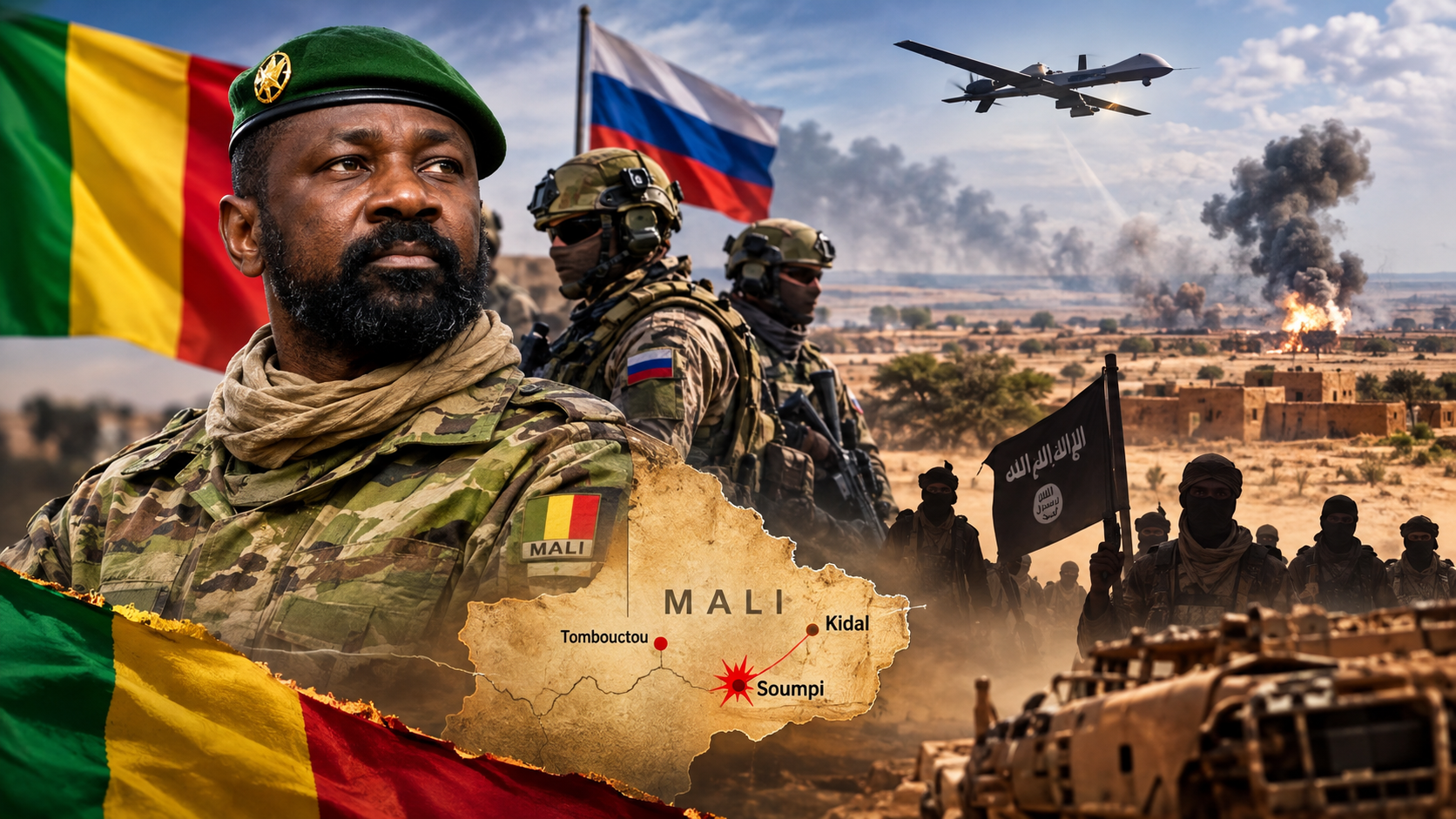
The October 10, 2026 drone attack on Malian and Africa Corps positions in Soumpi, near Tombouctou, has reignited a critical debate. After more than four years of persistent insecurity, can Bamako realistically achieve stability by relying primarily on its Russian military partnership?
Under the leadership of Colonel Assimi Goïta, Mali has reframed its security strategy around shifting away from Western partners toward Moscow. While presented as a move toward sovereignty, the continued vulnerability of military positions and the frequency of attacks raise pressing questions about the tangible benefits of this pivot.
This latest incident does not conclusively determine the fate of Malian-Russian military cooperation, but it does underscore an uncomfortable truth: foreign military support, in itself, cannot ensure the end of insurgency or the restoration of lasting peace.
What has the Russian partnership delivered so far?
The cooperation between Mali and Russia has provided tangible assets modernized equipment, tactical training, and operational support. Yet, as recent events demonstrate, these contributions have not translated into sustainable security for the population. The October 6 recapture of Kidal, achieved with Russian-backed forces, represents a symbolic victory but not a decisive turning point in the struggle against armed groups.
Drone strikes near Soumpi shortly afterward serve as a stark reminder of how fragile stability remains. Despite years of collaboration, Malian forces and their allies continue to face targeted attacks. What, then, explains this vulnerability? And what does it say about the long-term effectiveness of external military partnerships?
Beyond military assistance: Is Mali building its own security foundation?
A robust and lasting solution to Mali’s crisis cannot rest solely on the presence of foreign troops or contractors. While Russian support offers valuable capabilities, it must complement not replace a coherent national security strategy. The critical questions are not about sovereignty rhetoric or foreign power rivalries, but about Mali’s own preparedness:
Have Malian forces developed the operational independence and skills to maintain control over recovered territories?
Can civilians return to their villages without fear of recurring violence?
Are governance and public services functioning reliably in areas retaken from armed groups?
Has Mali invested in intelligence networks and community-based solutions to address the roots of insecurity?
These are the benchmarks of genuine progress not the mere presence of foreign allies.
The untold costs of military cooperation
The debate must also address the economic dimension of the Malian-Russian partnership. While the primary goal remains security, the involvement of private military companies raises concerns about transparency and accountability. Contracts, costs, and operational transparency must be publicly scrutinized to ensure they serve Malian interests, not foreign profit motives.
It is essential to distinguish between legitimate security assistance and arrangements that may prolong instability for financial gain. However, any such critique must be evidence-based and grounded in verifiable data not speculative accusations.
A call for Mali-centered solutions
Colonel Goïta’s administration faces a pivotal moment. Security cannot be measured by the volume of foreign firepower or the frequency of military announcements. True success lies in restoring civilian safety, enabling displaced populations to return, and fostering inclusive governance.
The October attack in Soumpi is not a verdict on Russian cooperation it is a warning. Mali must now prioritize long-term strategies: strengthening its national defense institutions, improving local intelligence, engaging communities in reconciliation, and investing in reconstruction. Military partnerships can assist, but they cannot substitute for a Malian-led vision of peace.
The fate of the country should not be decided in foreign capitals, nor should security be contingent on the interests of external actors. The people of Mali deserve a future defined by stability, dignity, and self-determination—one built by Malians, for Malians.
By Yvette Tchuente — Journaliste / Rédacteur