

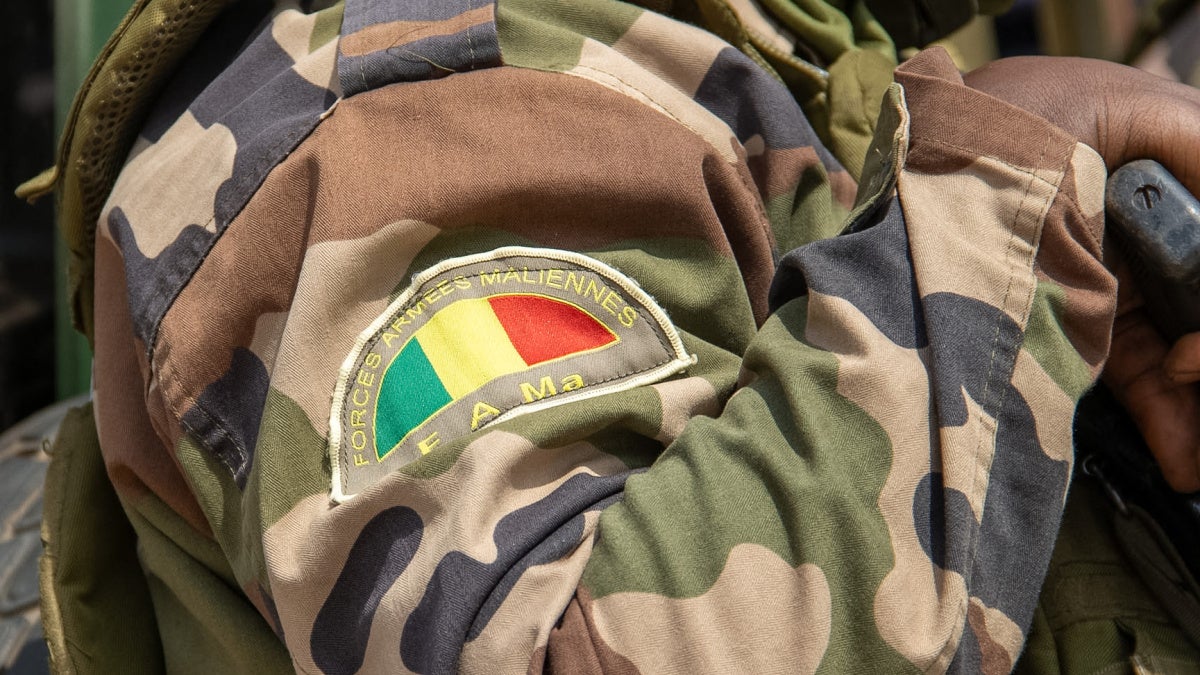
Army and allied militias accused of targeted killings in Ségou region
In a series of coordinated operations, Malian armed forces and allied dozos militias are alleged to have executed at least 31 civilians and set fire to homes in two villages under the control of Islamist insurgents during early October. The incidents occurred in the Ségou region, a hotspot of conflict where the Group for the Support of Islam and Muslims (JNIM), an Al-Qaeda affiliate, maintains a strong presence.
The first attack took place on October 2 in Kamona, where soldiers and dozos militants—recognized by traditional attire and protective amulets—allegedly executed at least 21 men and burned down over ten homes. Survivors reported that the military, accompanied by dozens of pickups and armored vehicles, arrived in the village shortly after local residents had been warned by JNIM fighters. Many villagers fled, but those who remained were rounded up and shot at point-blank range.
“Those who couldn’t escape were gathered and executed without trial,” recounted a local survivor who requested anonymity for safety reasons.
Witnesses confirmed that no clashes occurred between the army and insurgents before the killings, as JNIM fighters had already withdrawn. The victims, all men aged 20 to 65, were later buried in two mass graves. Villagers also reported that soldiers stole livestock and destroyed property belonging to the Fulani ethnic group, whom they accused of collaborating with insurgents.
A second incident unfolded on October 13 in Balle, located roughly 55 kilometers from Kamona. Soldiers in five pickups and dozos militants on at least 30 motorcycles stormed the village, prompting some residents to flee. Survivors described soldiers going door-to-door, assaulting men and ultimately killing ten civilians, including a 55-year-old woman. The attackers also looted over 100 cattle before withdrawing around 4:00 PM.
“I hid in an abandoned house with my nine-year-old daughter,” shared a 40-year-old herder. “When the attackers left, I found 17 bodies under a tree—all riddled with bullets. One victim’s skull was shattered.”
Local authorities have yet to respond to allegations, though military officials previously claimed their October 13 operation in Balle resulted in the “neutralization” of “about twenty terrorists.” However, residents insist the village has been under JNIM control for years, with no government security presence. “We pay zakat to the insurgents, and disputes are settled by their courts,” explained a local elder. “The army makes no distinction between us and them.”
Calls for accountability amid escalating violence
The attacks follow a surge in JNIM offensives targeting key infrastructure, including the destruction of a sugar refinery in Siribala in August. The insurgency’s recent siege on Bamako has further strained the country’s stability, forcing authorities to suspend education nationwide.
International humanitarian law prohibits deliberate attacks on civilians, summary executions, and the destruction of civilian property. Perpetrators of war crimes may face prosecution under the Rome Statute, to which Mali remains bound until September 2026 despite its withdrawal from the International Criminal Court (ICC).
Human rights advocates urge regional bodies like the African Union to prioritize accountability measures. “The AU’s Peace and Security Council must take urgent action,” stated a regional analyst. “Diplomatic pressure, coordinated regional responses, and regular briefings are critical to addressing impunity.”