

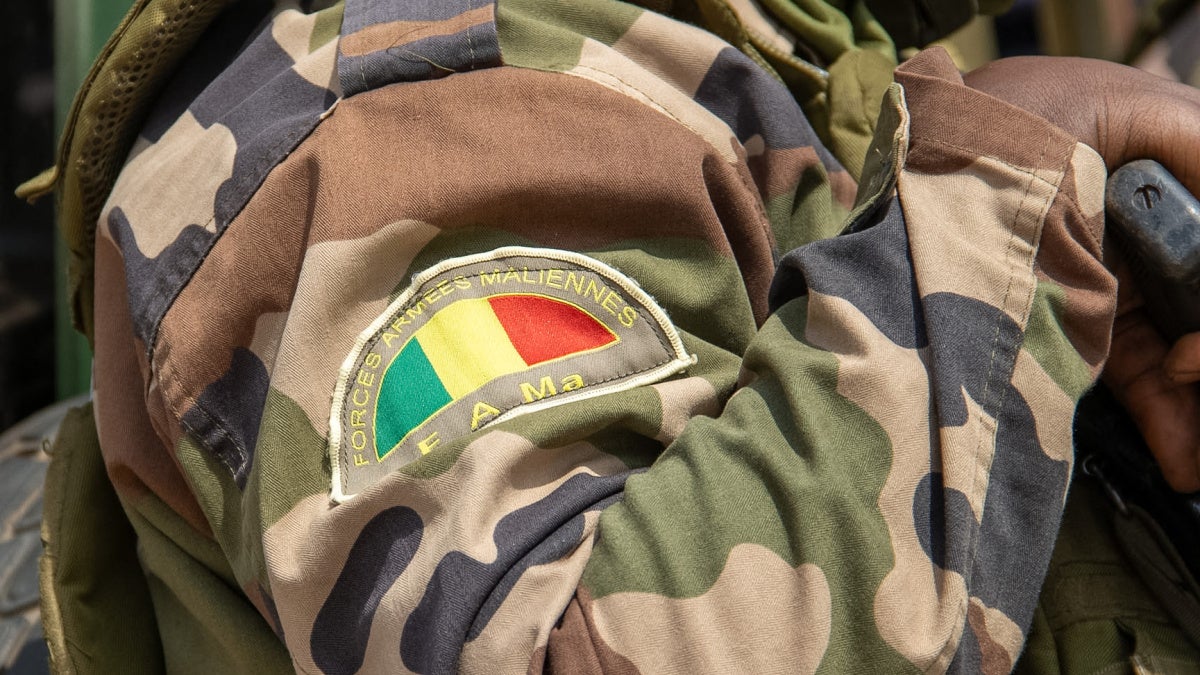
Army and allied militias accused of killing 31 civilians in central Mali
In the heart of Mali’s conflict-ridden Ségou region, a new wave of violence has left at least 31 civilians dead and entire communities in ruins. Between October 2 and 13, soldiers from the Malian Armed Forces, alongside allied militia groups, launched coordinated attacks in the villages of Kamona and Balle, targeting local residents under the pretext of counterterrorism operations.
The first attack unfolded on October 2 in Kamona, where at least 21 men were executed and 10 homes set ablaze. Witnesses reported that soldiers, accompanied by members of the dozos—traditional hunters from the Bambara ethnic group who have been active in counterinsurgency efforts for over a decade—arrived in at least seven pickup trucks, three armored vehicles, and on motorcycles. Before the assault, local residents had been warned of the army’s advance by Islamist fighters, prompting many to flee. Those who remained were rounded up and systematically killed.
A 40-year-old shepherd, who had taken refuge in an abandoned house with his 9-year-old daughter, described the horrific scene upon returning. « The bodies were scattered under a tree, riddled with bullets. One man’s head was completely shattered. Empty bullet casings littered the ground. » The victims, all men aged 20 to 65, were later buried in a mass grave. Survivors believe at least 15 additional men may have been killed in the surrounding bush, though they dared not verify due to lingering fear of the army’s return.
The second incident occurred on October 13 in Balle, a village long under the control of the Group for the Support of Islam and Muslims (JNIM), an Al-Qaeda-linked faction. Around 1 PM, Malian soldiers in five pickup trucks, accompanied by at least 30 dozos on motorcycles, stormed the village. « I didn’t flee immediately, but when I saw soldiers going door-to-door, kicking and slapping men, I ran », a 24-year-old resident recounted. « From my hiding place, I heard gunfire. »
The attackers killed 10 civilians, including nine men aged 22 to 67 and a 55-year-old woman, and stole over 100 cattle. A 33-year-old man discovered the bodies the next day. « They lay side by side, their bodies broken and shot through. Some had shattered limbs. » The woman’s 21-year-old daughter tearfully described how her mother had confronted the soldiers, accusing them of abuse, before being dragged away and executed.
Local residents, who have paid Islamic taxes (zakat) to JNIM for years, expressed frustration over the military’s indiscriminate violence. « There are no soldiers, police, or gendarmes here. Disputes are settled by the jihadists. The army doesn’t distinguish between them and us. »
The Malian Armed Forces’ chief of staff claimed in a statement that the October 13 operation was a “offensive reconnaissance mission” near Balle, resulting in the neutralization of about twenty terrorists and the seizure of military equipment. However, witnesses and locals denied any clashes, asserting that JNIM fighters had long since left the area.
Since 2012, Mali has been embroiled in a brutal conflict with various Islamist armed groups, leading to thousands of civilian deaths and displacing over 400,000 people. Both the Malian military and its allied militias, as well as Islamist factions like JNIM, have been implicated in widespread atrocities. The recent surge in violence follows JNIM’s siege of Bamako, which has crippled the capital’s fuel supply and forced the military junta to temporarily shut down all schools and universities.
Under international humanitarian law, including Common Article 3 of the Geneva Conventions and customary laws of war, all parties involved in the conflict are prohibited from targeting civilians, committing murder, or inflicting cruel treatment. Those responsible for war crimes may face prosecution.
Despite Mali’s withdrawal from the International Criminal Court (ICC) in September, the country remains bound by the Rome Statute until September 2026. The ICC opened an investigation into alleged war crimes in Mali in 2013. Meanwhile, the African Union has been criticized for its lack of decisive action amid the escalating crisis. Human rights advocates urge the AU’s Peace and Security Council to prioritize Mali, calling for urgent diplomatic efforts and coordinated regional responses to hold all perpetrators accountable.
Demands for accountability grow as violence escalates
As the death toll rises and communities reel from the aftermath, calls for justice have intensified. Survivors and local leaders demand credible, impartial investigations into the October massacres, with perpetrators brought to trial in fair proceedings. The international community, including regional bodies, faces mounting pressure to intervene and ensure that those responsible for these horrific acts are held to account.