

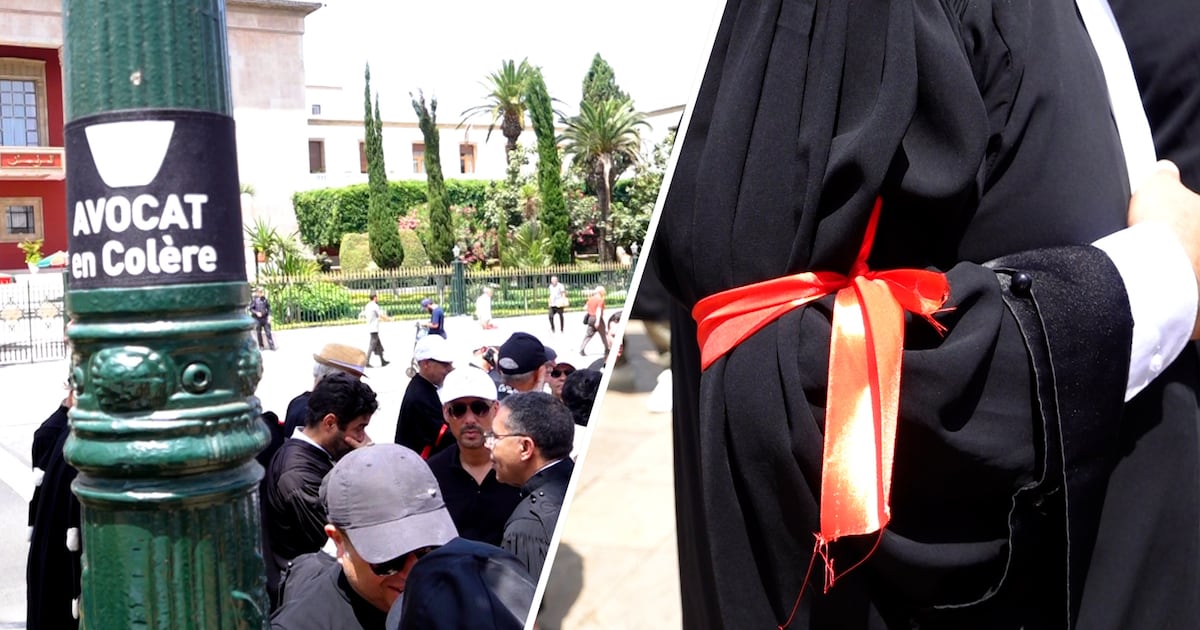
Dressed in black robes and red armbands, Moroccan lawyers resumed their open-ended strike on Monday, July 6, gathering outside Parliament in Rabat. Their determination remains unshaken as they escalate their protests, demanding the complete withdrawal of the controversial draft law regulating their profession.
The demonstrators, who have been mobilizing for days, argue that the proposed legislation undermines their professional autonomy. Key concerns include provisions that would erode their independence from the Public Prosecutor’s Office and the Ministry of Justice, particularly through changes to disciplinary procedures. Lawyers also oppose the transfer of training oversight to the Ministry of Justice and criticize new eligibility rules, such as lowering the age requirement for the qualifying exam.
During a prior protest last Thursday outside Parliament, representatives of the profession warned that this battle has only just begun. They have not ruled out intensifying their actions if the government fails to withdraw the bill in its entirety.
Aziz Rouibah, the bâtonnier of Rabat, emphasized the gravity of the situation, stating that the profession feels threatened in its very existence. “We are facing a deliberate attempt to symbolically dismantle our profession,” he declared, urging lawyers to resist what he described as an aggressive legislative assault. Rouibah framed the mobilization as both a professional duty and a moral obligation to defend the core values of the legal system.
Me Mounir Belghiti, a member of the Rabat Bar Council, framed the ongoing protest as a final appeal to lawmakers. The duration of the sit-in, he explained, will hinge on parliamentary debates. Belghiti stressed the need for legislation that prioritizes the public interest and the future of the nation, rather than catering to personal grievances. “If we allow laws to be crafted for specific exceptions, we risk eroding the very foundations of democracy,” he cautioned.
The discussions surrounding the draft law are set to continue this week in the Chamber of Advisors. If amendments are adopted, the bill will return to the Justice Commission of the Chamber of Representatives for a second reading.
In the meantime, Morocco’s courts remain severely disrupted by the strike. The open-ended walkout has left many litigants in limbo, particularly those in pre-trial detention, whose hearings have been postponed for nearly a month.
The Moroccan Association of Bar Associations (ABAM) serves as the umbrella organization for all lawyers’ orders across the Kingdom, playing a central role in coordinating the profession’s response to the proposed legislation.