
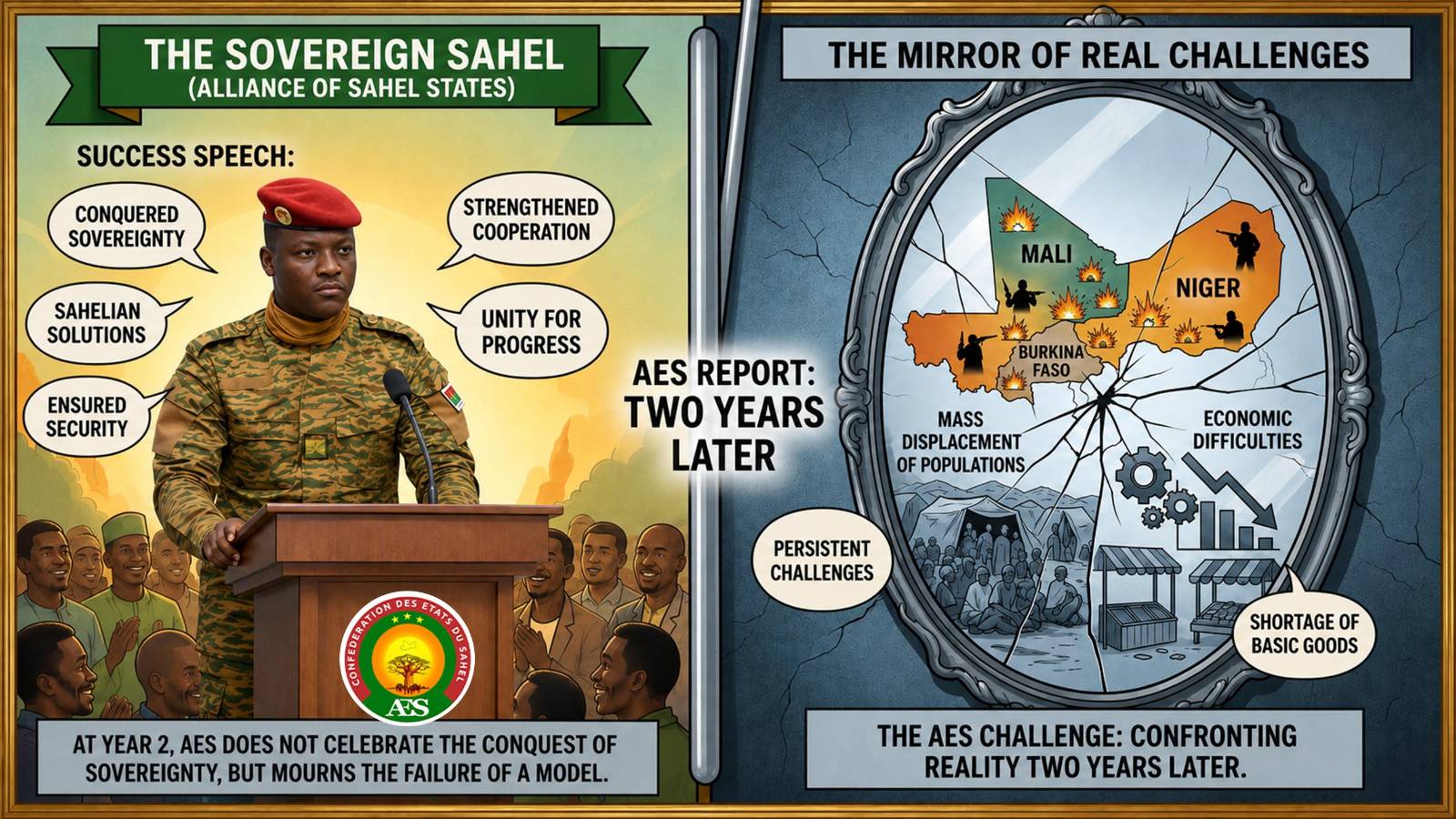
Assessing the Alliance of Sahel States after two years
The Alliance of Sahel States (AES), established two years ago, is presented by its leaders—particularly Captain Ibrahim Traoré—as a strategic and political milestone anchored in sovereignty, solidarity, and regional cooperation among Burkina Faso, Mali, and Niger. While this narrative resonates with a segment of the public, it has yet to persuade those seeking tangible outcomes.
The AES leadership asserts that significant progress has been made across diplomatic, military, and institutional spheres. However, the persistent challenges that initially prompted the formation of this alliance remain largely unresolved.
Sovereignty as a political mantra
The emphasis on sovereignty has become the cornerstone of the AES authorities’ messaging. Yet sovereignty transcends mere shifts in international alliances or the rejection of traditional partners. At its core, it hinges on a state’s ability to safeguard its citizens, uphold institutional functionality, protect its economy, and provide opportunities for its youth.
Despite repeated claims of military successes, armed groups continue to operate across multiple regions in the three countries. Civilians face ongoing threats of violence, frequent displacement, and persistent humanitarian crises. These realities underscore the gap between rhetoric and tangible progress.
Economic integration: more promises than progress
The anticipated benefits of regional economic integration have yet to materialize. Trade flows remain limited, fiscal constraints persist, and the erosion of household purchasing power remains a pressing concern. Many analysts argue that the projected advantages of the AES are still largely conceptual rather than practical.
For the public, the true test of governance lies in tangible improvements to daily life. Access to security, healthcare, education, employment, and infrastructure stands as the definitive measure of effective leadership. Merely espousing political independence does not address these fundamental needs.
The overlooked dimensions of governance
The relentless focus on sovereignty often overshadows critical issues such as governance, transparency, and accountability. A regional union’s enduring credibility hinges on robust institutions, well-designed public policies, and responsible resource management. Without these pillars, public trust remains elusive.
Two years into its existence, the AES undeniably represents a transformative shift in West Africa’s political landscape. Yet its legacy will not be determined by official declarations alone. The alliance’s success will be measured by its capacity to deliver measurable improvements in security, economic stability, and social welfare for the people of Burkina Faso, Mali, and Niger.
Ultimately, the rhetoric of sovereignty, while symbolically powerful, cannot alone reshape realities. Citizens demand concrete evidence that the AES can effectively address the enduring security, economic, and social challenges confronting the region. It is upon these achievements—not merely stated intentions—that history will assess the alliance’s true impact.