
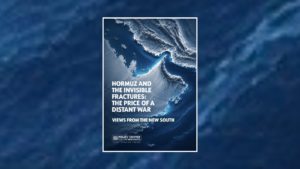
A new research paper examines the global fallout from the Iran–United States conflict and the escalating tensions around the Strait of Hormuz, with a focus on North African economies.
The collective work, titled “Hormuz and the Invisible Fractures: the Price of a Distant War,” brings together contributions from several international experts to assess the geopolitical, economic and security consequences of the war involving Iran, the United States and Israel.
According to the authors, the crisis in the Strait of Hormuz goes far beyond a regional conflict. It exposes the vulnerabilities of a globalised economy deeply dependent on energy, trade and logistics flows passing through this strategic maritime chokepoint, which carries a substantial share of the world’s oil, gas, fertilisers and international commerce.
One chapter, authored by an economist, simulates the impact of a 20% increase in oil prices on the economies of Morocco, Tunisia and Egypt. Using an input-output economic model, the analysis concludes that Morocco appears as the most exposed country to the repercussions of an oil shock linked to the Hormuz crisis. The study highlights vulnerabilities in several sectors, particularly agriculture, construction, transport and other activities reliant on energy products.
In contrast, Egypt would partially benefit from higher prices thanks to state oil revenues, while Tunisia would show a broadly balanced outcome despite significant disparities between sectors.
Broader international implications
Beyond economic aspects, several contributors view the 2026 war as a turning point in the evolution of the international order. The conflict illustrates the growing fragmentation of the global system and the weakening of traditional cooperation and deterrence mechanisms. Others see the emergence of a more multipolar world where conflicts are managed rather than resolved.
Another contribution analyses the war’s repercussions on transatlantic relations, arguing it has deepened divergences between the United States and several European countries over the use of force and crisis management.
The work also highlights risks to African energy security, Sahel stability and South American economies, while pointing to the growing role of strategic minerals in new global geopolitical dynamics.
This collective effort aims to inform the debate on shifts in the international order and the strategies states must adopt in the face of crises that could durably disrupt supply chains, energy markets and geopolitical balances worldwide.