
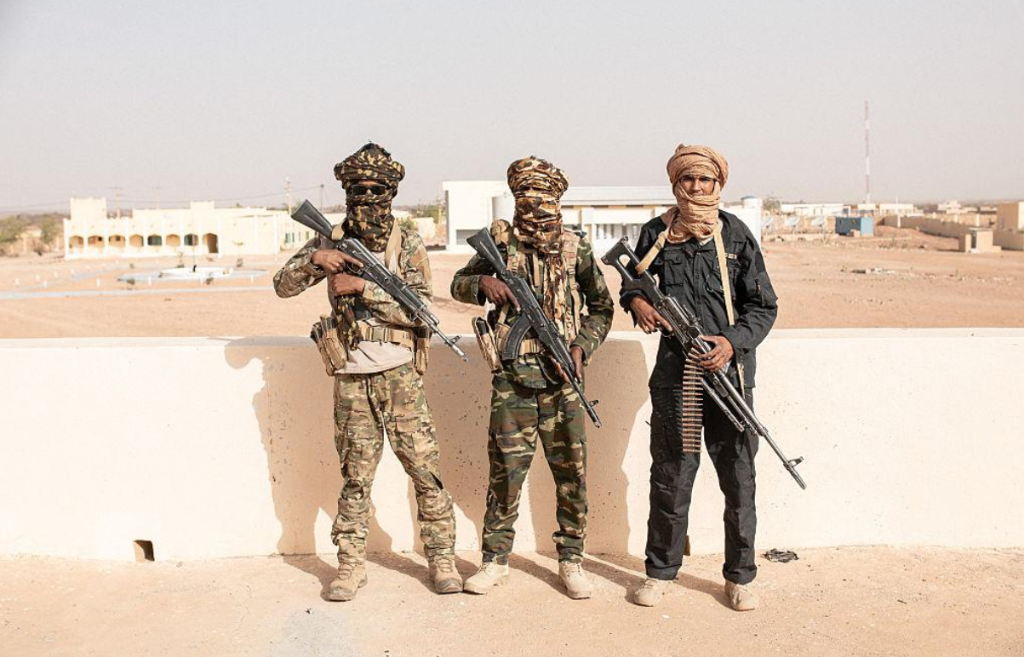
Why the fall of Kidal forces the Azawad rebels into uncharted alliances
The strategic retreat from Kidal has left Mali’s Azawad separatists in uncharted territory, prompting a desperate search for external backers. Without their northern stronghold, the Front de libération de l’Azawad (FLA) now faces existential questions: Can foreign alliances in Libya and the UAE provide the lifeline needed to survive?
How Libya’s east emerged as a potential sanctuary for Mali’s rebels
The vast, porous Sahara offers few secrets—and few hiding places. With Kidal no longer tenable, the FLA has turned its gaze eastward, where Libya’s divided territories present unexpected opportunities. A high-level delegation traveled to Benghazi, meeting with key figures including Saddam Haftar, son of Libyan National Army leader Khalifa Haftar. While no immediate arms deals have been confirmed, the outreach signals a strategic pivot toward an axis that could bypass Mali’s military encirclement.
The role of Haftar’s Libya in reshaping Sahel security
Libya’s post-2011 fragmentation has created a patchwork of de facto authorities, each with competing interests. The east, under Khalifa Haftar’s influence, has cultivated ties with regional actors seeking to challenge central governments. For the Azawad rebels, this geography—where borders blur under the desert winds—makes Libya a pragmatic, if risky, partner in their survival strategy.
Why Abu Dhabi could be Mali’s Azawad rebels’ most surprising ally
The United Arab Emirates has long played a behind-the-scenes role in Africa, leveraging financial and security networks from the Horn of Africa to the Sahel. Yet for the FLA, aligning with Abu Dhabi carries high stakes—not least the potential for escalating tensions with Algeria. The Algerian government, which shares a 1,000-mile border with Mali, views any foreign intervention near its southern flank as a direct threat to its national security.
The geopolitical chessboard: Algeria vs. UAE in the Sahara
Algeria’s response to this diplomatic realignment has been swift and calculated. By deepening its cooperation with Mali and Niger, Algiers seeks to counterbalance external influences it perceives as destabilizing. For Bamako and Niamey, this renewed partnership offers a pragmatic alternative: stronger border security, joint counter-trafficking operations, and economic development initiatives to deter foreign meddling.
What’s next for the Azawad rebels and their newfound patrons?
The coming months will determine whether Libya and Abu Dhabi can deliver on their promises—or if the FLA’s gamble will leave them further isolated. With Algeria and its Sahel allies tightening their grip, the rebels’ survival may hinge on two factors: the speed at which logistical corridors through the Sahara can be secured, and whether their new backers prioritize ideological alignment over strategic pragmatism.
Will these alliances hold—or crumble under pressure?
History suggests that external alliances in the Sahel are rarely stable. The Azawad rebels’ survival strategy now depends on navigating a minefield of shifting loyalties, where today’s ally could become tomorrow’s adversary. As Bamako consolidates control over northern Mali, the FLA’s foreign overtures may offer temporary relief, but at what cost—and for how long?