
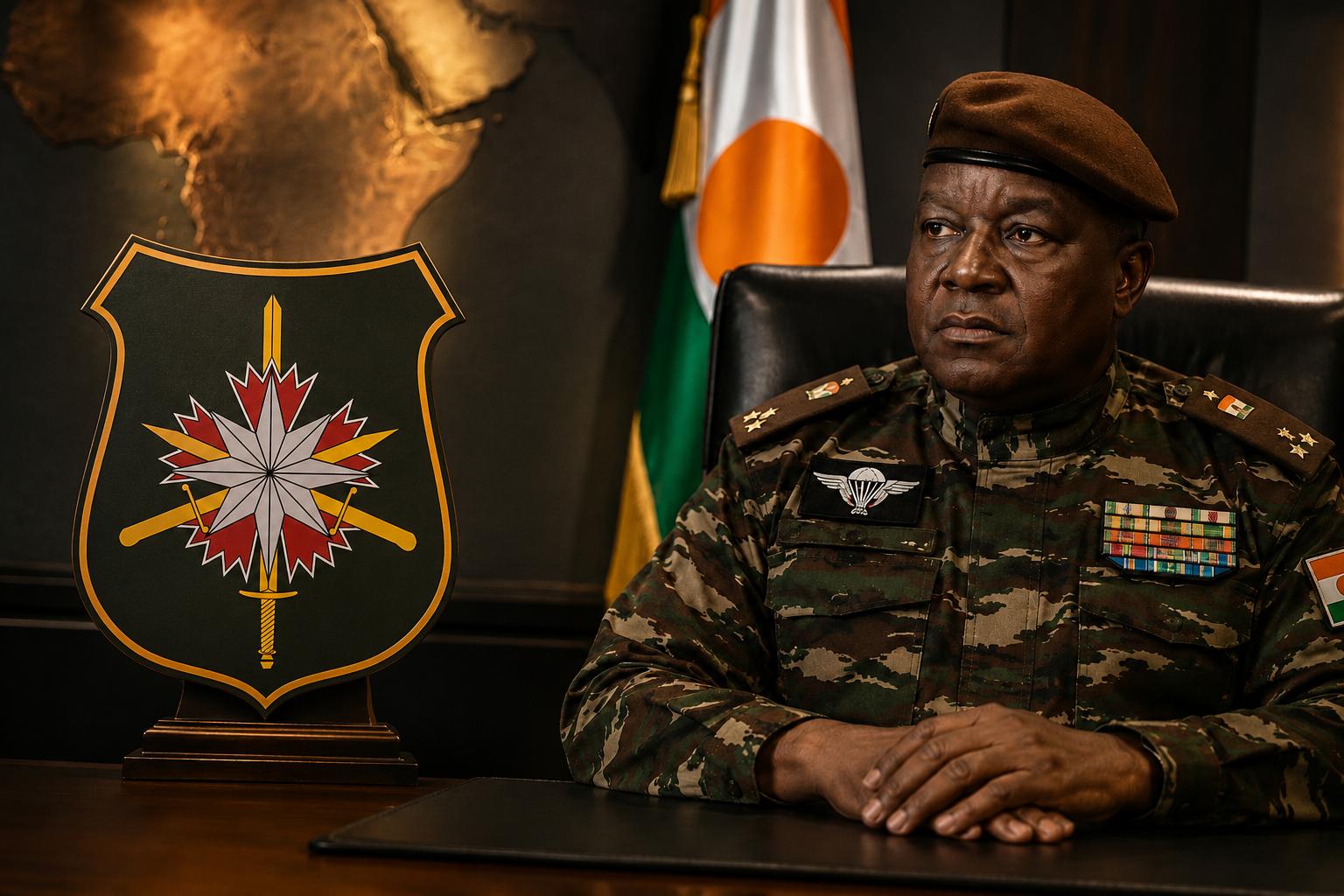
The August 29 mutiny at Niamey’s Air Base 101 exposed cracks in Niger’s military apparatus, revealing fractures that go beyond the usual jihadist threat. Clashes erupted among elite special forces—once the backbone of the anti-terror fight in the tri-border region—shedding light on deep-seated grievances. Dissatisfaction over battlefield losses, disputes over command structures, and operational fatigue have eroded the junta’s inner circle, threatening its stability from within.
When foreign troops become the regime’s last line of defense
The swift intervention by Africa Corps (formerly Wagner Group) to quell the mutiny marked a pivotal shift in Niger’s security strategy. These Russian-backed forces, once deployed for tactical support against insurgencies, now function as the regime’s ultimate safeguard against its own military. This reliance on external firepower creates a critical dependency, where foreign contingents form the core of palace protection, relegating national security to a secondary concern.
Security theater: Elite protection vs. civilian vulnerability
A stark contrast emerges between the state’s hyper-militarized safeguards and the harsh realities faced by Nigerien civilians:
- Over-militarized power centers: Armored convoys and Africa Corps units can secure key locations—such as the presidential palace, airport, or mutiny hotspots—in minutes, yet this rapid response prioritizes regime protection over broader safety.
- Fragile outer defenses: The September 2 attack near Koubia, just outside Niamey, underscores the capital’s porous security perimeter. Repeated assaults on checkpoints (Koubia, Karey Gorou, and even the airport) reveal that foreign troops have failed to stem infiltration or the boldness of armed groups.
- Widening civilian distrust: While official narratives tout sovereignty gains and new alliances, locals endure relentless insecurity at the city’s edges—roadblocks, disrupted trade, and worsening conditions in Tillabéri speak to a widening gap between rhetoric and reality.
The paradox is clear: Niamey’s leadership leans heavily on foreign forces to fend off coups and internal rebellions, yet this dependence further weakens the security net for its own people. The more the regime fortifies itself with external troops, the more its citizens face an eroding shield against daily threats.