
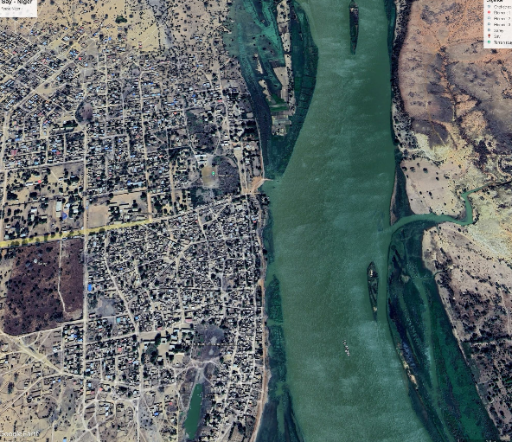
The body of Captain Maman Ada Sahabi, commander of the Say gendarmerie unit, remains adrift on the Niger River more than 24 hours after a deadly ambush by Jama’at Nasr al-Islam wal-Muslimin (JNIM) militants. The attack, which occurred late Wednesday afternoon, also claimed the lives of at least two other gendarmes while their vessel drifted unsecured.
a high-risk mission amid rising insecurity
Captain Sahabi, a seasoned officer with over five years of service in Say, was leading a reconnaissance mission along the Niger River—near the volatile borderlands of Tillabéri and Dosso—when his patrol boat came under heavy fire around 5 PM. The operation coincided with Say’s weekly market day, a period known for heightened militant activity in the region.
The ambush left three gendarmes dead, including the captain, whose body remained aboard the drifting vessel. Two other soldiers were swept away by the current after falling into the river. Despite ongoing security operations, authorities have yet to recover the bodies, citing fears of improvised explosive devices (IEDs) and the risk of further attacks.
a local security pillar lost
At 40 years old, Captain Sahabi was a respected figure in Niger’s counterterrorism efforts, particularly in the Liptako-Gourma region—a hotspot for JNIM and Islamic State in the Greater Sahara (EIGS) activity. His death underscores the escalating threats faced by security forces patrolling the Niger River, a critical but vulnerable transit route for both civilians and militants.
Since the 2023 military transition, embattled security forces have struggled to curb jihadist advances, despite official claims of successful operations. The persistent attacks—including riverine ambushes—highlight the adaptability of armed groups, who exploit border weaknesses and the Niger River’s mobility to launch strikes.
public outrage over delayed recovery operations
The failure to retrieve Captain Sahabi’s body has sparked widespread outrage, with critics questioning the government’s commitment to honoring fallen soldiers. Over 24 hours after the attack, no recovery mission had been authorized, leaving the officer’s remains in a state of neglect—a move condemned by both security personnel and local residents.
“How can we abandon our commander’s body to drift on the river like that? It’s a total lack of respect for those who serve,” said an unnamed security source. Many view the incident as emblematic of a hesitant command structure, where swift action in the face of tragedy has become alarmingly rare since the 2023 coup.
questioning the value of soldiers’ sacrifices
This tragedy reignites debates about the treatment of frontline troops under Niger’s current military leadership. While official statements frequently tout victories against terrorists, the reality in red-zone regions like Tillabéri, Tahoua, and Dosso tells a different story—one of chronic insecurity and operational missteps. Families of fallen soldiers, survivors, and civilians in high-risk areas express growing frustration: lofty sovereignty rhetoric clashes with the harsh ground truth of daily peril and mismanagement.
The Niger River ambush is a grim reminder of the human cost of counterterrorism in a region where the line between security and chaos remains thin.
