
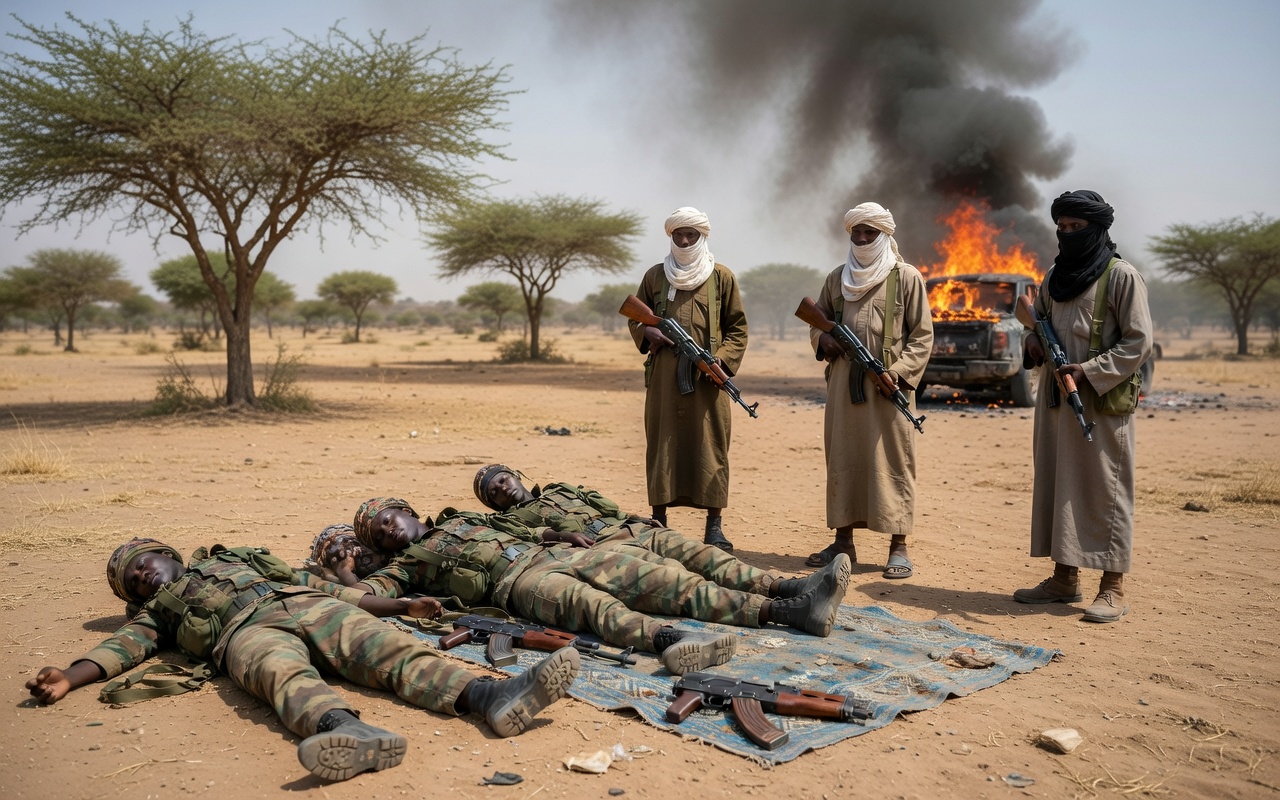
The Group for the Support of Islam and Muslims (JNIM), a prominent Al-Qaeda affiliate in the Sahel, has claimed responsibility for two separate assaults conducted within a 24-hour span in western Niger. According to their announcement, the incidents resulted in at least three fatalities and material damage across the Touré and Say districts.
escalation in the ‘three borders’ zone
The security landscape in western Niger remains highly unstable, particularly in the volatile ‘Three Borders’ region—a hotspot for militant activity. In a statement disseminated through their established propaganda channels, JNIM asserted that their attacks targeted Nigerian defense and security forces along two critical routes.
roadside bomb strikes near touré
The first incident involved the detonation of an improvised explosive device (IED) on the road to Touré. While JNIM did not disclose immediate casualty figures for this specific strike, they confirmed targeting a patrol convoy. The frequent use of homemade landmines has emerged as a major hazard for Nigerian troops, severely restricting movement on unpaved roads.
lethal ambush in the say area
Further south, in the Say sector, the group boasted of an ambush that left three soldiers dead. This zone, adjacent to the W National Park, has long been a hotspot for armed incursions as militants seek to establish control over forested borderlands shared with Burkina Faso and Benin.
understanding jnim’s operational tactics
These back-to-back attacks highlight JNIM’s persistent strategy of attrition warfare. By deploying a mix of roadside bombs and mobile ambushes, the insurgents aim to:
- Disrupt supply chains between urban hubs and remote outposts.
- Strain security forces through prolonged low-intensity conflict.
- Assert influence over rural areas bordering Niger’s capital, Niamey.
government response and ongoing risks
As of now, Nigeria’s Ministry of Defense has not issued an official statement to validate or refute the militant group’s claims. However, authorities have intensified security measures in the wake of recent political shifts, particularly along the right bank of the Niger River. Civilian travelers and transporters are urged to exercise extreme caution when navigating these routes, as the jihadist threat continues to undermine regional stability.