
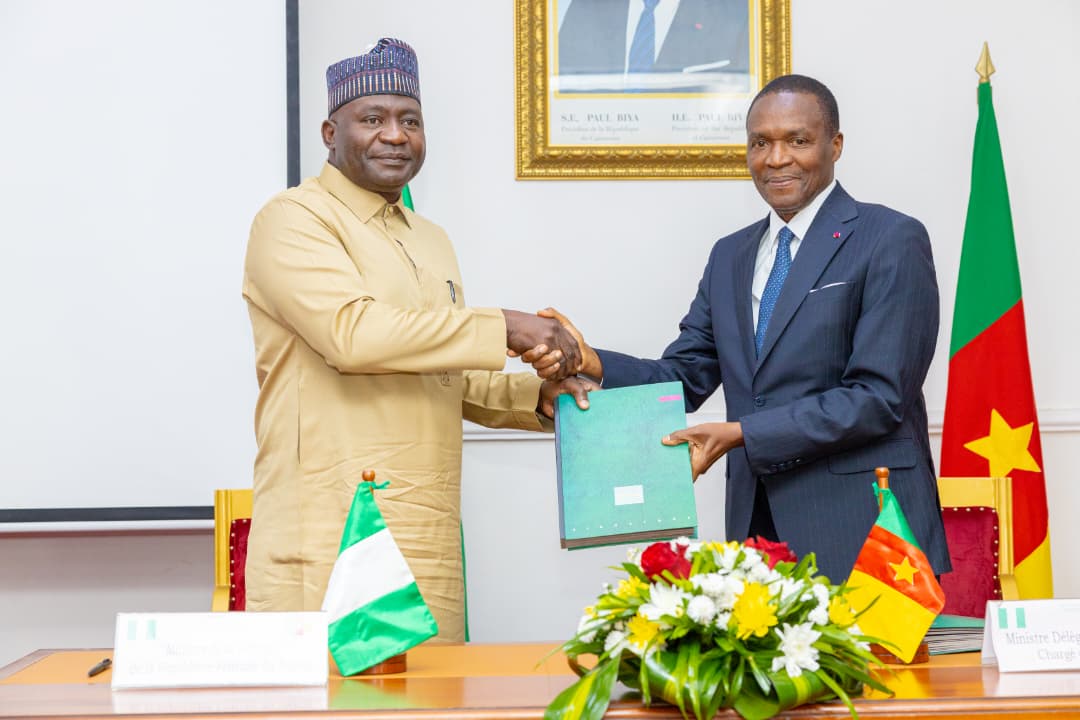
Nigeria and Cameroon bolster regional security with landmark defense agreement
Nigeria and Cameroon have finalized a defense cooperation pact in Yaoundé to enhance the security of their shared southern border. The agreement establishes a robust framework for coordinated military operations, intelligence sharing, and joint training programs, while also fostering collaboration in defense manufacturing.
- Security

High-ranking officials from Nigeria and Cameroon concluded a bilateral defense agreement aimed at strengthening security along their joint southern frontier. The pact, signed in Yaoundé by Nigeria’s former Defense Minister, General Christopher Gwabin Musa, and Cameroon’s Minister Delegate to the Presidency for Defense, Joseph Beti Assomo, follows two days of intensive security consultations.
The newly ratified memorandum outlines a comprehensive strategy to address evolving security threats, both on land and within their shared maritime zone. Key provisions include enhanced operational coordination, real-time intelligence exchange, mutual logistical support, and joint military training initiatives. Both nations also agreed to streamline their rapid-response protocols to counter emerging security risks more effectively.
During the signing ceremony, General Musa emphasized that the agreement would “provide a structured framework for sustained military collaboration”, adding that it would institutionalize joint efforts in tackling common security challenges. Discussions also highlighted the recently established combined maritime task force, with both sides stressing the urgency of operationalizing this initiative to bolster maritime security in the Gulf of Guinea and safeguard regional economic interests.
The defense industry emerged as a focal point of negotiations. Nigeria’s delegation reiterated its commitment to deepening partnerships in defense technology and innovation, citing the continent’s reliance on imported military equipment as a critical vulnerability. General Musa underscored the need for stronger regional industrial collaboration to enhance local production capabilities and reduce dependency on foreign suppliers.
He highlighted Nigeria’s Defence Industries Corporation as a potential hub for collaborative projects, including the co-production of military hardware, technology transfer, and joint research initiatives. Cameroon’s representative, Joseph Beti Assomo, echoed this sentiment, affirming his country’s interest in expanding bilateral cooperation in defense innovation. He revealed that formal proposals were being finalized to kickstart concrete joint ventures in this sector.