
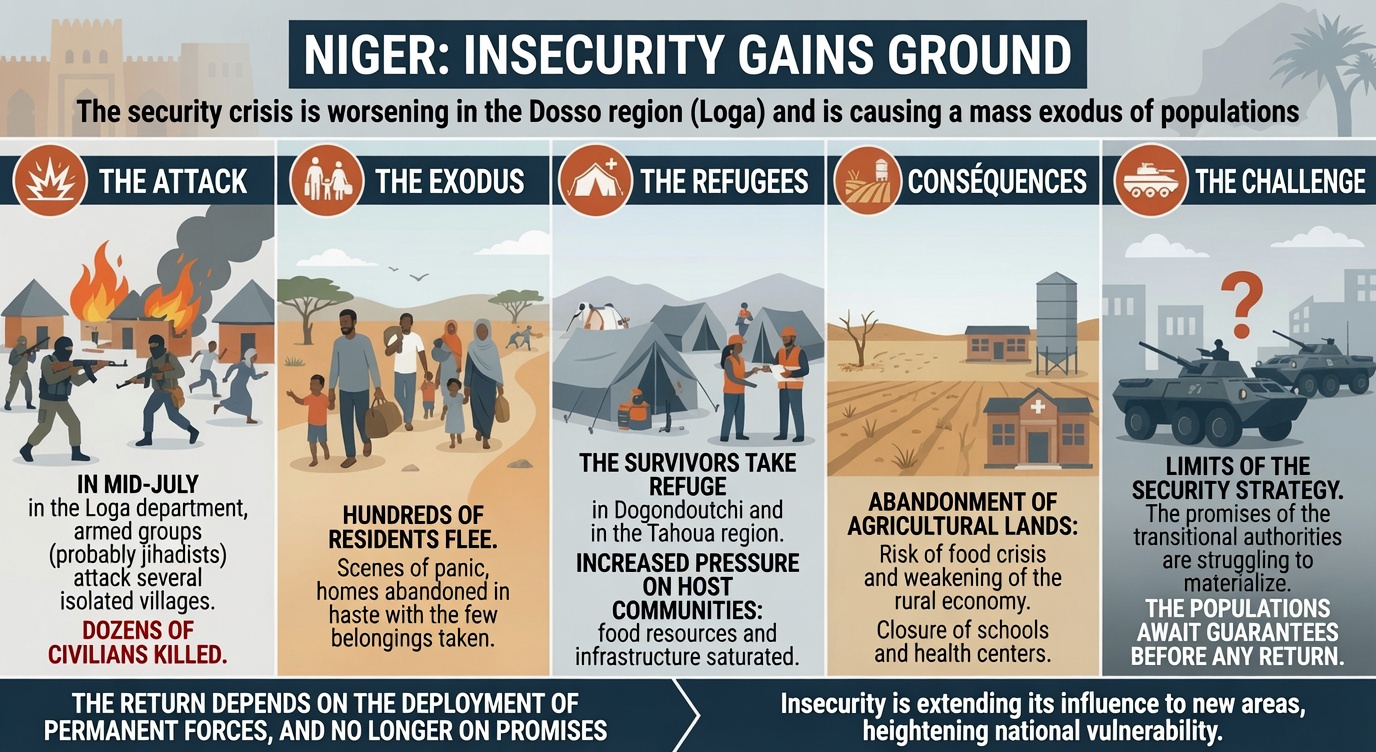
The deteriorating security landscape in Niger has reached new extremes, with the Loga district in the Dosso region bearing the brunt of a recent surge in attacks that has uprooted hundreds of residents. The mid-July violence, characterized by its brutal efficiency, has exposed the inadequacy of ongoing military efforts to shield civilians from the encroaching threat of armed factions operating across the nation’s vulnerable zones.
Reports indicate that the assaults, linked to extremist groups operating in the Sahel belt, resulted in numerous civilian casualties. Attackers systematically targeted remote settlements, exploiting gaps in defense mechanisms to inflict maximum fear and disruption. Survivors recount harrowing escapes, leaving behind possessions in a frantic bid to save their lives a testament to the psychological and material toll exacted by the conflict.
The displaced, predominantly seeking shelter in Dogondoutchi and other areas of the Tahoua region, now face compounded challenges. Host communities, already strained by economic instability and limited resources, now shoulder the burden of supporting an influx of individuals who have lost everything. The strain on local infrastructure from food supplies to housing has reached critical levels, amplifying the humanitarian fallout.
This displacement crisis casts a harsh light on the limitations of Niger’s transitional government’s security agenda. While the junta has prioritized restoring order since its ascent to power, the persistence of attacks—spreading from frontier zones to the heart of the country casts doubt on the viability of its military strategies and troop deployments. The failure to curb violence has eroded public confidence in the state’s ability to protect its citizens.
Desperation deepens as communities abandon ancestral lands
For many displaced families, the abandonment of villages represents more than a temporary flight from danger; it signals a collapse of trust in the government’s capacity to guarantee safety. The decision to relocate is rarely made lightly, as it entails forfeiting homes, farmlands, and livelihoods built over generations. Returning, locals emphasize, will demand more than ceasefires it requires a sustained, visible military presence capable of deterring future attacks. For now, skepticism prevails, with many insisting that assurances alone offer little solace.
Rural economies crumble under the weight of insecurity
The exodus is not merely a humanitarian issue but an economic catastrophe. The loss of agricultural lands jeopardizes upcoming harvests, deepening food insecurity and destabilizing rural economies already weakened by years of turmoil. Schools shutter their doors, medical facilities operate at reduced capacities, and local markets falter, leaving communities increasingly vulnerable. The ripple effects of displacement extend far beyond immediate safety concerns, threatening Niger’s long-term stability.
Humanitarian agencies scramble amid soaring needs
The scale of the crisis has overwhelmed local and international relief efforts. Displaced individuals confront dire shortages of essentials clean water, nutritious food, medical care, and adequate shelter. Aid organizations warn that resources are stretched perilously thin, with the rising tide of internally displaced persons (IDPs) outpacing available support. The situation’s urgency demands immediate, coordinated action to prevent a further deterioration of conditions.
Security breakdown signals a widening insurgency
The expansion of armed group activity into previously unaffected regions underscores a troubling trend: the conflict’s reach is growing, exposing vulnerabilities in Niger’s security apparatus. Analysts warn that without decisive measures to strengthen defenses and address root causes of instability, the crisis will continue to metastasize, dragging more communities into its fold. For the people of Loga, the path forward remains clear yet unattainable: security must precede any hope of return.
As Niger grapples with this entrenched crisis, the human toll grows families displaced, economies strained, and futures uncertain. The question no longer revolves around *if* communities can return, but *when* and whether the state will finally deliver on its promise to safeguard them.