
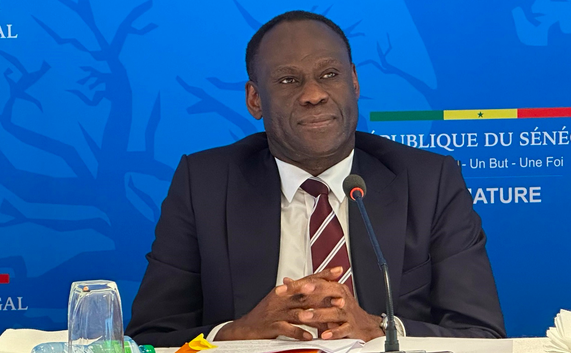
The highest judicial body in Senegal has a new leader. In an official announcement made on Monday, July 13, 2026, President Bassirou Diomaye Faye appointed Ousmane Diagne as both member and president of the Constitutional Council. This appointment, formalized by decree n°2026-1318, marks a significant institutional shift for the country’s top legal authority.
Ousmane Diagne brings extensive legal expertise to his new role. Previously, he served as Attorney General at the Dakar Court of Appeal and as First General Attorney at the Supreme Court. His political career includes a stint as Minister of Justice and Keeper of the Seals in the initial government formed under Prime Minister Ousmane Sonko at the beginning of President Faye’s term. Though later excluded from the executive branch during subsequent cabinet reshuffles, his return to a prominent judicial position underscores his enduring influence in Senegal’s legal and political spheres.
Filling a critical vacancy
Ousmane Diagne succeeds the late Mamadou Badio Camara, whose passing created a leadership void in the Constitutional Council. This institution plays a pivotal role in arbitrating institutional and electoral disputes, most recently during the contentious debates surrounding constitutional reform. The council’s decisions carry immense weight, shaping the legal and political landscape of Senegal.
A career marked by legal and political milestones
Born into a family with deep roots in Senegal’s judiciary, Ousmane Diagne has built a reputation as a steadfast and principled legal figure. His career spans decades, during which he has contributed to landmark cases and reforms. As president of the Constitutional Council, he is expected to bring a measured approach to resolving complex legal challenges, ensuring the council remains a cornerstone of Senegal’s democratic framework.
The appointment reflects President Faye’s commitment to strengthening institutions and promoting transparency. By selecting a figure of Diagne’s caliber, the government signals its prioritization of judicial independence and constitutional integrity.