
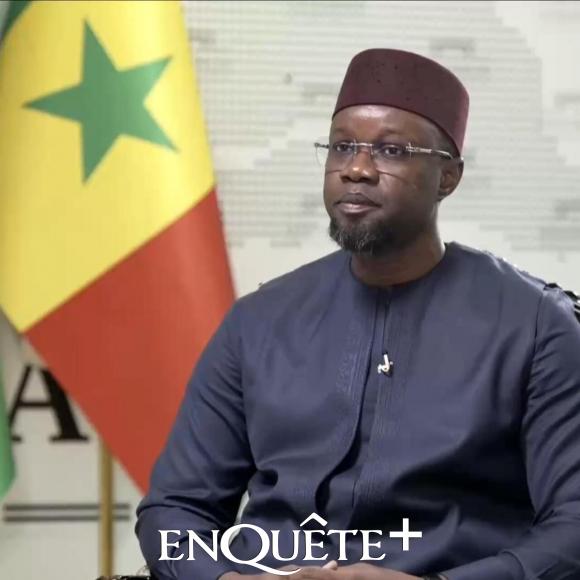
From fiery rhetoric to measured diplomacy
Since departing his role as Prime Minister, Ousmane Sonko has undergone a noticeable transformation in his public discourse. Once known for his confrontational style, the Pastef leader now presents himself as a voice of reason, deliberately toning down his previous belligerent tone. His recent appearances suggest a deliberate shift toward moderation and strategic ambiguity.
Rebranding as a statesman
At Pastef’s recent congress in Diamniadio, Sonko urged his followers to adopt a more disciplined approach to public engagement. “Our party has matured,” he declared, emphasizing the need for measured language in political discourse. “Insults and provocations do not elevate us in the eyes of the public—leaders, religious figures, and families are watching.”
This recalibration extends beyond rhetoric. Sonko’s media interviews now reflect a more cautious, almost diplomatic tone. While previously uncompromising on issues like debt restructuring, he now speaks in nuanced terms. When questioned about potential sovereign debt adjustments, he stated: “Our positions are not absolute. We will assess the situation with clarity and act in the best interest of Senegal.”
Contradictions and strategic ambiguity
Sonko’s evolving stance reveals underlying contradictions. In the same breath, he dismisses “wild restructurings” while leaving room for negotiation. “As Prime Minister, I opposed reckless debt policies because the conditions didn’t justify them. Now, as a former leader, I recognize the complexities of governance—but we will not accept terms that harm Senegal.”
The issue of “odious debt” exemplifies this duality. Once a vocal advocate for debt cancellation, Sonko now downplays his earlier position, attributing past statements to his role as party leader rather than Prime Minister. “Those were opinions shared in public forums,” he explained, “but governance requires different considerations.”
Shifting priorities on social issues
On contentious social matters, Sonko’s language has also evolved. While previously emphasizing legal crackdowns on homosexuality, he now highlights its link to HIV transmission—a subtle pivot that aligns with global health narratives. Yet his past statements, including a recent parliamentary exchange where he claimed the goal was to “end the proliferation” of LGBTQ+ activities, continue to fuel criticism from opponents.
The new face of Senegal’s political opposition
Sonko’s transformation isn’t just about tone—it’s a calculated shift in political strategy. He now frames his differences with President Bassirou Diomaye Faye as mere “political divergences,” rejecting accusations of betrayal. “The media and our adversaries seek to paint us as instigators,” he warned at Diamniadio. “Our focus must remain on policy, not provocation.”
The question remains: Is this a genuine evolution or a tactical move ahead of 2029? One thing is clear—Senegal’s political landscape is witnessing a leader recalibrating his approach, one calculated statement at a time.