
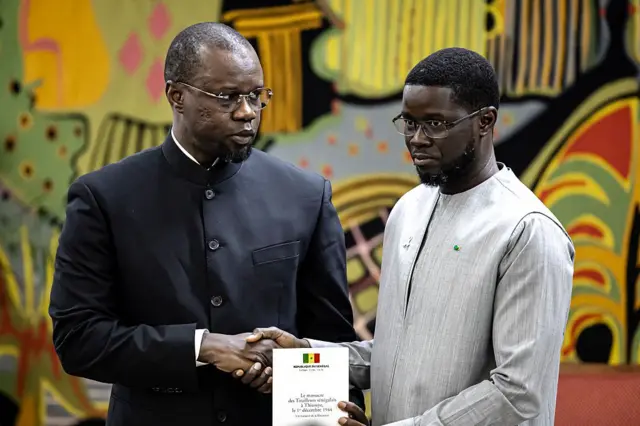
Deepening rifts within Senegal’s political landscape
A sharp political divide has surfaced between Ousmane Sonko, leader of the Pastef-Les Patriotes party, and President Bassirou Diomaye Faye, casting a shadow over recent government transitions. During a press briefing in Dakar, the former Prime Minister outlined the reasons behind his party’s decision to abstain from joining the newly formed cabinet led by Ahmadou Alamine Mohamed Lô.
Key disagreements over national priorities
The rejection stems from fundamental differences on critical state policies. Sonko highlighted major concerns, including justice sector reform, accountability mechanisms, and renegotiating unfavorable economic contracts inherited by the administration. Public debt management emerged as another focal point of contention, with the opposition leader questioning the government’s approach to financial sustainability.
Financial safeguards and future engagements with international lenders also topped the list of unresolved issues. Sonko criticized the administration’s subsidy policies and judicial governance framework, arguing these areas require stronger alignment with the party’s vision for national development.
Government formation sparks controversy
The appointment process itself became a flashpoint. Sonko emphasized that as the country’s dominant political force, the Pastef deserved substantial representation in the executive branch. His party insisted on holding at least half of the ministerial portfolios to ensure meaningful influence over policy direction.
Despite the inclusion of several allies in the new government, Sonko questioned its political legitimacy. However, he ruled out immediate confrontational measures, stating that the Pastef would not pursue a no-confidence motion against the administration in the near term.
Uncertainty looms over Senegal’s reform agenda
The public dispute underscores growing strains between the presidency and the party that spearheaded the 2024 political transition. With strategic disagreements unresolved, the coming months may test the stability of Senegal’s governance model and the feasibility of its reform commitments.