
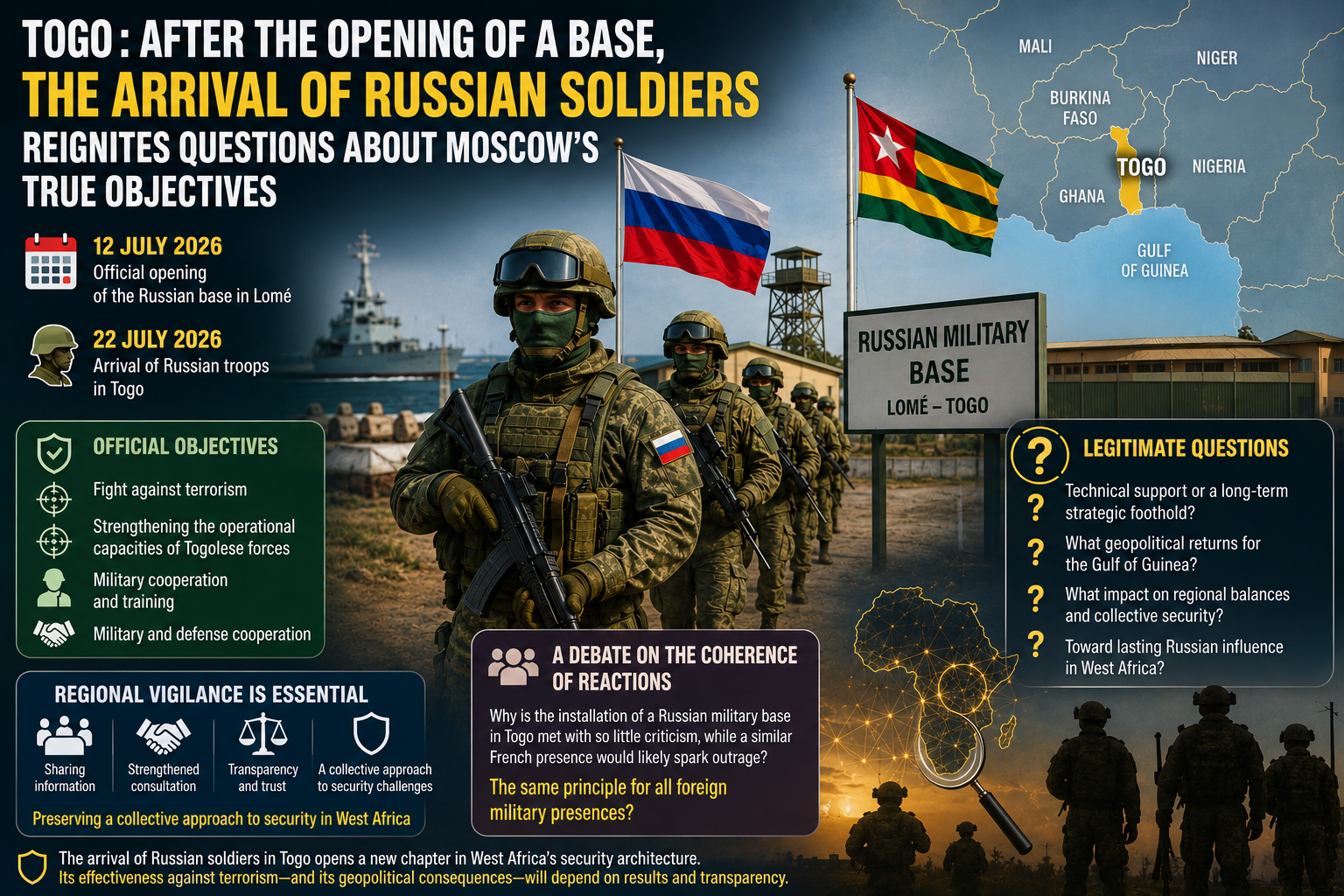
The deployment of Russian military personnel to Togo, confirmed on July 22, 2026, shortly after the inauguration of a Russian military base in Lomé on July 12, marks a significant shift in the West African nation’s security partnerships. Officially, these soldiers are tasked with enhancing anti-terrorism efforts and bolstering the operational capabilities of Togo’s armed forces.
Yet the move has ignited a wave of speculation among regional security analysts. While cooperation between sovereign states is a fundamental principle, the long-term presence of foreign military forces in a region grappling with persistent jihadist threats inevitably reshapes the strategic landscape across West Africa.
Russia’s expanding footprint in Africa
Moscow has steadily deepened its military engagements across the continent through defense agreements, training programs, arms transfers, and, in select cases, the deployment of uniformed personnel. The arrival of Russian troops in Togo aligns with this broader strategy of strengthening defense ties with African governments.
The central question now is whether this cooperation is strictly limited to technical support for Togo’s forces in combating armed groups operating near the northern border—or if it signals a deeper ambition to embed Russia within the security framework of the Gulf of Guinea.
A closer look at the implications
The arrival of foreign military personnel rarely amounts to a mere operational aid package. It often paves the way for expanded cooperation in intelligence sharing, military education, logistics, industrial defense partnerships, and defense diplomacy—each with implications that extend far beyond immediate battlefield support.
Mixed reactions across the Sahel
The announcement has also sparked debate over the inconsistent reactions to military partnerships based on their origin. Observers have noted that had a French base been established in Togo under similar conditions, public and diplomatic backlash would likely have been far more pronounced. Regional leaders and allied voices in the Alliance of Sahel States (AES) have frequently criticized the presence of Western forces in West Africa, labeling them as destabilizing or interference in domestic affairs.
In stark contrast, the establishment of a Russian base and the deployment of its soldiers have so far elicited minimal criticism from the same quarters. This discrepancy has led some analysts to question whether assessments are driven by the identity of the foreign partner rather than by a consistent principle regarding foreign military presence.
Calls for transparency and regional vigilance
For neighboring states, this evolving security reality demands heightened attention. While recognizing Togo’s sovereign right to choose its defense partners, regional actors must carefully monitor how this cooperation unfolds and assess its potential impact on collective security, regional cooperation mechanisms, and West African diplomatic balances.
In an era where terrorist threats transcend national borders and global powers intensify their influence campaigns, transparency emerges as a cornerstone of trust. Strengthening information sharing and consultation frameworks could help prevent misunderstandings and safeguard a unified approach to regional security challenges.
The introduction of Russian military personnel in Togo opens a new chapter in West Africa’s security architecture. Its effectiveness in counter-terrorism operations and its broader geopolitical consequences will only become clear through tangible results on the ground and the evolving dynamics among Lomé, Moscow, and regional partners.