
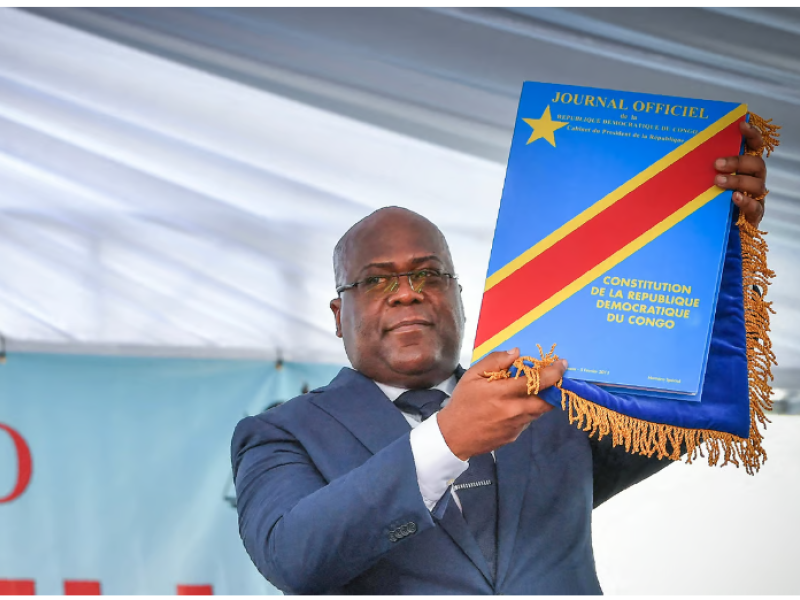
In the Democratic Republic of Congo, the debate over amending the constitution is creating a deep rift within the political and social landscape. This critical issue was recently addressed in Genève, Suisse, during a session of the United Nations Human Rights Council focused on the security and rights situation in Nord-Kivu and Sud-Kivu.
Representing the High Commissioner for Human Rights, Abdoul Aziz Thioye expressed significant concern regarding the narrowing of political and civic freedoms in RDC. He specifically pointed to the recent demonstrations in Kinshasa, where opposition groups gathered to voice their resistance to any constitutional modifications.
The necessity of a broad national agreement
According to the United Nations, any move to alter the nation’s fundamental law must be grounded in a wide-reaching national consensus. This approach is deemed essential for maintaining social stability and ensuring that the country’s international human rights obligations are upheld.
“A constitutional reform process cannot succeed without the inclusion of all voices. Failing to reach a consensus could severely jeopardize social cohesion,” warned the United Nations representative, who previously led human rights monitoring efforts within the country.
Combatting impunity and supporting rights defenders
Beyond the political debate, the United Nations continues to support the Congolese justice system in its fight against impunity. Despite logistical and financial hurdles, this partnership has facilitated the conviction of 109 individuals through various judicial inquiries and mobile court hearings. Additionally, protection and assistance have been extended to 150 human rights defenders and journalists, providing them with legal, financial, and psychological aid, as well as relocation measures when necessary.
A nation divided amidst a security crisis
The political scene is currently split between two major factions: the Coalition Article 64 for the Defense of the Constitutional Order (C64), which opposes the changes, and the Coalition of Congolese for Constitutional Change (C4), which supports them. Both groups claim to represent the will of the Congolese people.
This internal political friction is unfolding against the backdrop of a dire security situation in the eastern part of the RDC. The region remains plagued by the AFC/M23 rebellion, which receives support from Rwanda, as well as the ongoing threat from the ADF. While diplomatic efforts continue, tangible results on the ground remain elusive for the populations living in conflict zones, where territories remain under the control of armed groups.