
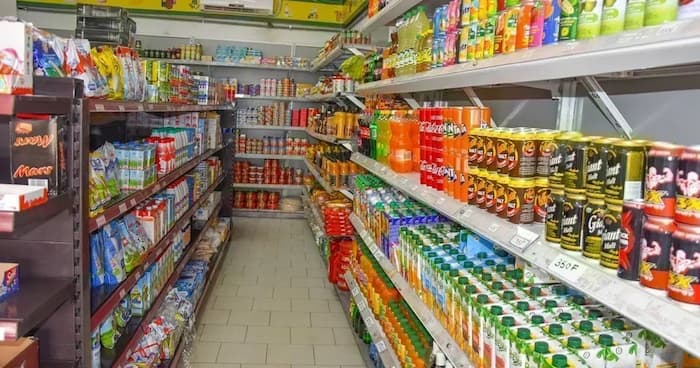
In a nation grappling with persistent inflation, a striking observation has reignited public discourse on the high cost of living in Senegal. A video created by French content producer Simon Labas, initially uploaded in December 2025, has recently recirculated across social media platforms. The footage meticulously compares prices of various products found in Dakar retail outlets with those for similar items in Paris, revealing significant disparities.
The comparison begins with whole chicken, priced at 2,610 F CFA per kilogram in the Senegalese capital. This figure notably surpasses the equivalent Parisian cost of 2,300 F CFA. Butter from the popular Elle & Vire brand follows a similar pattern, retailing at 2,990 F CFA in Dakar compared to approximately 1,990 F CFA in France. Cooking oil, a fundamental staple in Senegalese households, reaches 6,990 F CFA in Senegal, while across the Mediterranean, it sells for around 6,000 F CFA.
The price gap widens considerably for other everyday necessities. A packet of Chocapic cereal is listed at 5,250 F CFA on Dakar shelves, a price more than double the Parisian equivalent of 1,990 F CFA. Similarly, a bottle of Soupline fabric softener costs 9,990 F CFA in Dakar, nearly twice the 5,600 F CFA price tag in Paris.
Adding to these existing disparities is an impending logistical constraint set to further impact import costs. Maritime transporter Maersk is scheduled to implement a handling surcharge of 250 dollars per container, effective May 1, 2026. This translates to roughly 151,250 F CFA, with potential increases reaching up to 211,750 F CFA depending on specific circumstances. Such an additional charge is expected to inevitably inflate the cost of imported goods, ultimately passing these increased expenses onto Senegalese consumers.
The re-emergence of this price comparison has triggered a wave of reactions from Senegalese internet users, many expressing surprise at the sheer magnitude of the differences highlighted. Beyond food items, comments frequently cite housing and fuel as particularly burdensome expenses for households, especially in the wake of recent fuel price hikes mandated by authorities.
This observation underscores a broader regional trend where Senegal is consistently ranked among African countries with the highest cost of living. A 2024 assessment by Countryeconomy, cited by Jeune Afrique magazine, positioned Senegal as the second most expensive nation on the continent, trailing only Côte d’Ivoire.