
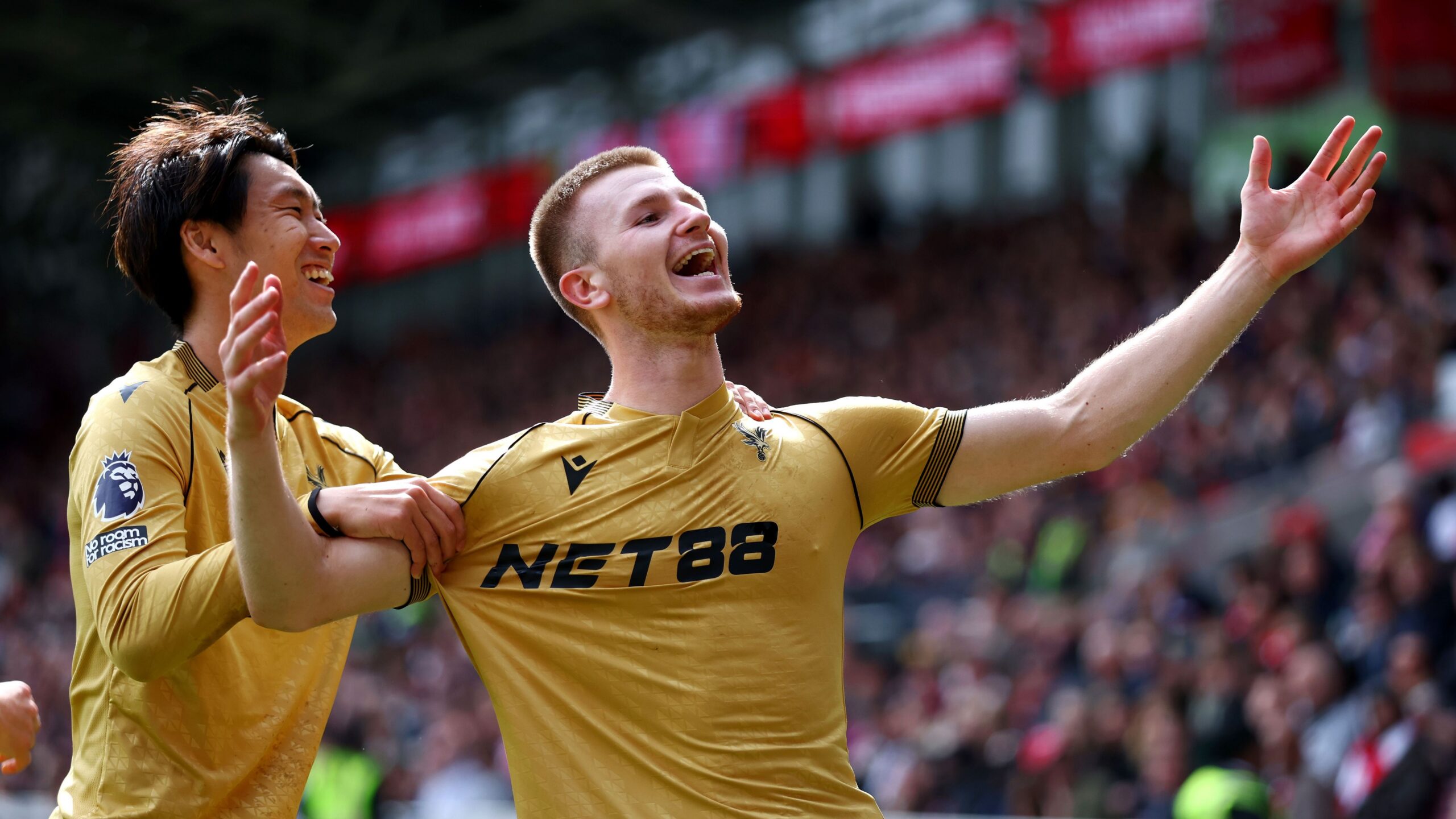
Tonight’s Europa Conference final at the Red Bull Arena promises a clash far removed from the traditional powerhouse narratives. Crystal Palace and Rayo Vallecano, two clubs that entered the season with modest ambitions, now stand on the brink of footballing history. For both sides, this isn’t just another match; it’s a rare opportunity to etch their names into the annals of European football.
Oliver Glasner has already cemented his legacy at Crystal Palace by guiding them to their first major trophy last season, the FA Cup. But European glory carries a different weight. Across the pitch, Rayo Vallecano’s presence under Iñigo Pérez feels even more improbable. Yet those who have followed Pérez’s development understand why his team’s journey has earned quiet admiration from neutral observers.
Contrary to expectations shaped by reputation and resources, this final isn’t the one-sided affair many predicted. Beneath the radar, a tactical duel is brewing—one that could spiral into chaos or hang in delicate balance, depending on which side seizes control.
Rayo Vallecano’s controlled chaos
Iñigo Pérez’s rise is one of the most compelling coaching stories in modern football. Just three years ago, he was part of Andoni Iraola’s staff at Rayo Vallecano, helping shape the club’s reputation for fearless, high-energy football. When Pérez’s own path to England was blocked by work permit issues, rather than abandon his ambitions, he returned to Vallecas, absorbed more experience, and refined a philosophy that preserved Iraola’s DNA while integrating his own ideas.
The result? A team that maintains intensity without descending into reckless pressing. Their attacking identity remains aggressive, but now with added composure in possession. The numbers reflect this duality: Rayo generates a high volume of shots, nearly 40% of which come in transition, often from crosses. Their shot maps show a team that dominates territory, flooding central zones around the penalty area. Yet this aggression sometimes borders on disorder—their average expected goals (xG) per shot are modest, indicating a preference for quantity and speed over polished build-up.
This tendency is evident in their season-long xG trends. Rayo’s matches rarely feel fully controlled, with their offensive output remaining relatively stable but their defensive structure frequently fragile. They thrive in instability, where momentum can swing violently from one end to the other. Yet despite these fluctuations, their goal difference remains positive—a consistency Crystal Palace would be unwise to dismiss.
Crystal Palace’s precision in transition
Glasner’s tactical nous was on full display last season when Palace defied the odds to lift the FA Cup, a triumph that followed a tactical masterclass against Manchester City. The Austrian coach’s calm demeanor masked a steely resolve, one that has since become a hallmark of his leadership in high-pressure knockout football.
This season hasn’t been without turbulence. Injuries to key players like Eberechi Eze and Marc Guéhi tested the squad’s depth, but a comfortable mid-table finish in the Premier League allowed Palace to refocus on the Europa Conference. Glasner’s pedigree in European knockout football—bolstered by his Europa League success with Eintracht Frankfurt—positions him as one of the most tactically astute managers in such finals.
Their shot profile tells a story of efficiency over volume. While Rayo floods the box with speculative efforts, Palace prioritizes quality. Nearly 40% of their non-penalty shots also come in transition, but their approach is more measured once they enter dangerous zones. Their xG per shot is higher, and their shots are taken from closer distances, reflecting more refined sequences. Their shot maps reveal a deliberate focus on central areas, avoiding speculative long-range efforts in favor of high-danger attempts inside the box.
This precision is evident in their xG trends, which, while more volatile than Rayo’s, feature sharper peaks—moments where Palace dominates through structured, vertical transitions. In a one-off final, these peaks could prove decisive.
Adam Wharton: the architect of Palace’s verticality
Adam Wharton embodies the modern midfielder: fearless, intelligent, and relentlessly vertical. Often overlooked in discussions about England’s World Cup squad, his profile is exactly what elite football claims to value but rarely nurtures—players who combine risk with control, dribbling with passing, and aggression with composure. Each action he takes is designed to hurt the opposition, not just retain possession.
His statistics paint a picture of a midfielder who excels in progression and chance creation. He ranks among the Premier League’s elite in carrying the ball forward, delivering progressive passes, and contributing directly to xG buildup. What sets him apart is his balance: he can slow the tempo to maintain control, then explode forward with a single pass or dribble, exploiting gaps in defensive lines.
This versatility is crucial against a team like Rayo Vallecano. Rayo’s aggressive pressing thrives on momentum, but it also leaves them vulnerable to quick transitions. Wharton’s ability to disrupt defensive structures, particularly in half-spaces and around the edge of the box, could be the difference in a match that turns chaotic.
His presence in the buildup maps underscores his importance. The blue markers highlight his role in advancing Palace’s attacks from midfield, while the red dribbles show a player unafraid to take on pressure. Many of Palace’s most dangerous sequences flow through him, especially in the half-spaces where a disguised pass or a burst of speed can unravel a defensive block.
At just 21, Wharton’s composure and audacity suggest a player destined for the highest level. Under Glasner’s guidance, he has found an environment where his talents can flourish—but it won’t be long before Europe’s elite come calling.
Rayo’s set-piece puzzle for Palace
If Rayo Vallecano is to exploit a weakness in Crystal Palace’s armor, it may lie in the Eagles’ vulnerability at set pieces. Palace ranks among the Premier League’s poorest teams in defending defensive corners, not necessarily in the frequency of shots conceded, but in the quality of chances allowed. Their xG conceded on these phases is disproportionately high, indicating structural flaws rather than random mishaps.
The data confirms a disturbing trend: Palace’s defensive corners often lead to high-danger chances in central zones. Opponents consistently find space in the crowded penalty area after second balls, with shots from the right flank generating an average xG of over 0.31—a staggering figure. Even from the left, the central zones remain the most perilous.
Rayo isn’t traditionally a set-piece specialist. Their strengths lie in transitions, direct pressing, and collective intensity, not in elaborate dead-ball routines. Yet the context is revealing: Palace’s defensive corners are a recurring source of danger, and Rayo, with its relentless pressing and physicality, could exploit these moments without needing to design complex routines.
The solution for Rayo may be simple: overload central zones, force second balls, and maintain pressure after the initial clearance. Throughout the season, these sequences have repeatedly led to high-quality chances against Palace—moments that could decide a tightly contested final.
Conclusion: a final of contrasts
This isn’t a clash of equals in the traditional sense. Crystal Palace boasts superior individual talent, greater physicality, and a tactical edge that could see them dominate possession and dictate play. At their best, Glasner’s team combines fluid transitions with enough structure to outmaneuver even the most disciplined opponents. Players like Wharton provide the vertical control that could prove decisive if the match descends into chaos.
Yet Rayo Vallecano thrives in unpredictability. Under Pérez, they embrace instability rather than fear it, dragging opponents into a whirlwind of pressing and counterattacks. Palace may possess more talent, but Rayo’s intensity and tactical identity could unsettle even the most composed side.
This final isn’t about the consistency of a 38-game season; it’s about who can impose their will over 90 chaotic minutes. A Wharton through ball, a Palace counterattack, a Rayo pressing trap, or even a second ball from a defensive corner could decide the trophy. That unpredictability is what makes this final so compelling.
Regardless of the outcome, this is no longer a story of David versus Goliath. It’s a collision between two managers with radically different philosophies, each fighting for the defining moment of their careers.