
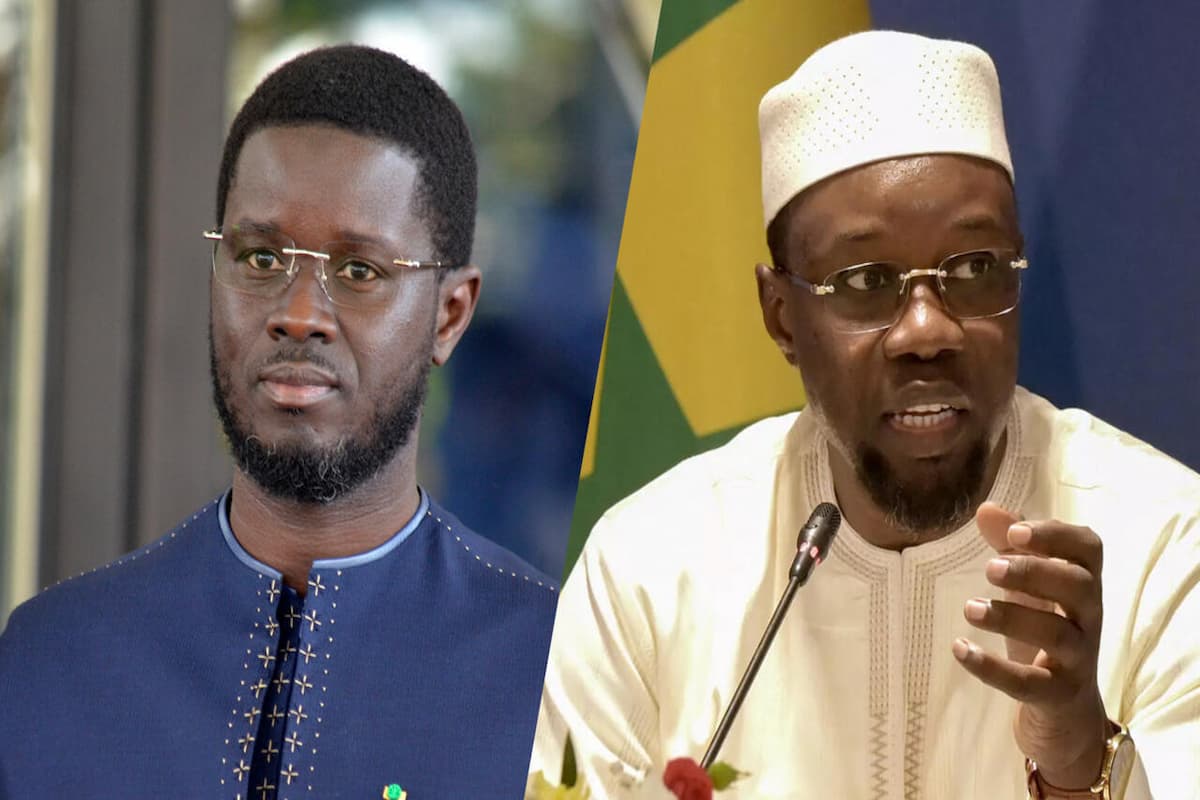
In a move that stunned the nation, Senegal experienced its first-ever political rupture within an elected leadership, a rare occurrence in Francophone West Africa. The partnership between Ousmane Sonko and Bassirou Diomaye Faye, which had once symbolized opposition unity against former President Macky Sall, collapsed abruptly late on the evening of May 22, 2026.
Government dissolved in an unexpected announcement
Around 10 p.m., Senegalese citizens were jolted by a formal statement broadcast on national television from the Presidential Palace in Dakar. Oumar Samba Ba, Secretary-General of the Presidency, delivered the news that Prime Minister Ousmane Sonko had been relieved of his duties, alongside the entire cabinet. The decree, numbered 2026-1128, marked the end of Sonko’s tenure and transferred the government into caretaker mode.
« By this decree, President Bassirou Diomaye Faye has terminated the mandate of Ousmane Sonko as Prime Minister, thereby ending the functions of all ministers and state secretaries. The outgoing government will manage current affairs until further notice, » declared Oumar Samba Ba in a measured tone.
Sonko’s defiant reaction
Within hours, Ousmane Sonko took to Facebook to share his response. His message was brief but loaded with significance: « Tonight, I sleep with a light heart. » Earlier that same evening, during a parliamentary session, he had made his stance clear, asserting that « I am not a Prime Minister who blindly obeys or approves everything without question. »
The rift between the two leaders had been growing for months, with public disagreements escalating. Just weeks prior, during a press briefing, President Bassirou Diomaye Faye had openly hinted at the possibility of dismissing his Prime Minister if trust eroded. The formal announcement on May 22 confirmed that threshold had been crossed.
Uncertain future for Senegal’s government
With this abrupt reshuffle, questions swirl about the direction of Senegal’s political landscape. The next major electoral milestones remain years away—municipal elections are not due until 2027, while the presidential race is scheduled for 2029. The sudden change in leadership leaves citizens and observers alike speculating about the stability and continuity of governance in the coming years.