
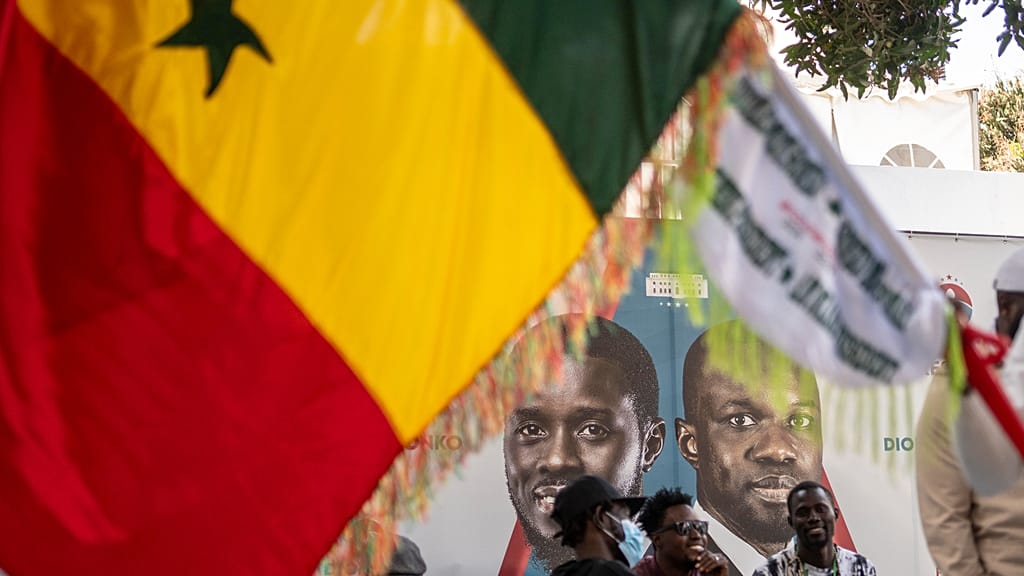
Senegal’s president dismisses prime minister amid rising political tensions
In a decisive move that has sent shockwaves through West Africa, Senegal’s President Bassirou Diomaye Faye terminated the mandate of Prime Minister Ousmane Sonko on Friday. The announcement, delivered via a televised address read by presidential advisor Oumar Samba Ba, also included the dissolution of the entire government. The decision comes after months of escalating friction between the two leaders, plunging the debt-laden nation deeper into uncertainty.
In his televised decree, Oumar Samba Ba formally declared that President Faye had “put an end to Ousmane Sonko’s duties as Prime Minister and, consequently, to those of all ministers and state secretaries.” The decision marks a dramatic shift in the political landscape of Senegal, a country where power dynamics have recently been reshaped by a historic election.
The unusual political situation stems from the fact that President Faye owes much of his electoral success to Sonko. Had Sonko not been barred from running due to a defamation conviction, he would have likely become president himself. Instead, Faye, a former key ally of Sonko, now holds the reins of power—and the authority to remove his own prime minister with a single executive order.
From allies to adversaries: the breakdown of a political partnership
The once-close relationship between Faye and Sonko has deteriorated rapidly in recent months. Their party, Pastef, swept the first round of the March 2024 elections on promises of sweeping political change, vowing to combat corruption and poor public governance. Sonko, in particular, captured the imagination of Senegal’s disillusioned youth with his fiery panafricanist rhetoric and uncompromising stance against France, the former colonial power.
Yet, despite his widespread popularity, Sonko’s influence has waned as Faye consolidated power. The president’s decision to dismiss him underscores the growing divide within the party and raises questions about the future direction of Senegal’s government.
In a bold public statement delivered to Pastef supporters in early July, Sonko accused Faye of a “lack of leadership,” criticizing the president for failing to adequately defend him against mounting criticism. The clash of personalities and visions has now culminated in a high-stakes political showdown, leaving the nation to grapple with its consequences.
What comes next for Senegal?
The sudden dismissal of the prime minister and the dissolution of the government have left many Senegalese citizens and political observers scrambling to understand the implications. With Faye at the helm, the country faces a critical juncture as it navigates economic challenges, public expectations, and the fractured unity of its ruling party.
The move has intensified speculation about the government’s priorities moving forward. Will Faye double down on reform, or will the power struggle overshadow policy implementation? For now, Senegal’s political future remains uncertain, as citizens and analysts alike await the next steps from a president determined to assert his authority.