

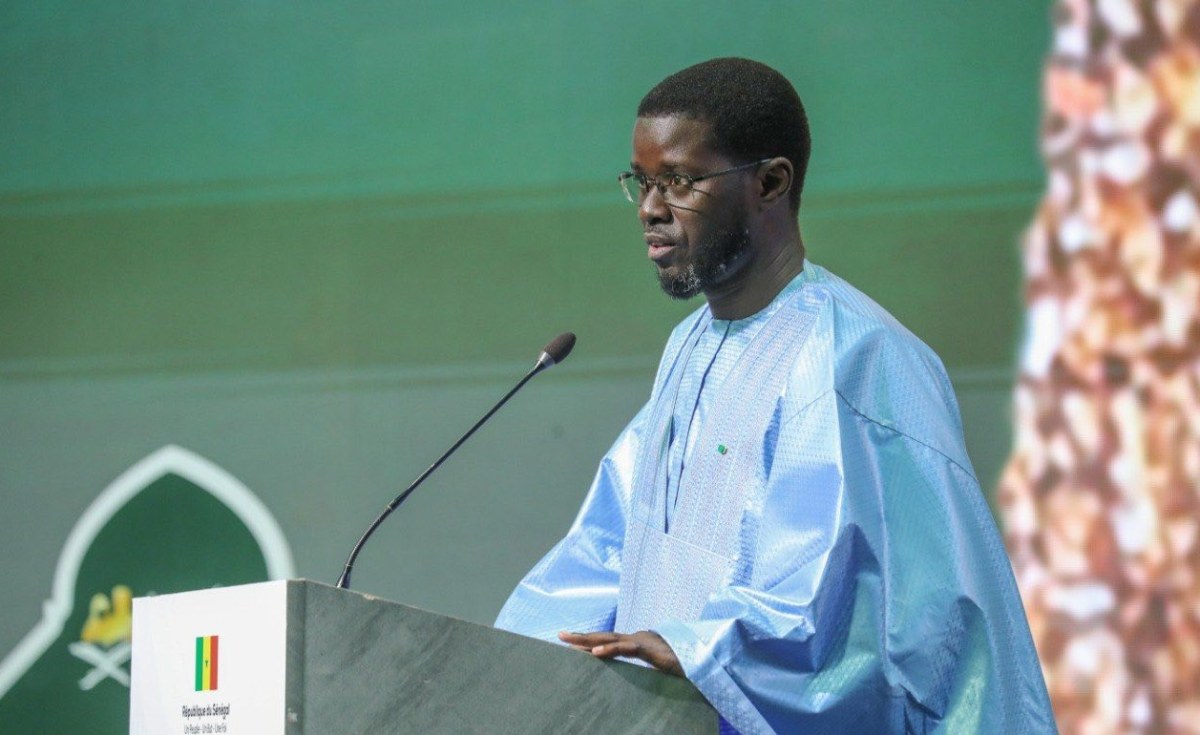
The growing rift between Senegal’s President Diomaye Faye and his former Prime Minister, Ousmane Sonko, appears irreversible. The announcement of a new party to be launched in the coming days underscores this divide, leaving little room for reconciliation between the two leaders within the PASTEF platform.
a fractured alliance and uncertain political future
With over 300 mayors in a coalition spanning nearly 600 municipalities nationwide, President Faye commands significant local support. Yet his ability to consolidate this backing into a sustainable political force remains uncertain. Recent government reshuffles have exposed his limited influence within PASTEF, where Sonko, now Speaker of the National Assembly, holds greater sway.
This power imbalance has prompted Faye’s decision to establish his own party—a calculated move to reclaim political dominance. However, the move risks deepening divisions within the movement, as Sonko’s leadership over PASTEF continues to overshadow Faye’s ambitions. The reforms passed in the Assembly further restrict Faye’s options, including prohibiting him from simultaneously leading a political party.
the cost of political infighting
Rather than uniting to address pressing national challenges, the two leaders seem locked in a struggle for control. This discord plays directly into the hands of the opposition, potentially paving the way for an outsider to emerge and capitalize on public disillusionment ahead of the next presidential election. Meanwhile, former President Macky Sall’s absence from the fray only highlights the instability gripping the ruling coalition.
The political impasse threatens to derail critical reforms, with Senegal’s socioeconomic priorities likely to take a backseat to partisan squabbles. Economic instability looms large, as prolonged uncertainty could trigger costly early elections—a burden the country can ill afford. The fallout extends beyond governance: public trust in both leaders has eroded, casting a shadow over Senegal’s reputation as a democratic model in West Africa.
cohabitation or collapse?
Observers warn that the current standoff already resembles a de facto cohabitation, where power is effectively split between conflicting factions. If Faye and Sonko fail to mend their differences, their legacy may be one of division rather than progress. For Senegal’s sake, a resolution—even a fragile one—would be preferable to a downward spiral of political and economic instability.