

The civil society landscape in Sénégal is demanding clarity following the recent legislative push for constitutional change. After the National Assembly approved a reform bill initiated by Pastef deputies on Monday, June 29, the Y’en a marre collective has stepped forward to emphasize the necessity of a popular vote. The group, a fixture of Senegalese citizen activism for 15 years, insists that the transition to a referendum—as suggested by President Bassirou Diomaye Faye—must be handled with absolute transparency rather than political maneuvering.
The movement has voiced concerns over what they describe as a deteriorating political atmosphere characterized by “political calculations” and “schemes” reminiscent of previous administrations. Behind the current reform efforts, the collective sees a continuation of the political face-off involving Bassirou Diomaye Faye and Ousmane Sonko.
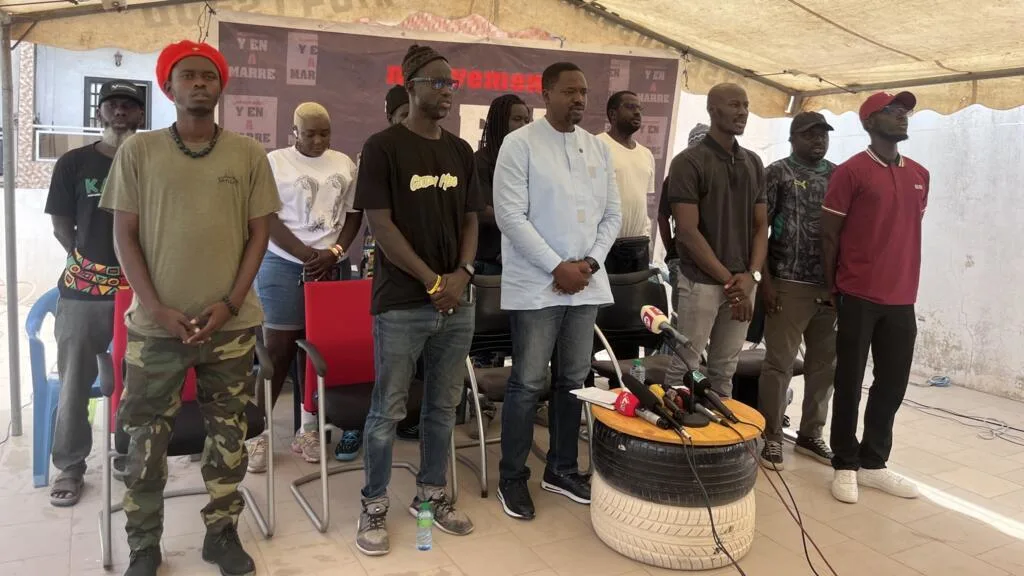
Aliou Sané, the founder of Y’en a marre, expressed support for the executive’s promise of a referendum but demanded genuine commitment. He warned that the announcement should not serve as a stalling tactic to undermine the Pastef initiative. Instead, he called for a process that allows citizens to fully grasp the stakes and make an informed decision.
Allegations of smear campaigns
The collective also highlighted the resurgence of old tactics aimed at silencing dissent. Since voicing their concerns regarding the Pastef-led approach, members of Y’en a marre report being labeled as an “LGBT lobby” by certain figures and supporters of Ousmane Sonko‘s party. In Sénégal, where homosexuality is heavily stigmatized and has faced stricter repression since last March, such accusations are seen as a tool for social disqualification.
“These are the same strategies we faced under Abdoulaye Wade and Macky Sall,” the movement noted. They pointed out the irony that those currently in power were once their allies, expressing outrage when the previous administration used identical accusations of foreign funding to destabilize the country.
The tensions surrounding the reform were further evidenced by the arrest of twelve individuals near the National Assembly on the day of the vote. Among those detained were nine young activists from the opposition party Alternative pour la relève citoyenne (ARC). While they were held on charges of “disturbing public order” and participating in an unauthorized protest, they were released a few hours later.