
Gabon and African Development Bank unveil priority projects for sustainable growth
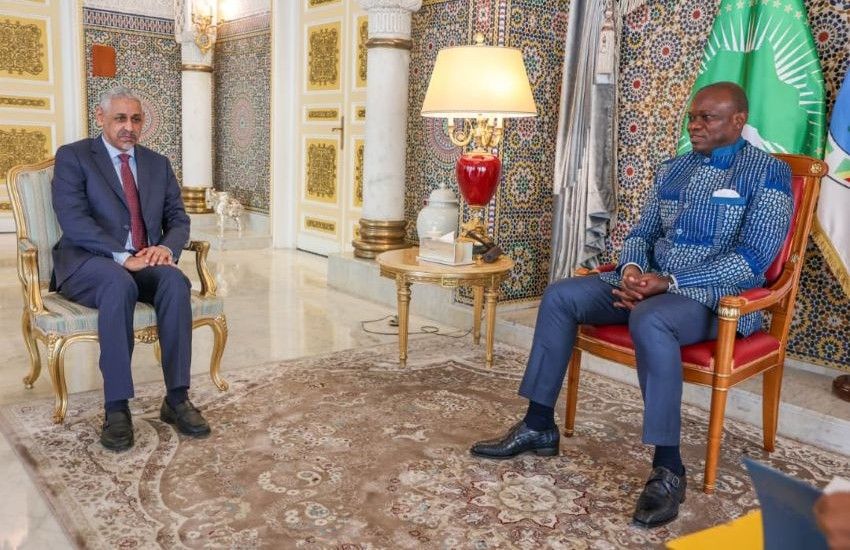
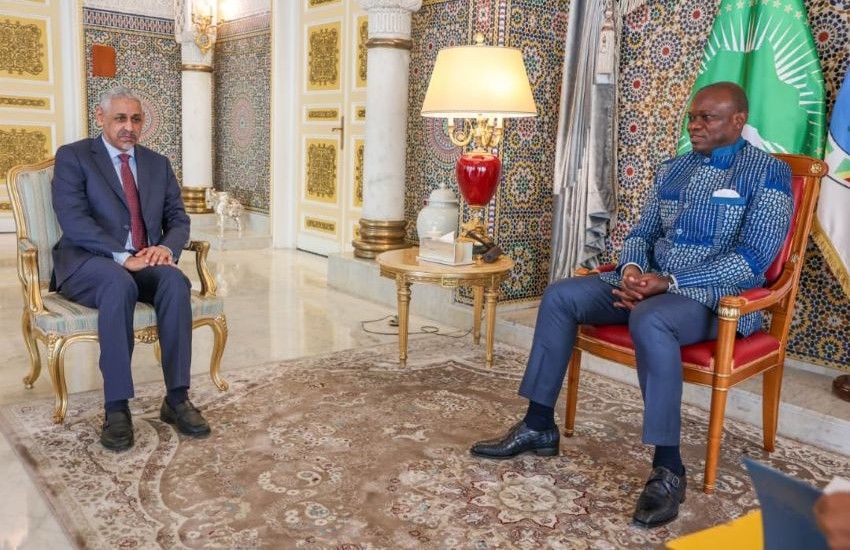
Libreville, Saturday, August 15, 2026 — A landmark partnership is taking shape between Gabon and the African Development Bank (BAD). On Friday, August 14, President Brice Clotaire Oligui Nguema welcomed BAD’s new president, Sidi Ould Tah, for a meeting that went beyond routine portfolio reviews. This was a strategic dialogue focused on tangible outcomes for Gabon’s citizens.
The discussions underscored a pressing national priority: ensuring that external financing translates into visible improvements in public services. Accompanied by Nouredine Kane Dia, BAD’s resident representative in Gabon, Sidi Ould Tah reviewed the government’s key priorities—two sectors that directly impact daily life and economic competitiveness: access to clean water and reliable electricity, and agricultural transformation.
Water and electricity as national imperatives
Gabon’s leadership has elevated access to essential utilities to a top-tier concern. Reliable water and electricity supplies are no longer just infrastructure needs—they are pillars of public trust and economic resilience. Rising demand has exposed gaps in production and distribution, leading to frequent disruptions that erode citizen confidence. To address this, BAD is positioning itself as a key partner in financing structural projects.
Central to these efforts is the development of water resources from the Komo River basin, in line with national directives. Success will hinge on coordinated action among technical experts, public and private operators, and long-term financing strategies. The goal is clear: transforming existing resources into sustainable public services that deliver quality, consistency, and accessibility.
Boosting local agriculture to reduce imports
President Oligui Nguema also emphasized the urgent need to revitalize Gabon’s agricultural sector. The country’s heavy reliance on food imports leaves it vulnerable to global price swings, logistics bottlenecks, and supply chain disruptions. The administration is determined to shift this dynamic by accelerating local production and moving toward food self-sufficiency.
Under the new framework, BAD’s support will focus on expanding agricultural value chains, empowering smallholder farmers, and fostering private investment. The strategy recognizes that agricultural development can unlock broader economic benefits—creating rural jobs, strengthening food security, and building domestic value chains. But achieving this requires more than funding: it demands robust infrastructure, efficient market access, and a conducive policy environment.
From financing to measurable impact
The meeting in Libreville signals a fundamental shift in Gabon’s partnership with BAD. While the two sides reaffirmed their strong relationship, the focus now is on impact. The government is pushing for a more targeted approach—one where financial commitments are aligned with sectors capable of delivering immediate socio-economic benefits.
This represents a departure from volume-based financing toward outcome-driven development. For Gabon, the challenge is to convert political alignment into funded, executed, and monitored projects. For BAD, the test will be proving that its interventions can directly address the country’s most pressing constraints.
The August 14 discussions mark the beginning of a new chapter. Water, electricity, and agriculture are now the benchmarks of a partnership built on results, not promises. In a climate where citizens demand visible progress, success will be measured not by the size of investments, but by their ability to transform daily life. It is on this foundation—real impact—that Gabon and BAD’s renewed collaboration must prove its worth.