
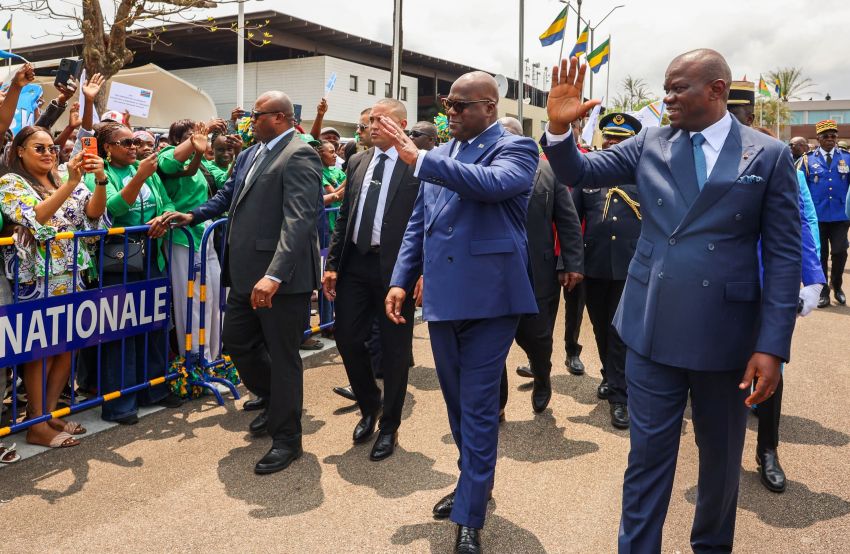
The arrival of Félix-Antoine Tshisekedi Tshilombo in Libreville on August 15, 2026, marked the beginning of a three-day working visit that extends far beyond mere diplomatic protocol. Welcomed by Gabonese President Brice Clotaire Oligui Nguema, this meeting reflects a broader continental trend: African nations increasingly leveraging historical and cultural ties to forge stronger political, economic, and strategic alliances.
The warm reception accorded to the Congolese leader—including a spontaneous public gathering in Libreville—elevated the visit’s significance beyond state-level exchanges. Gabon and the Democratic Republic of the Congo (DRC) share deep-rooted human, cultural, and diplomatic connections. Their growing collaboration comes at a pivotal moment when intra-African cooperation is becoming indispensable for asserting the continent’s interests in a rapidly shifting global landscape.
Diplomacy rooted in shared history
The choice of the Léon Mba Memorial as the symbolic first stop of the visit was deliberate. Renovated just one day before Tshisekedi’s arrival, this site commemorating Gabon’s founding president provided a powerful backdrop for the two leaders’ discussions. The Congolese president laid a floral tribute at the memorial, honoring Léon Mba’s legacy before reviewing his biography and paying respects to fallen heroes.
This ceremonial act carries profound political and historical weight. By paying homage to Léon Mba, Tshisekedi acknowledges a generation of leaders who shaped early African independence. In doing so, he underscores the role of memory—not just as a diplomatic tool, but as a reminder that Africa’s future must remain anchored in its past. In an era where institutional memories often fade, the restoration of historical sites and their integration into diplomatic relations reinforces national and continental continuity.
From symbolic unity to tangible cooperation
While the emotional resonance of this visit cannot be overstated, its true measure will lie in the concrete outcomes it produces. Diplomatic goodwill between Libreville and Kinshasa must translate into measurable progress across trade, security, education, and cultural exchange.
Gabon brings strategic advantages in sectors like energy and forestry, while the DRC’s vast resources and demographic weight position it as a key player in Central Africa. A strengthened partnership between the two nations could unlock new regional synergies, benefiting both populations and solidifying Central Africa’s integration efforts.
Strategic timing for a strengthened alliance
This visit occurs at a critical juncture. Gabon is actively redefining its global and economic positioning, while the DRC faces pressing security and geopolitical challenges. The dialogue between Oligui Nguema and Tshisekedi thus takes on added significance, potentially shaping a bilateral relationship that transcends national borders.
The challenge now is to move beyond symbolic gestures and translate mutual goodwill into actionable commitments. A privileged partnership between Gabon and the DRC will only fulfill its potential if it fosters greater trade, mobility, institutional collaboration, and joint initiatives. By beginning his visit with a tribute to Léon Mba, Tshisekedi set the tone for a diplomacy of results—one where Africa’s historical bonds become instruments of collective strength, prosperity, and sovereignty.