
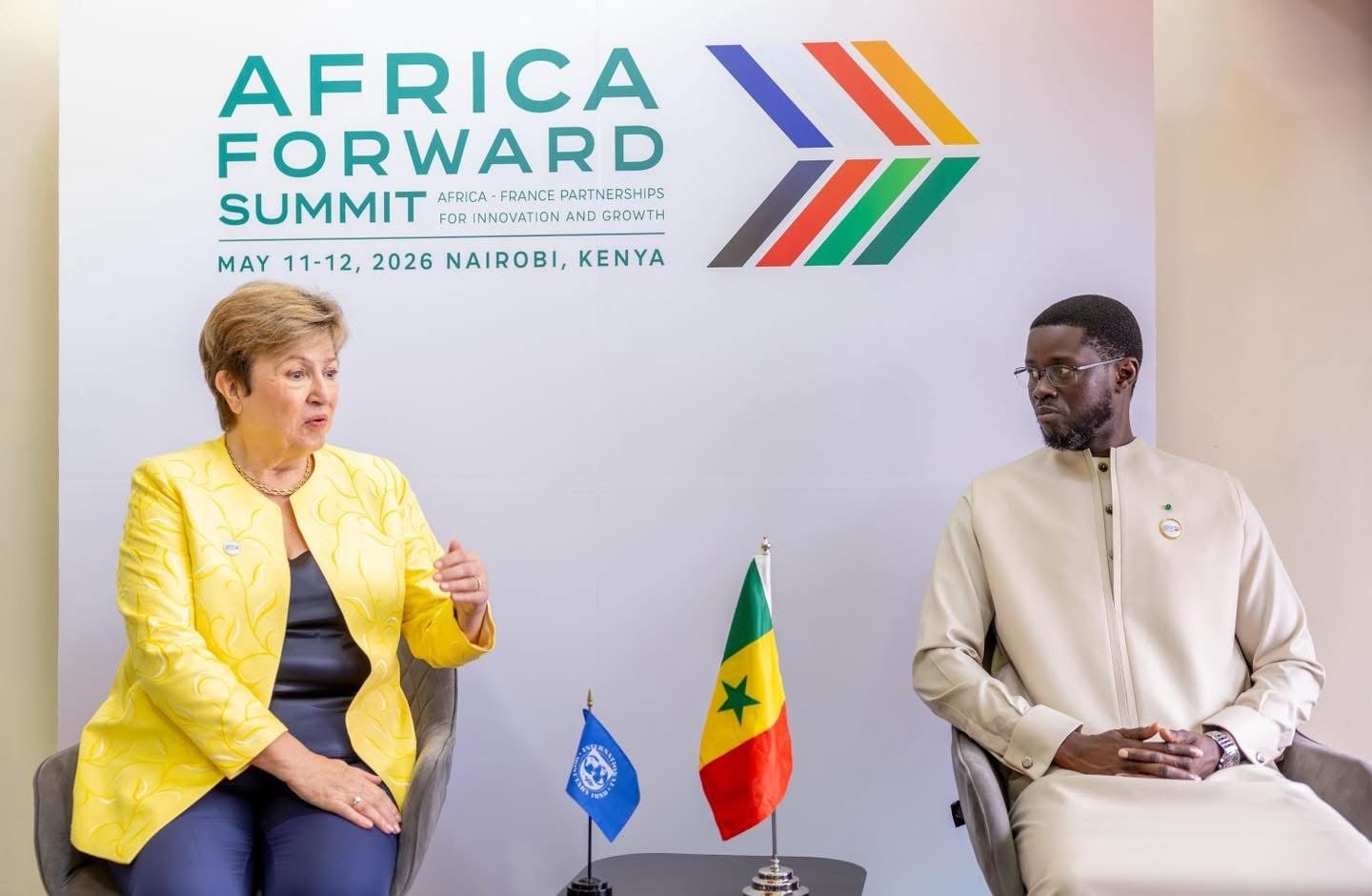
Senegal-FMI: debt management and reforms take center stage in Diomaye-Georgieva talks
Dakar, Senegal — The debt sustainability and economic reforms of Senegal were the focal points during a high-level meeting between President Bassirou Diomaye Faye and Kristalina Georgieva, Managing Director of the International Monetary Fund (IMF), held on the sidelines of the Africa Forward summit in Nairobi.
The tête-à-tête between the Senegalese leader and the IMF chief comes at a time when global economic uncertainties continue to cast a shadow over Africa’s financial landscape. While both parties engaged in constructive discussions, concrete progress on Senegal’s pending financial program remains pending, underscoring the complexity of navigating today’s volatile markets.
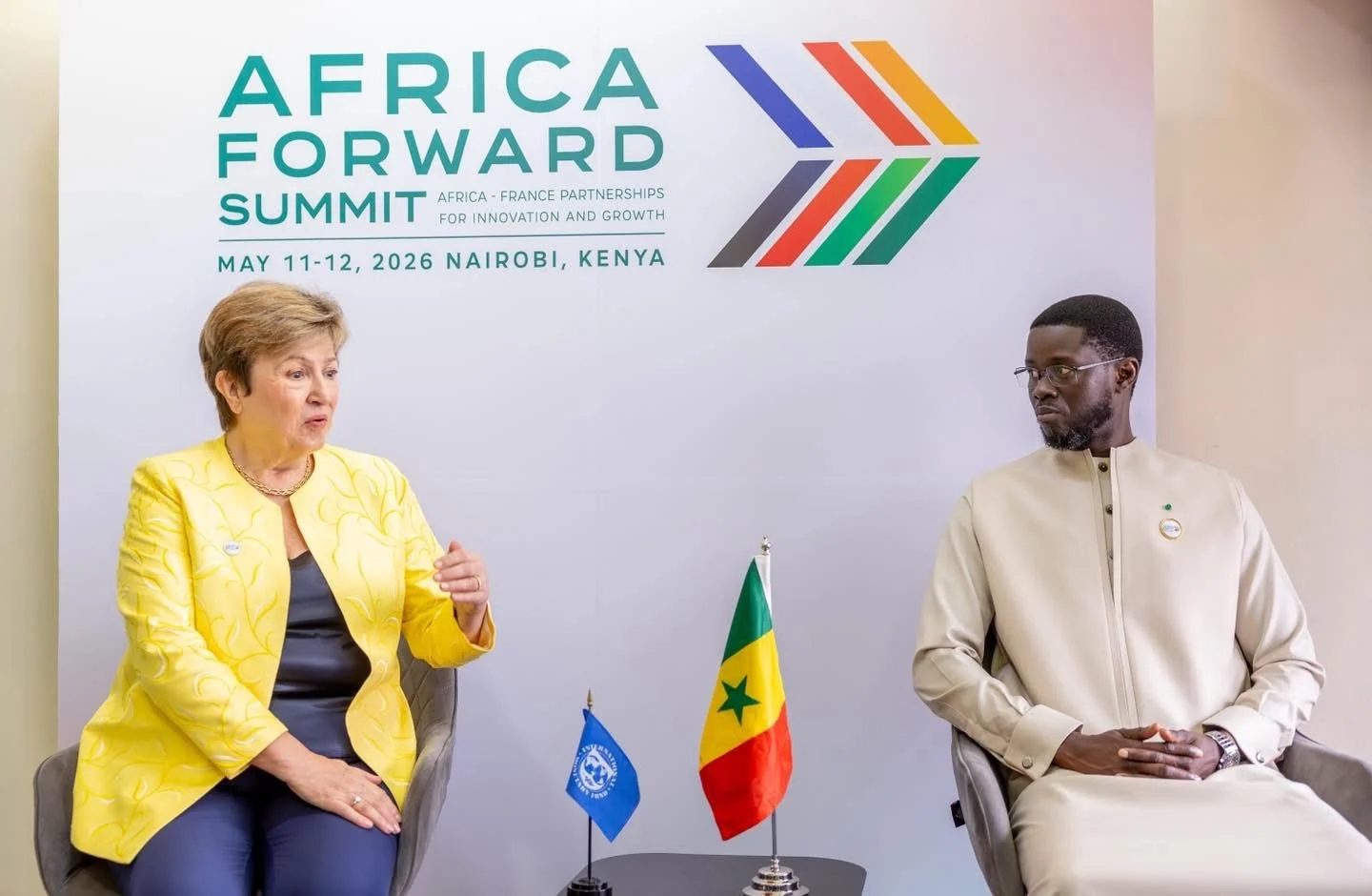
Key takeaways from the Diomaye-Georgieva meeting
Following the closed-door discussions, Kristalina Georgieva highlighted the importance of debt transparency and the need for Senegal to advance structural reforms to bolster economic stability. In a post on X, she emphasized:
« We discussed the reform agenda, debt sustainability, and the government’s ongoing efforts to enhance transparency. »
While the IMF reaffirmed its commitment to supporting Senegal, no timeline was provided for the approval of a new financial program. This follows earlier remarks by Abebe Aemro Selassie, Director of the IMF’s African Department, who cited market volatility and the need for robust economic forecasting as key challenges.
Why is Senegal’s financial program delayed?
According to IMF officials, the delay stems from a deliberate approach to ensure that any new program aligns with Senegal’s long-term economic strategy. Selassie stressed that the institution aims to avoid imposing overly restrictive conditions on the population while fostering a credible and sustainable path forward.
« We have chosen to allow the government the necessary time to develop a strategy that is both credible and financially viable, avoiding excessive austerity measures. This process requires careful deliberation and leadership from Dakar, » he noted.
The weight of debt and the path to stability
The new administration inherited a high national debt, making it imperative for policymakers to explore viable options to manage this burden. The IMF’s stance underscores the delicate balance between fiscal responsibility and social equity in crafting economic policies that serve the interests of all Senegalese citizens.
As discussions continue behind closed doors, the government faces the dual challenge of restoring investor confidence and ensuring that economic reforms do not disproportionately impact vulnerable communities.
What’s next for Senegal and the IMF?
The road ahead remains uncertain, but one thing is clear: Senegal’s economic future will depend on its ability to navigate these negotiations with strategic foresight. With global financial conditions tightening, the decisions made in the coming months could shape the country’s trajectory for years to come.
For now, all eyes are on Dakar and Washington, as both sides work to strike a balance between debt sustainability, growth, and inclusivity.