

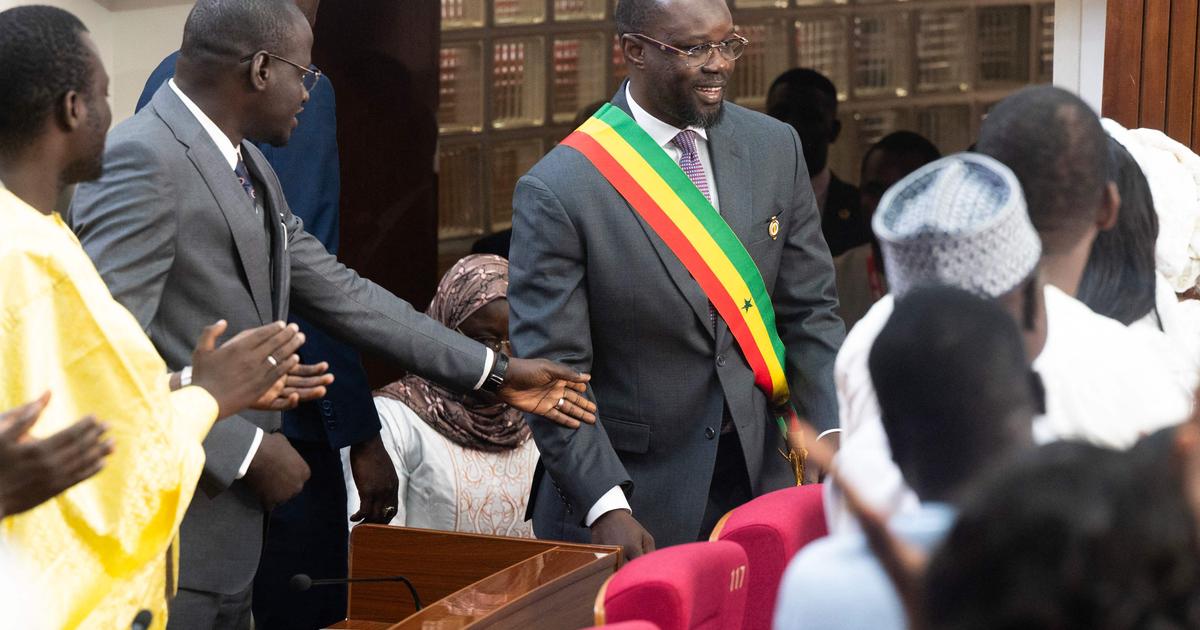
The political landscape in Senegal is currently defined by a high-stakes confrontation between two competing visions of legitimacy. On one side stands institutional legitimacy, embodied by President Bassirou Diomaye Faye. On the other, charismatic legitimacy, personified by opposition leader Ousmane Sonko. This tension, far from being a mere personal clash, represents a fundamental test for the country’s democratic stability.
Sonko’s political journey has been marked by an uncompromising stance against what he perceives as a closed political system. His rise to prominence was fueled by the frustrations of Senegal’s marginalized youth, who found in him a voice that articulated their demands for sovereignty, dignity, and genuine people’s representation. This populist approach, while energizing his base, has also raised concerns about the potential erosion of institutional checks and balances.
Institutional upheaval and political realignment
The recent political earthquake began when President Faye dismissed Sonko as Prime Minister on May 22. The very next day, the Assembly President Malick Ndiaye resigned, strategically clearing the way for Sonko’s ascent. By May 26, Sonko had been overwhelmingly elected as Assembly President with 132 votes out of 165, firmly establishing himself as the leader of the ruling Pastef party and the country’s principal opposition figure to the president he once served alongside.
This rapid succession of events has been described by political observers as both an “historic election” and a “institutional coup d’état.” The outcome has created a unique political configuration where the former allies now face each other across the aisle, with the Pastef party having voted as a bloc to secure Sonko’s position.
Legitimacy in question: people versus institutions
The current crisis exposes a deeper structural issue in Senegalese politics: the persistent tension between charismatic leadership and institutional governance. While Sonko’s popularity stems from his ability to embody the aspirations of a significant portion of the population, this very strength threatens to overshadow the country’s democratic institutions.
Political parties remain largely centered around individual leaders, while Parliament struggles to assert itself as an independent counter-power. This imbalance creates fertile ground for what political scientists term ‘hubris’ – a situation where personal charisma begins to eclipse institutional authority, potentially weakening the very foundations of democratic governance.
The ultimate democratic challenge
The central question facing Senegal today is not about personalities but about institutional primacy. Can Sonko – who has built his entire political identity around being the driving force of change – accept that the democratic project he helped create must now evolve beyond his personal leadership? Can he embrace the reality that governance requires more than mobilization; it demands compromise, institutional hierarchy, and sometimes personal sacrifice for the greater good of the nation?
The historical record shows that many African political movements have succeeded in opposition only to falter when confronted with the complex realities of state governance. The true measure of a leader’s greatness may ultimately lie in their capacity to recognize and respect these institutional boundaries, even when it means stepping back from the spotlight.
The way Senegal navigates this delicate balance will determine not just the future of the Pastef movement, but the very trajectory of the country’s democratic experiment. The stakes could not be higher, as the outcome will either strengthen the nation’s democratic institutions or risk plunging them into uncharted and potentially dangerous territory.