
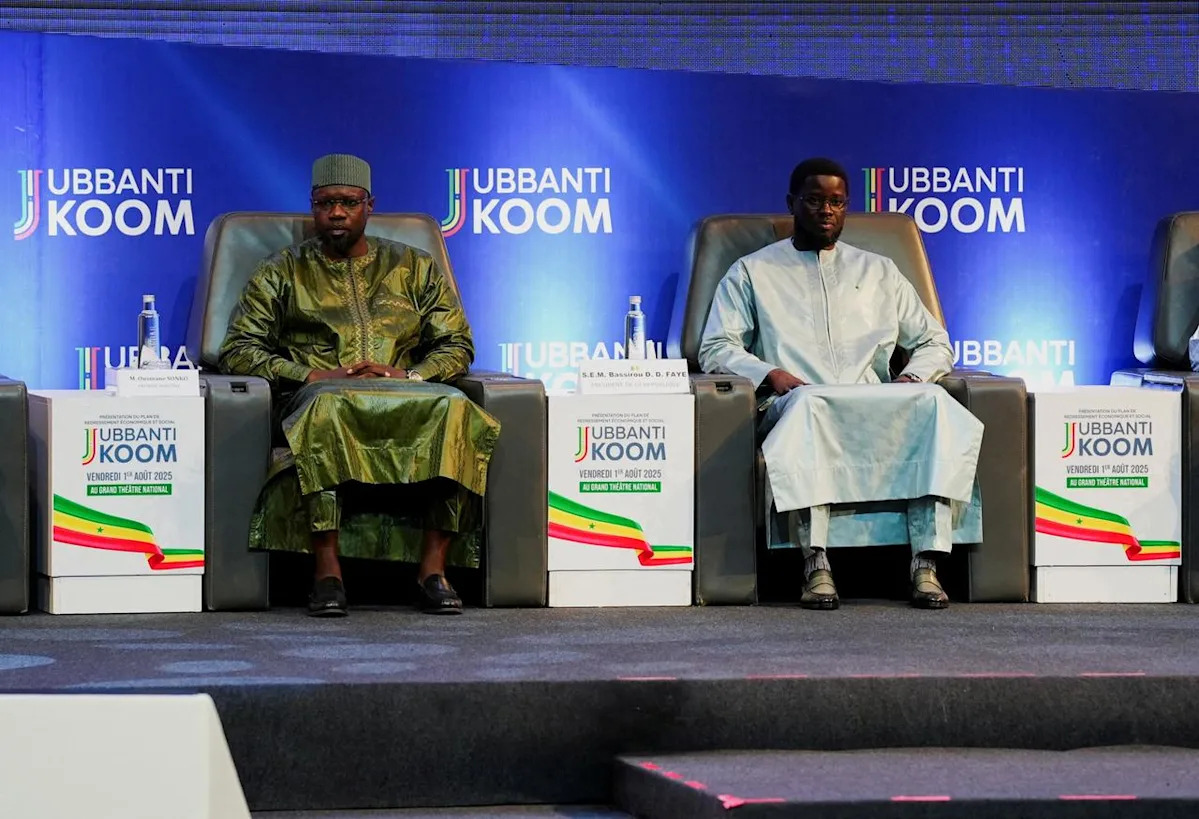
Senegal’s economic divide between Sonko and Faye exposed
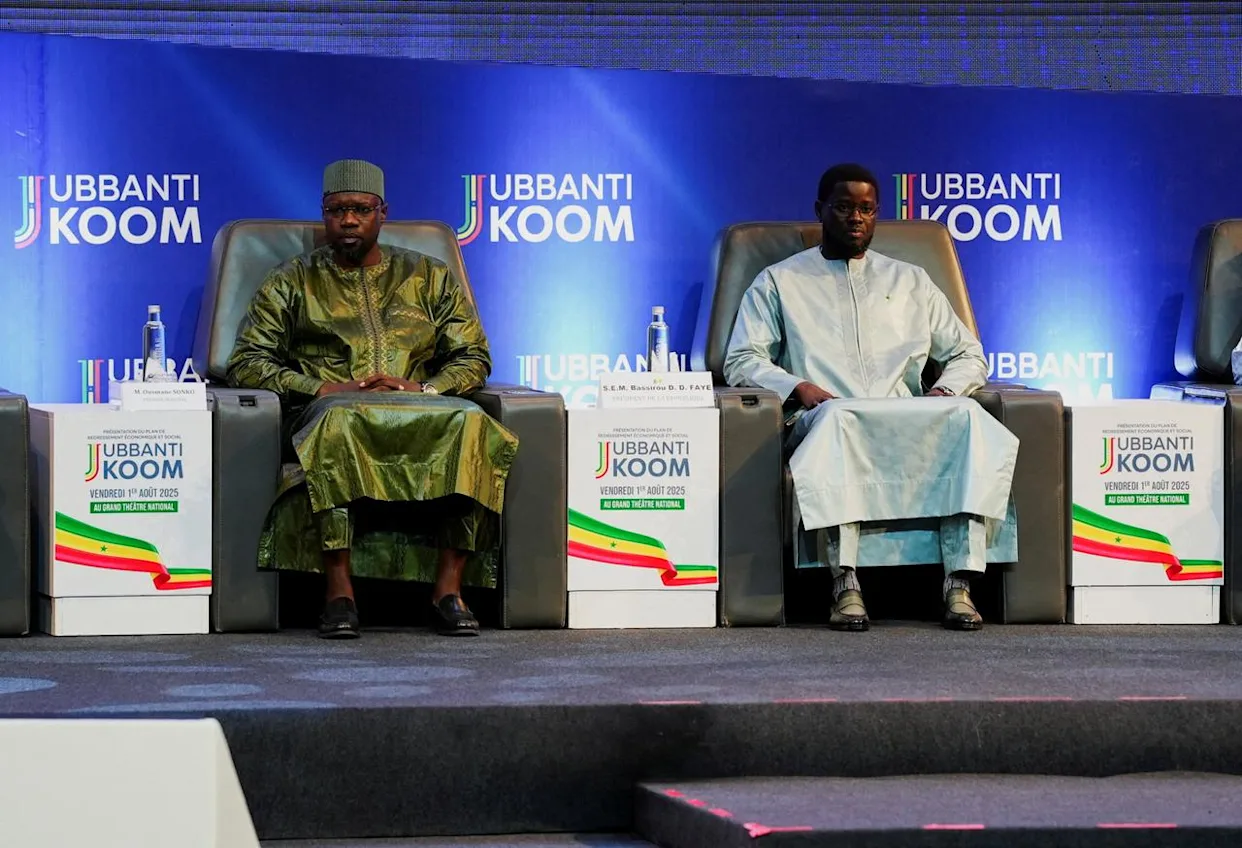
The dismissal of Ousmane Sonko by Bassirou Diomaye Faye on May 23, 2026, wasn’t a clash of egos—it was a collision of irreconcilable economic visions. Two years after Faye’s April 2024 election, during which Sonko served as Prime Minister, their partnership collapsed over three critical economic issues shaping Senegal’s future: debt management, hydrocarbon projects, and the role of foreign capital in national development.
Debt management: the breaking point
The most visible fracture emerged over debt. In September 2024, Sonko publicly exposed undisclosed debts accumulated under Macky Sall’s administration. A March 2025 IMF assessment revealed approximately €7 billion in unrecorded liabilities, pushing the debt-to-GDP ratio beyond 100%. Annual debt servicing consumes 5,500 billion West African francs (€8.4 billion), while refinancing needs approach 6,000 billion (€9.1 billion). The country’s sovereign credit rating was downgraded three times in twelve months.
Sonko advocated for outright rejection of restructuring, framing his stance as a moral crusade against predecessor corruption. His rhetoric resonated with supporters, the diaspora, and grassroots activists. Faye, however, pursued negotiations, engaging IMF teams in November 2025 and launching a national dialogue in May 2026 to address the crisis.
With a suspended €1.55 billion IMF program, restricted access to international markets, and looming sovereign default risks by 2028, Sonko’s position became economically unsustainable—yet politically indispensable for mobilizing the Pastef party’s base.
Hydrocarbons and foreign investment tensions
The second major divide centered on hydrocarbon projects, particularly oil and gas ventures. Sonko opposed foreign concessions, arguing they compromised national sovereignty. Faye, in contrast, prioritized foreign direct investment to exploit offshore reserves, viewing it as essential for economic recovery. This divergence mirrored broader debates on economic sovereignty versus pragmatic partnerships.
Capital control and national priorities
The third fault line involved the role of foreign capital in Senegal’s economy. Sonko championed state-led development, advocating for local financing of infrastructure and social programs. Faye’s administration leaned toward international partnerships, particularly with Western institutions and investors, to fund critical projects. This strategic difference highlighted clashing visions for Senegal’s economic trajectory.
The dissolution of their alliance underscores a fundamental question: Can Senegal’s leadership reconcile economic pragmatism with nationalist ideals in an era of global financial constraints?