
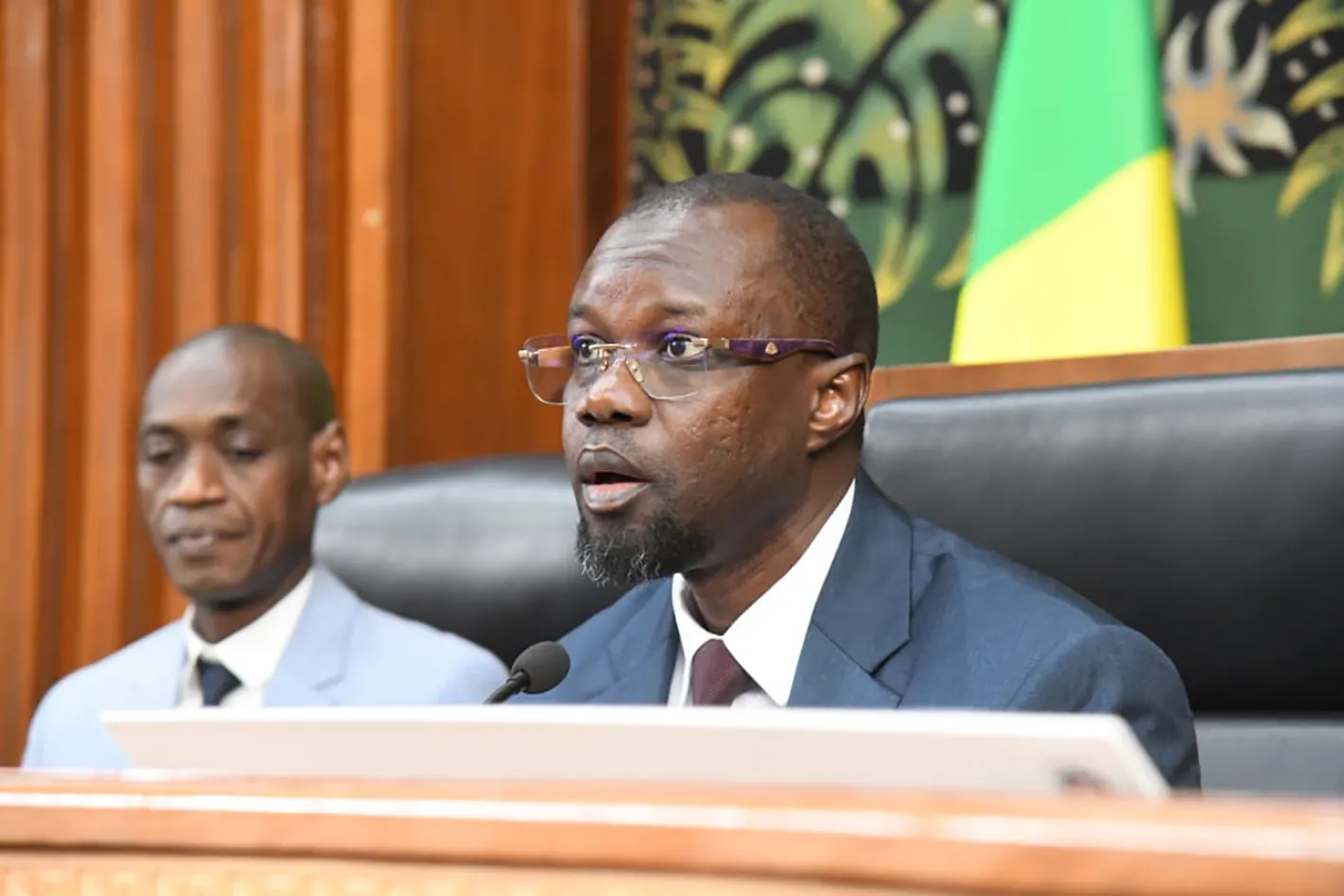
In a decisive move to dispel mounting political speculation, Ousmane Sonko, President of Senegal’s National Assembly, has categorically denied claims that lawmakers issued an ultimatum to the Head of State regarding the constitutional revision process.
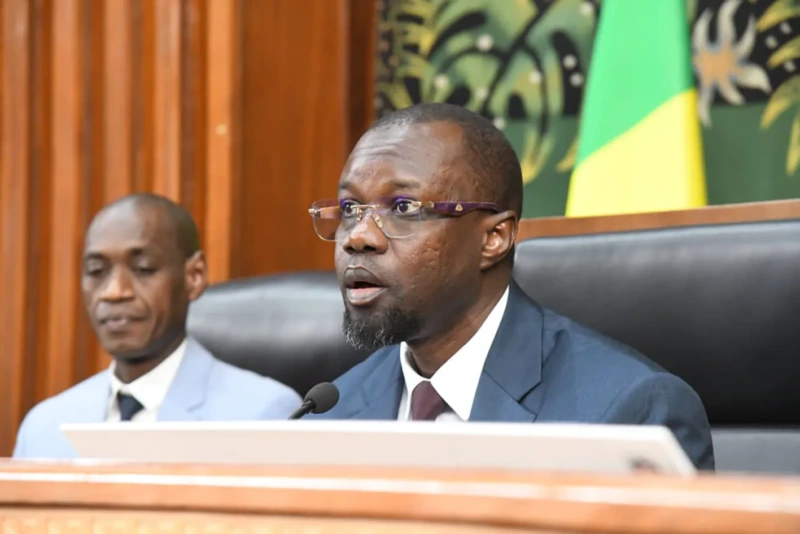
Speaking before senators during a plenary session focused on labor and social security code revisions, Sonko directly addressed the controversy surrounding the constitutional amendment process. With a firm tone, he declared, “That’s false—no ultimatum was ever given to the president.” His statement aimed to dismantle perceptions of institutional tension or coercion against the executive branch.
Sonko emphasized that the parliamentary initiative adheres strictly to constitutional procedures, not as a confrontation but as part of a long-debated institutional project. He clarified that the Assembly’s role stems from its constitutional authority as the derivative constituent power, governed by both the Constitution and decisions of the Constitutional Council.
Constitutional legitimacy and institutional harmony
The National Assembly leader referenced the Constitutional Council’s landmark ruling of January 18, 2006, which affirms the Assembly’s capacity to initiate revisions with a three-fifths supermajority. This legal precedent, he argued, reinforces the legitimacy of the ongoing process.
Sonko dismissed assertions of a rift between state institutions, insisting instead on the smooth functioning of a dialogue among powers. He stressed that each branch operates within its constitutional mandate, under the oversight of the Constitutional Council, and without encroaching on others’ prerogatives.
“Those expecting a crisis at the highest level of government will have to look elsewhere,” he concluded, reaffirming that the constitutional revision will proceed according to established legal pathways—regardless of whether the executive formally weighs in.
Central to his message was the insistence on institutional stability and adherence to prescribed legal frameworks, ensuring the process remains transparent and constitutionally sound.